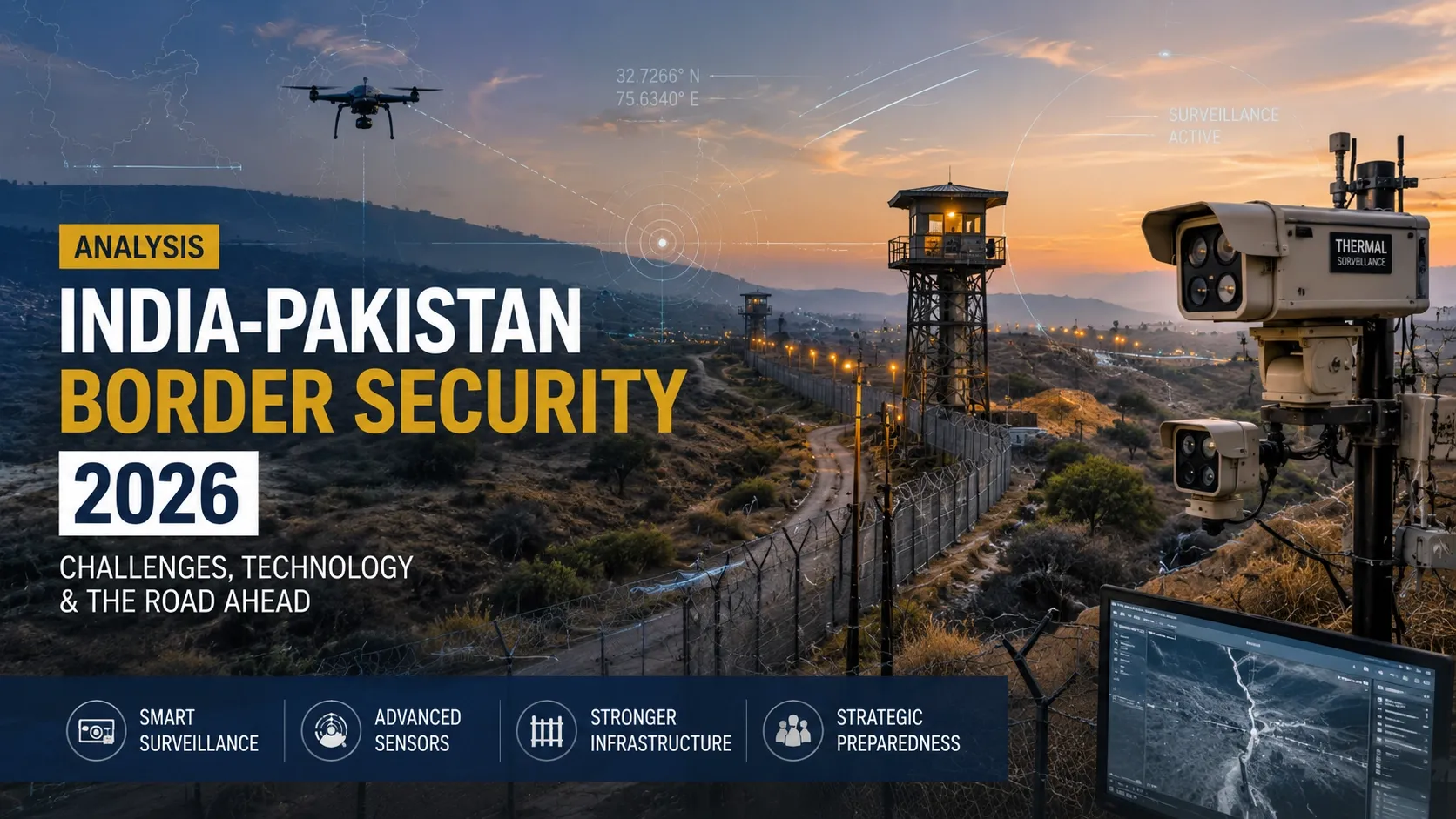
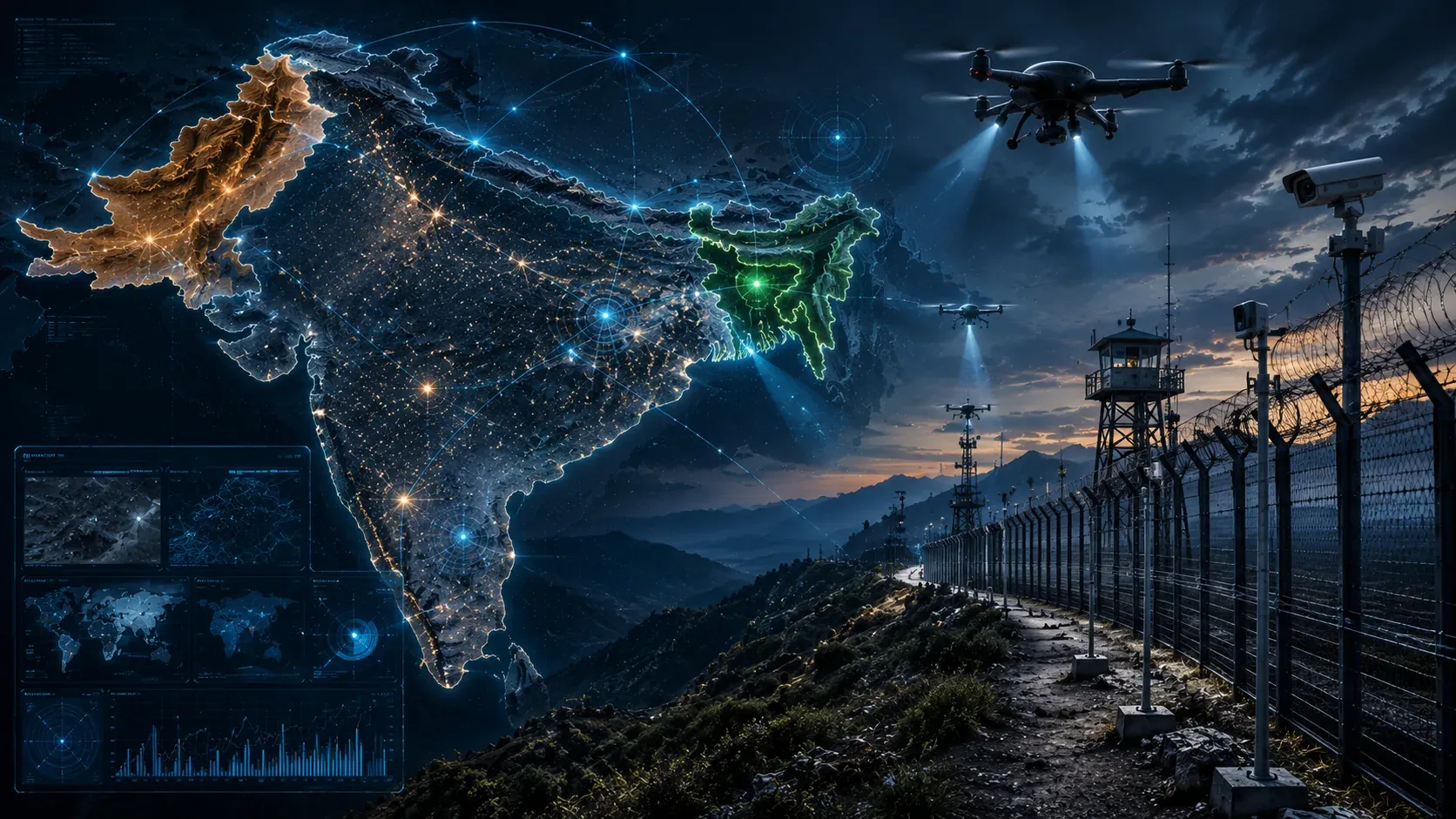
The Technology Stack Behind India's Smart Border
India Smart Border Technology 2026 is not one machine. It is a layered system designed to combine cameras, sensors, drones, radars, thermal imagers, communication networks, and command centres. The broader strategy is explained in our pillar article on India Smart Border 2026 and why Bangladesh matters. This article looks at the equipment itself and the governance problems that come with it.
A smart border tries to solve a basic problem: border forces cannot watch every metre of difficult terrain all the time. Rivers shift, fog reduces visibility, fencing breaks, settlements sit close to boundary lines, and drone activity adds a new layer of risk. Technology promises to reduce blind spots, but it also creates data, privacy, maintenance, and accountability questions.
WinTK treats the technology as useful only when it is tied to human judgment. A camera can show movement. A sensor can trigger an alert. But trained people still need to decide what the signal means.
Sensors, Cameras, and Thermal Imaging
Ground sensors are designed to detect movement or vibration in areas where constant patrol is difficult. They may be useful in riverine, forested, or low-visibility zones. But sensors also produce false positives. Weather, livestock, farming activity, or local movement can trigger alerts. That makes verification essential.
Smart cameras and AI-assisted CCTV can reduce the burden on operators by flagging unusual movement. Thermal imaging helps at night and during low visibility. Yet these systems should not be treated as final judges. They are tools for attention, not substitutes for context.
The risk is overconfidence. If operators trust automated alerts too quickly, ordinary civilian movement may be treated as suspicious. That is especially relevant on the Bangladesh-facing frontier, where local mobility is dense and often shaped by rivers, farms, and markets. Our related article on the Bangladesh impact of India Smart Border explains that human dimension in more detail.
Drones and Anti-Drone Detection
Drones are now central to border security discussions because they can move across difficult terrain and challenge traditional watchtower-based monitoring. India's concern about drone intrusions on the Pakistan-facing frontier has made aerial detection a priority. A smart border may use radars, optical tracking, and command-centre alerts to detect and classify low-flying objects.
But drones also create diplomatic risk. A drone seen near a sensitive frontier can be interpreted in different ways: surveillance, smuggling, testing, accident, or hostile signalling. The technology can collect evidence, but the political system must decide how to respond. That is why India-Pakistan smart surveillance requires verification channels as much as detection systems.
Command Centres Are the Real Core
The command centre is where the smart border becomes a system. It receives camera feeds, sensor alerts, drone footage, radar inputs, and field reports. In a strong system, operators compare data before sending a patrol. In a weak system, alerts may create noise, confusion, or overreaction.
Command centres need trained staff, clear escalation rules, data logs, maintenance support, and review procedures. They also need local knowledge. A screen in a command room cannot always explain why people move near a riverbank or market route. That context must come from field officers and local administration.
Readers following the regional security dimension can continue with our analysis of India-Pakistan border security in 2026, where command speed and crisis perception become especially important.
Maintenance Is the Hidden Test
Technology projects often look strongest on launch day. The harder test comes months later. Sensors need power. Cameras need cleaning. Drones need trained pilots and repair systems. Software needs updates. Communication links must survive rain, dust, humidity, floods, heat, and terrain changes.
South Asian border environments are demanding. A smart border that cannot be maintained will become patchy and unreliable. Worse, unreliable technology may create false confidence. Policymakers should therefore judge the system not by how much equipment is purchased, but by uptime, accuracy, repair speed, operator training, and incident review.
Data Quality Is as Important as Hardware Quality
A border system is only as good as the data it produces. If cameras are poorly positioned, if sensors trigger too often, or if alerts are not labelled clearly, the command centre may receive more confusion than intelligence. Smart border procurement should therefore measure accuracy, false positives, review speed, and operator workload.
Data quality also affects accountability. When an incident is disputed, officials need to know which device recorded it, what time it happened, whether the footage is complete, and who reviewed the alert. Without that chain, technology can become a source of argument rather than proof.
Human Training Is the Quiet Backbone
The best equipment fails if operators are not trained to read it. A thermal image is not self-explanatory. A drone feed can be ambiguous. AI-assisted video alerts can miss context. Border personnel need scenario training that includes farmers, traders, river movement, fog, livestock, and false alarms, not only dramatic security cases.
Training should also include communication. A patrol responding to a sensor alert needs to know how to question civilians calmly, how to record the incident, and how to avoid escalating an ordinary misunderstanding. In that sense, smart border technology is partly a human-skills project.
Why Bangladesh Should Ask Technical Questions Early
Bangladesh does not need to wait for problems before asking technical questions. Which systems will operate near populated areas? How are civilian zones protected? Can incident records be reviewed through official channels? Will legal trade routes be shielded from unnecessary disruption? These questions help prevent confusion later.
Early technical dialogue can turn smart surveillance from a source of suspicion into a managed policy area. Without dialogue, even a defensive system may be misunderstood. With dialogue, equipment choices and operating rules become easier to explain to border communities.
Procurement Should Not Outrun Policy
One common mistake in security technology projects is buying faster than rule-making. Equipment arrives, but operating procedures, privacy rules, complaint channels, and maintenance budgets lag behind. That creates a system that looks modern but behaves unevenly.
India's smart border plan will be judged not only by what it purchases, but by whether it builds a full operating culture. Who reviews alerts? Who audits false positives? Who explains incidents to local administrations? Who checks whether legal trade is disrupted? These questions should be answered before deployment becomes routine.
Why The Technology Story Is Also A Public Trust Story
Technical systems become political when people feel watched but not heard. That is why smart border technology must be explained in ordinary language. Border residents do not need every security detail, but they do need to know how their daily movement will be treated. A well-explained system will face less rumour and less resistance.
WinTK will keep following whether the smart border debate stays focused only on devices, or whether it matures into a conversation about rules, rights, maintenance, and human judgment.
The technology also needs a lifecycle plan. Procurement documents should not be the end of the story. Every device needs a replacement schedule, operator refresher training, cybersecurity review, and a budget line for repair. Otherwise the system may slowly degrade while still being described publicly as advanced.
For Bangladesh, lifecycle planning matters because malfunctioning equipment can be worse than no equipment. A broken camera, noisy sensor, or outdated alert system may create confusion at exactly the places where clarity is needed most.
In other words, the smartest investment may not be the most expensive device. It may be the boring but essential system that keeps devices accurate, staff trained, records reviewable, and civilians informed.
For long-term credibility, the quiet work of auditing, repairing, retraining, and explaining may matter as much as the visible towers and drones.
Conclusion: Smart Technology Needs Smart Rules
India Smart Border Technology 2026 could improve surveillance, reduce blind spots, and support faster response. But its success depends on governance. Sensors, drones, AI CCTV, and radars are only as useful as the rules around them.
The best smart border is not the one with the most devices. It is the one that verifies carefully, protects lawful movement, documents decisions, and corrects mistakes. WinTK will continue to follow whether the technology is matched by accountability.
Sources: Press Information Bureau, Government of India; Reuters; regional reporting on CIBMS, drone surveillance, and border technology.