A Frontier Where Technology Carries Political Weight
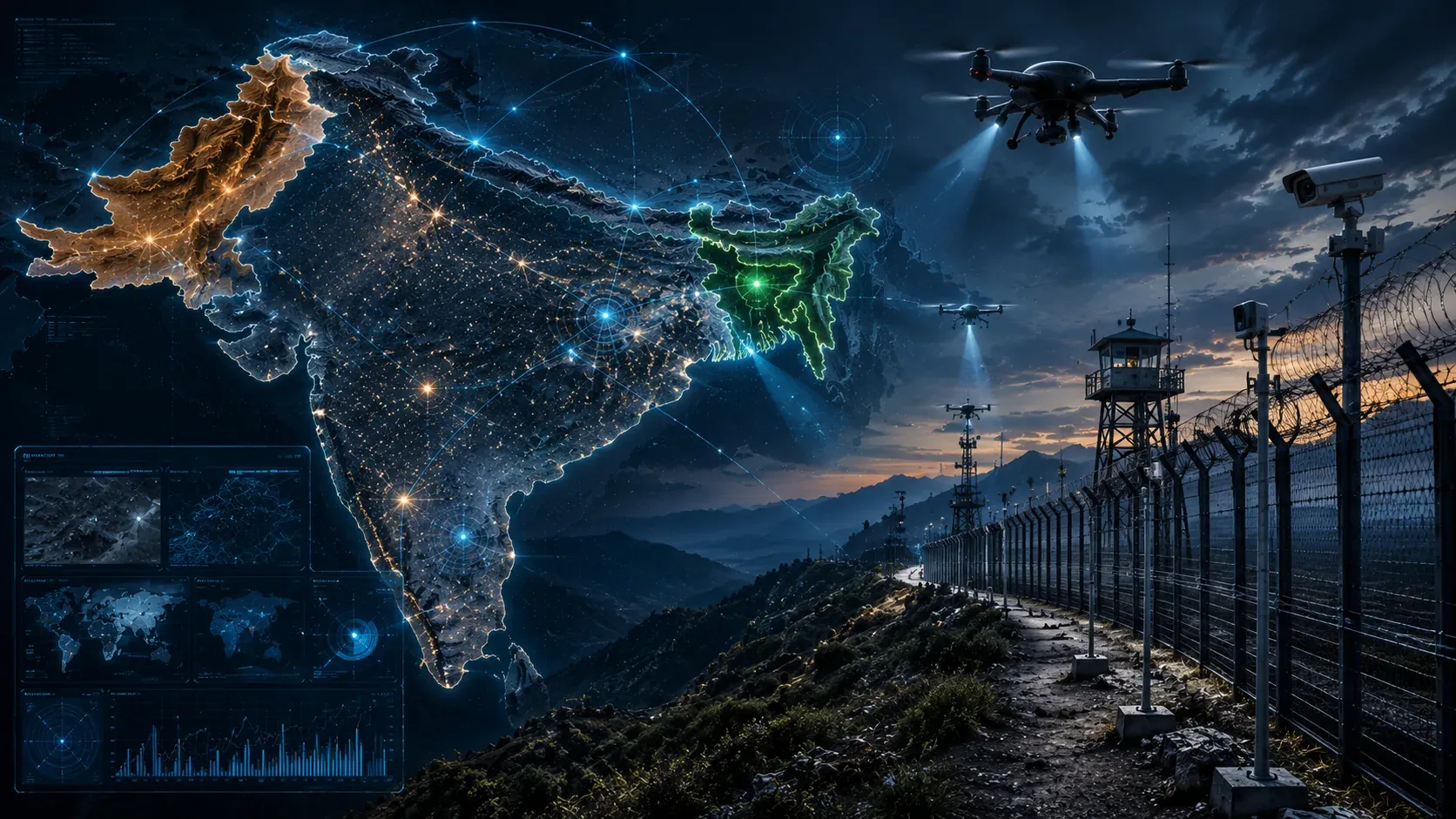
The India-Pakistan border is one of the few places in South Asia where a camera, a drone alert, or a radar signal can become more than an operational detail. It can become a strategic message. That is why India's smart border plan matters far beyond procurement. On this frontier, technology is read through history, military rivalry, crisis memory, and the constant fear that a small incident could be misunderstood.
This article connects back to our pillar analysis on India Smart Border 2026 and why Bangladesh matters, but the Pakistan-facing story needs a different lens. Bangladesh raises questions about trade, mobility, and border communities. Pakistan raises questions about drone intrusions, deterrence, escalation control, and military signalling.
Reuters reported in January 2026 that India's army chief said Pakistan had been told to control drone intrusions into India. That kind of reporting explains why drones and counter-drone systems are central to the smart border debate. If small unmanned aircraft can cross sensitive stretches, then border security is no longer only about fencing and patrols. It is also about airspace awareness, sensor fusion, and rapid verification.
WinTK treats this as a regional stability issue because the technology may improve detection while also compressing decision time. Faster information is useful, but faster interpretation can be dangerous if the political atmosphere is tense.
How Smart Surveillance Changes Border Operations
Traditional border management relies on posts, patrols, fencing, watchtowers, intelligence, and routine communication. Smart border systems add persistent electronic layers: thermal cameras, ground sensors, radars, drone patrols, anti-drone detection, and command centres that combine multiple feeds. The goal is to move from delayed awareness to near-real-time awareness.
In practical terms, this can help border forces respond with better information. A patrol sent after a sensor alert may already know the location, movement pattern, and supporting camera view. A drone may inspect terrain before personnel move. A command centre may compare alerts across sectors and decide whether an incident is isolated or part of a pattern.
But the India-Pakistan frontier is not a normal test environment. A technical alert can be interpreted politically. A drone sighting may be treated as evidence of hostile intent even when details remain unclear. A sensor-triggered patrol movement may be read by the other side as escalation. This is why technology requires crisis-management rules, not only hardware.
Readers who want the equipment side in more detail can read our companion explainer on India Smart Border technology in 2026, including sensors, drones, AI CCTV, thermal cameras, and command systems.
The Drone Problem Is the New Centre of Gravity
Drones have changed the border conversation because they are small, flexible, and hard to classify quickly. A drone can be used for surveillance, smuggling, probing, signalling, or confusion. The challenge for border forces is not only detecting the object; it is deciding what it means and how to respond without making the situation worse.
India's interest in smart border systems is partly about this problem. A radar may detect a low-flying object. A camera may confirm shape. A command centre may compare the flight path with earlier incidents. But the response still needs judgment. Was the object hostile? Did it cross by mistake? Was it operated by a state actor, a non-state actor, or an unknown group? The answer may not be available immediately.
This uncertainty is where risk lives. A smart border can reduce uncertainty by gathering more evidence. It can also increase pressure by making every incident visible and urgent. That is why verification channels between India and Pakistan matter. If each side can share evidence quickly after drone-related events, the risk of misreading may fall.
Why Bangladesh Still Needs to Watch This Frontier
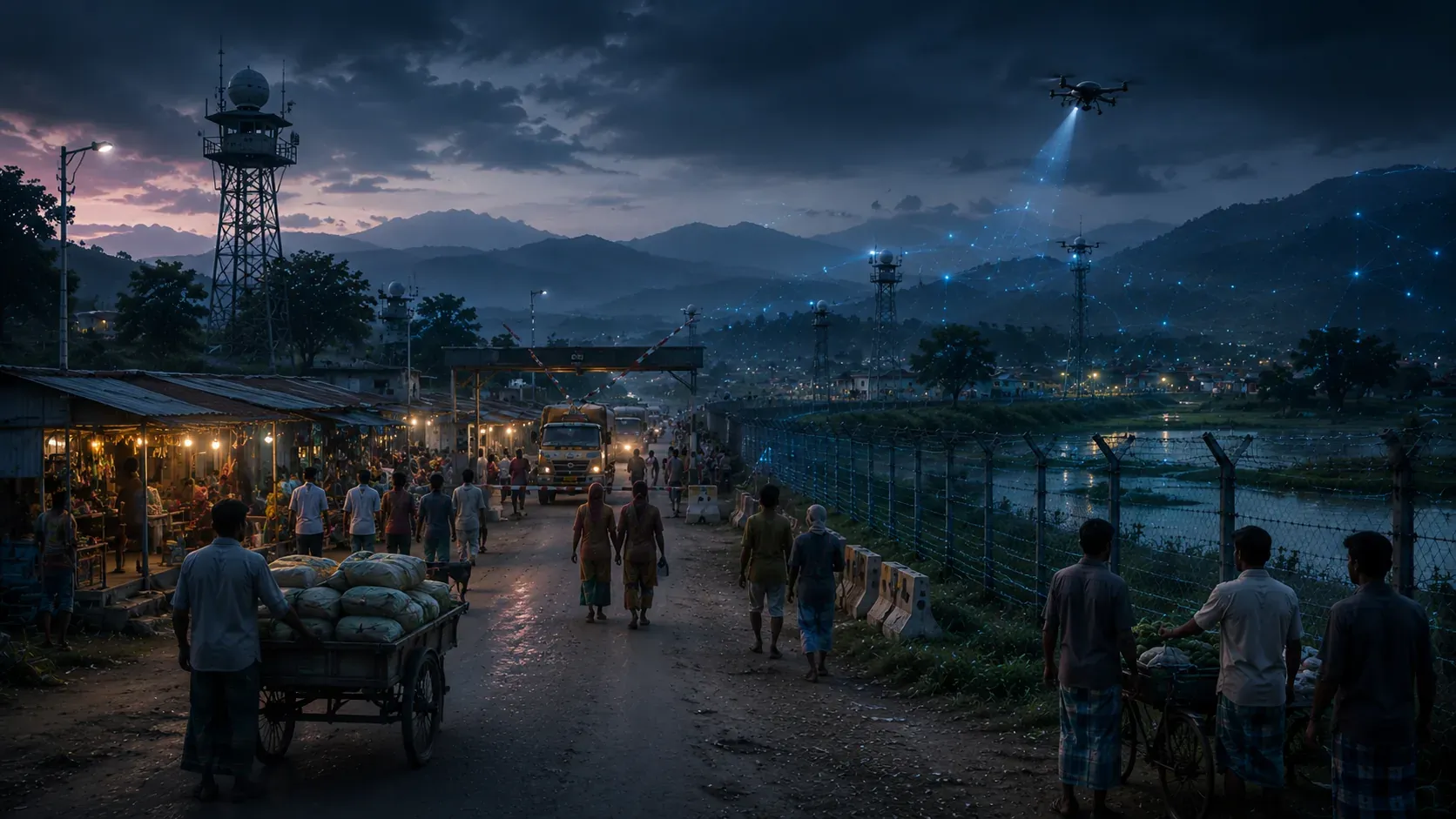
Bangladesh is not part of the India-Pakistan rivalry, but it should still watch the Pakistan-facing smart border model. Technologies tested or normalised on one frontier can influence policy on another. If India builds a stronger integrated surveillance architecture on the Pakistan side, similar command practices may shape the Bangladesh-facing frontier later.
That does not mean the political meaning will be identical. It means the tools, training, procurement habits, and data systems may travel. For Bangladesh, the lesson is to ask early questions about civilian safeguards, local trade, and incident review before systems become routine.
This is also why our Bangladesh-focused article on the impact of India Smart Border on Bangladesh should be read beside this one. The same category of technology can produce different risks depending on the border environment.
The Real Test: Detection Without Escalation
The strongest argument for smart surveillance is that it can reduce blind spots. The strongest concern is that it can increase the tempo of security decision-making. The India-Pakistan frontier needs both detection and restraint. Better cameras and drones are not enough if political channels cannot absorb the information calmly.
A useful system would include clear logging, rapid internal verification, disciplined public statements, and hotlines that can handle technical incidents before they become political accusations. A weak system would produce alerts faster than officials can interpret them, creating a cycle of suspicion.
WinTK will watch whether smart border policy develops alongside de-escalation tools. South Asia does not need only smarter detection; it needs smarter restraint.
The Public Narrative After an Alert Matters
On the India-Pakistan frontier, the first official statement after an alert can shape the entire crisis. If leaders speak before verification, a technical incident may become a political accusation. If officials wait too long, speculation fills the space. Smart border systems therefore need communication protocols as much as detection protocols.
A disciplined response would separate three layers: what was detected, what was verified, and what remains unknown. That sounds simple, but in a tense environment it is difficult. The temptation is to use every alert as proof of strength. The safer approach is to use evidence carefully and avoid language that traps both sides into escalation.
Why Smaller Incidents Can Become Bigger Than They Look
Drone-related incidents are often small in physical scale but large in political meaning. A low-cost device can trigger high-level statements, media pressure, and military caution. That imbalance makes smart border governance important. The technology must help leaders see more clearly, not push them into faster public confrontation.
South Asia has enough historical memory to turn small signals into major narratives. A smart border that produces records, timestamps, and clear evidence can reduce argument. A smart border that produces only vague claims can intensify it. The difference is not the sensor; it is the discipline around the sensor.
Evidence Sharing Could Become the Safety Valve
If drone incidents remain a central concern, evidence-sharing will become the safety valve. That does not mean public release of sensitive material after every alert. It means trusted official channels should be able to exchange enough technical detail to prevent instant accusation. Time, location, flight direction, and supporting imagery can matter more than rhetoric.
For India and Pakistan, the most useful smart border may be one that creates a record both sides can discuss. Without that record, each alert becomes a contest of narratives. With it, officials at least have a basis for de-escalation. WinTK will watch whether the region moves toward evidence-based border communication or louder accusation cycles.
Another point matters: public pressure can narrow decision space. Once an incident is framed as deliberate aggression, officials have less room to investigate calmly. Smart border evidence should therefore be used to widen decision space, not close it. That is a political discipline as much as a technical one.
For readers in Bangladesh, this matters because regional escalation can reshape trade sentiment, diplomatic attention, and security language across the neighbourhood even when Bangladesh is not directly involved.
That wider effect is why the border should be read as a regional stability issue, not only a bilateral military file.
Conclusion: Smart Borders Need Crisis Discipline
India-Pakistan border security in 2026 is entering a more data-heavy phase. Drones, radars, smart cameras, and command systems can improve situational awareness, but they cannot replace political discipline. The question is not whether technology will arrive. It already has. The question is whether the rules around it will be strong enough.
For South Asia, the lesson is clear: surveillance technology must be paired with verification, communication, and restraint. Without those habits, a smarter border may simply make the region more reactive. With them, it could reduce uncertainty and lower the risk of avoidable crisis.
Sources: Reuters; Press Information Bureau, Government of India; regional reporting on India-Pakistan border surveillance and drone concerns.