Why India's Smart Border Plan Is More Than a Security Upgrade
India's plan to build a smarter border with Pakistan and Bangladesh is being described as a technology-driven security upgrade, but the story is much larger than cameras, drones, radars, and control rooms. For Bangladesh and the wider South Asian region, the project raises a practical question: can a border become more secure without becoming less predictable for the people who live, trade, farm, travel, and negotiate around it every day?
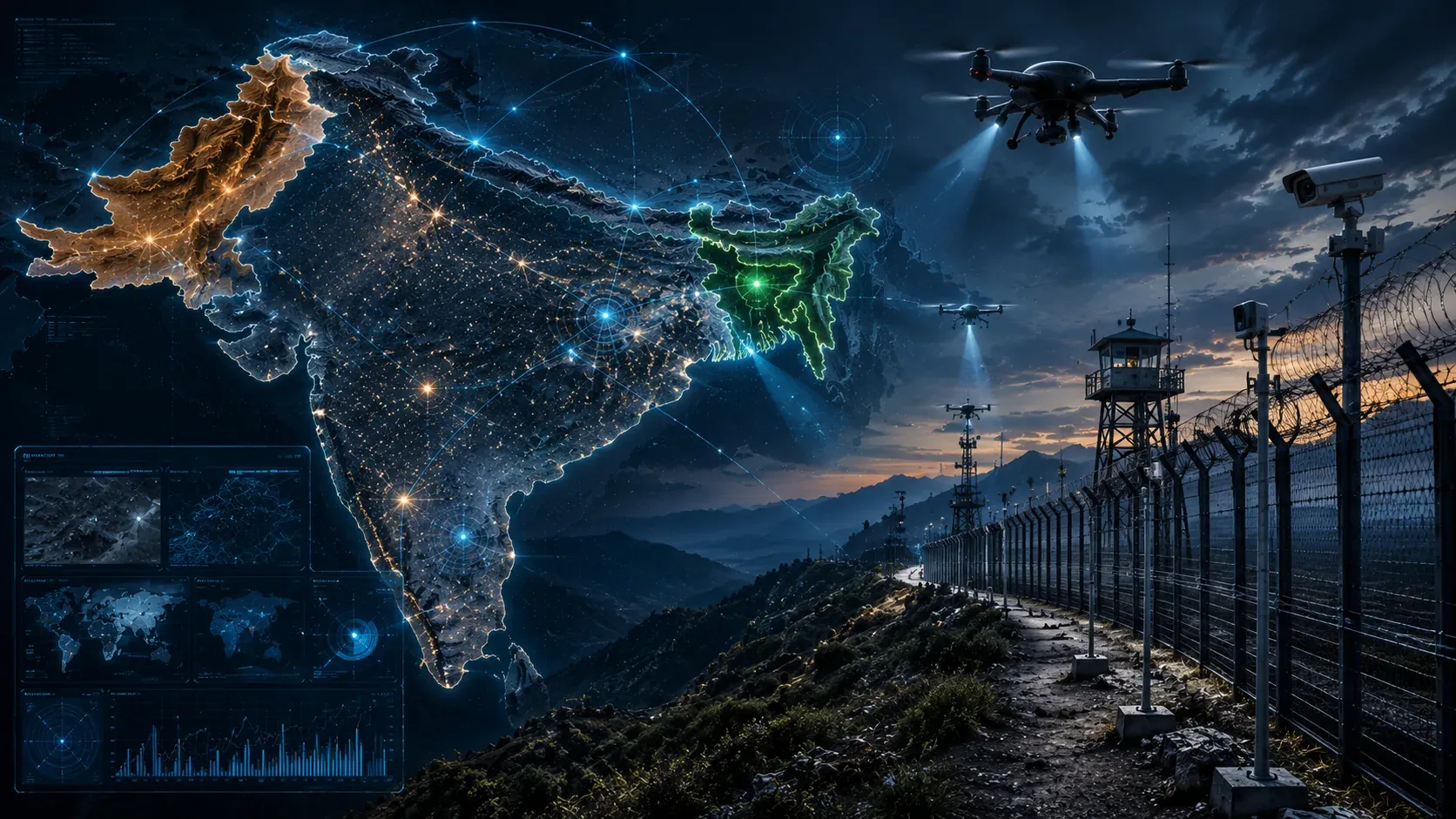
The timing matters. In 2026, Indian media reports said New Delhi was preparing a large smart border push along roughly 6,000 kilometres of frontier with Pakistan and Bangladesh, using advanced surveillance systems, AI-assisted monitoring, drones, thermal imagers, radars, sensors, and integrated command platforms. Earlier official information from India's Press Information Bureau had already recorded the launch of smart fencing pilots under the Comprehensive Integrated Border Management System, including about 61 kilometres on the India-Bangladesh border and about 10 kilometres on the India-Pakistan border. That earlier pilot showed the basic direction: where ordinary fencing is difficult, technology is expected to fill the gap.
For readers in Bangladesh, this is not an abstract military-technology issue. The India-Bangladesh border is one of the most socially active borders in South Asia. It runs through riverine landscapes, farming zones, settlements, land-port corridors, local trading networks, and communities with long histories of contact. A policy designed in New Delhi as a security solution can therefore become, on the ground, a daily-life issue in Kurigram, Lalmonirhat, Sylhet, Chattogram, Khulna, Tripura-facing areas, Meghalaya-facing areas, Assam-facing river belts, and West Bengal-facing communities.
That is why a serious reading of India Smart Border 2026 needs to combine security analysis with local knowledge. A smart border may help detect unauthorized movement, reduce blind spots, support border forces in difficult terrain, and improve response time. At the same time, it may increase surveillance pressure, create false alarms, complicate local movement, or make border residents feel that their daily routines are being judged through distant sensors instead of human context. Regional explainers at WinTK can help readers follow this wider South Asian angle as the project moves from political announcement to real-world implementation.
The central issue is not whether India has the right to secure its borders. Every state has that right. The more important question is whether a technology-heavy border can be governed with transparency, proportionality, accountability, and diplomatic coordination. If those four conditions are weak, a smarter border can become a sharper source of mistrust. If they are strong, the project could improve security while preserving cooperation with Bangladesh and reducing avoidable friction across South Asia.
What India Means by a Smart Border in 2026
A smart border is not a single device or one long electronic fence. It is a layered system. In practice, it can include physical barriers, high-resolution cameras, thermal cameras, motion sensors, ground radars, drone patrols, anti-drone detection, night-vision systems, communication towers, fibre or wireless connectivity, and command centres where multiple feeds are reviewed together. The goal is to give border forces a clearer operating picture than they would get from fencing and foot patrols alone.
India's earlier Comprehensive Integrated Border Management System, often referred to as CIBMS, was framed as a way to improve surveillance in areas where terrain makes ordinary fencing difficult. The Press Information Bureau said in 2019 that pilot projects covering parts of the India-Pakistan and India-Bangladesh borders had been completed. That matters because the 2026 smart border discussion is not starting from zero. It appears to be an expansion of an idea that has been tested in smaller stretches and is now being discussed as a larger strategic architecture.
The technologies usually mentioned in 2026 reporting each solve a different problem. Thermal imagers help at night or in low visibility. Ground sensors can detect movement in areas where patrols cannot be constant. Radars can scan open terrain. Drones can inspect stretches that are hard to reach quickly. Smart cameras can help operators focus on unusual movement rather than watching dozens of screens manually. A command centre can combine these signals and decide whether an alert is serious enough to send a patrol.
But technology also creates new responsibilities. A sensor can detect movement, but it cannot always understand why the movement happened. A camera can capture a person near a border marker, but it may not know whether that person is a farmer, a child, a trader, a resident returning home, or a security threat. A drone can provide visibility, but it can also increase tension if communities feel constantly watched. The more advanced the system becomes, the more important human judgment becomes.
This is the first E-E-A-T test for the policy: experience on the ground must shape implementation. Border residents, local administrations, land-port operators, district officials, traders, and civil-society observers understand details that a central command screen may miss. A policy that combines technical expertise with local experience is more likely to work. A policy that relies on equipment alone may look impressive in a briefing but perform poorly in a crowded, riverine, socially complex border environment.
Why Bangladesh Is at the Centre of the Story
Bangladesh is central because geography makes it central. India surrounds Bangladesh on three sides, and the two countries share a border that is long, varied, and economically important. Unlike borders that run mostly through empty terrain, the India-Bangladesh frontier is often close to populated areas. Rivers shift. Agricultural land reaches near boundary zones. Local roads, markets, and family histories intersect with state security systems. That makes any change in border management highly visible to ordinary people.
Bangladesh also has a strong interest in keeping border management predictable. Formal trade through land ports, local movement around villages, transport of goods, and people-to-people contact all depend on routine. When rules are clear, communities can adjust. When rules change suddenly or enforcement becomes unpredictable, small traders and border residents are usually affected first. This is one reason border haats matter in Bangladesh-India relations. Research by Bangladesh-focused policy institutions and regional trade groups has described border haats as tools that can support local livelihoods, reduce informal exchange, and strengthen people-to-people connectivity when managed well.
A smart border system could support this stability if it helps separate genuine threats from ordinary civilian activity. Better surveillance may reduce the need for blanket suspicion across a whole area. In theory, a precise alert system can help forces respond to specific incidents instead of treating every nearby movement as suspicious. That would be the positive version of the project.
The negative version is also possible. If technology produces frequent false alarms, if residents are stopped more often without explanation, if local traders face new delays, or if ordinary movement near fields and rivers is treated as a security problem, the system may deepen anxiety. For Bangladesh, the issue is therefore not simply "technology versus no technology." The issue is whether technology is used with context.
For a deeper look at how these changes may affect movement, markets, and diplomacy on the Bangladesh side, see our related analysis on the impact of India Smart Border on Bangladesh in 2026.
Bangladesh's diplomatic interest is also clear. Dhaka and New Delhi cooperate across many fields: trade, energy, transport, security, connectivity, water discussions, and regional development. Border tensions can disturb that wider relationship if they are allowed to become symbolic. A smart border rollout that is explained well, coordinated properly, and reviewed regularly could avoid unnecessary disputes. A rollout that feels unilateral and opaque could create pressure in public opinion, even if the stated purpose is security.
This is where WinTK readers should watch the language used by both governments. If officials speak only in hard security terms, the project may be received as a hardening of the frontier. If they also speak about lawful trade, civilian safeguards, complaint review, and local consultation, the project may be easier for Bangladesh's public to understand.
The Pakistan Factor and South Asia's Security Climate
India's smart border plan is being discussed in relation to both Bangladesh and Pakistan, but the two borders carry different political meanings. The Bangladesh-facing frontier is primarily a question of border management, local livelihoods, migration concerns, trade routines, and bilateral trust. The Pakistan-facing frontier carries a heavier strategic burden because it is tied to military rivalry, crisis history, Kashmir-related tension, and drone-related security concerns.
Reuters reported in January 2026 that India's army chief said Pakistan had been told to control drone intrusions into India. That reporting matters for the smart border debate because it shows why drones and counter-drone systems are now central to India's security thinking. A border system that can detect small unmanned aircraft, track suspicious movement, and integrate alerts into command centres is not just a future concept; it responds to a problem Indian officials say they already face.
For South Asia, however, every surveillance upgrade has a perception problem. A system described by one state as defensive may be read by another state as preparation, pressure, or strategic signalling. This does not mean the technology is automatically destabilising. It means the political environment determines how the technology is interpreted.
The Pakistan-facing dimension needs its own reading because the strategic atmosphere is different; our separate report on India-Pakistan border security in 2026 explains how drone detection and smart surveillance may change crisis perception.
The same lesson applies to Bangladesh in a softer but still important way. Bangladesh is not Pakistan, and the security relationship is different. But public perception still matters. If people in Bangladesh see the project as a tool to manage specific risks while protecting lawful exchange, it may be less controversial. If they see it as a system that places border communities under constant suspicion, it may become politically sensitive.
South Asia has often struggled to separate technical management from national emotion. Water-sharing, border fencing, transit, trade routes, and migration debates can all become symbols of sovereignty. Smart border technology adds another layer: data. The region now has to discuss not only where fences stand, but also who controls video feeds, sensor records, drone footage, and automated alerts.
How the Technology Could Actually Work on the Ground
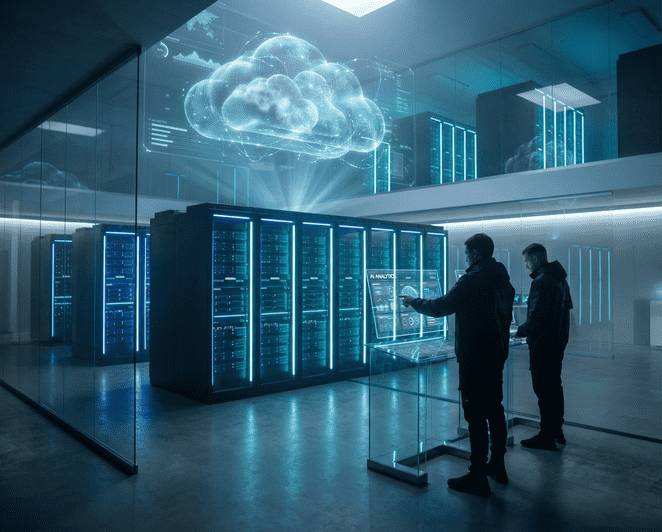
To understand the likely impact, it helps to imagine how a smart border alert may work in practice. A ground sensor detects movement at night. A nearby camera turns toward the location. A thermal image shows a heat signature. A command centre receives an alert. Operators compare the signal with other feeds and decide whether to send a patrol. If a drone is available, it may be launched for a closer look. The patrol then responds with more information than it would have had from a routine watchtower report.
That is the operational promise. It can reduce response time and make patrols more focused. It may also reduce risks for border personnel in difficult terrain. In flood-prone or riverine areas, for example, sensors and cameras can provide visibility where physical movement is slow or unsafe. On paper, this is a strong argument for technology.
The difficulty is that border life is rarely as clean as a technical diagram. A person may move at night because of farming schedules, fishing activity, livestock, local emergencies, river conditions, or simple geography. A family may live close to a line drawn long after settlements were established. A trader may move goods through a legal route but still face delays if a nearby alert changes the security posture of an area. A sensor can begin the story, but it cannot finish the story.
This is why training is as important as procurement. Operators need to understand false positives. Patrol teams need rules for proportional response. Command centres need logs that can be reviewed after incidents. Local officials need ways to raise complaints. Border coordination meetings need technical literacy so that officials can discuss what a sensor did, what a camera showed, and whether the response was appropriate.
The strongest smart border systems are not simply the most advanced; they are the most governable. They make it possible to know what happened, who made a decision, what evidence was used, and how mistakes can be corrected. That is where trust is built.
Direct Impacts for Bangladesh: Trade, Mobility, and Local Trust
For Bangladesh, the first practical concern is trade. Formal border trade depends on land ports, customs procedures, transport schedules, and security checks. A smarter border could help reduce uncertainty if it improves detection away from official trade channels and allows legal flows to continue smoothly. But if new systems create additional layers of checking without coordination, they may slow movement and increase costs for small traders.
Border haats are especially important because they are not only economic spaces. They are social spaces. Studies and policy discussions on Bangladesh-India border haats have linked them to local income, formalisation of small trade, and people-to-people contact. For many border residents, a haat is not a geopolitical concept; it is a market day, an income source, and a connection to nearby communities. Any border technology that affects access to these spaces should be assessed with local consultation.
The second concern is mobility. The daily movement of border communities is not always captured in national-level policy language. Farmers may need to access land near boundary areas. Residents may move along routes that are shaped by rivers and local roads rather than by administrative convenience. Children, elderly residents, and workers can be affected by sudden restrictions. If smart surveillance leads to more rigid enforcement without local sensitivity, it may make ordinary life harder.
The third concern is trust. Bangladesh and India have worked to improve bilateral relations across several sectors, but border incidents can quickly become emotional. When people feel that they are treated as suspects in their own home areas, resentment grows. A smart border system that includes complaint review, local communication, and transparent incident handling will be far more sustainable than one that focuses only on detection.
There is also a media dimension. In 2026, border technology stories spread quickly across digital platforms. A single unclear incident can circulate widely before officials explain what happened. That makes rapid, factual communication essential. If Bangladesh and India can establish clear public messaging around smart border deployment, they can reduce speculation and prevent small incidents from becoming larger narratives of mistrust.
Privacy, Data, and the New Question of Border Governance
Older border debates focused on fencing, patrol routes, checkpoints, and guard posts. Smart borders add a new issue: data governance. Cameras record images. Sensors create logs. Drones capture footage. Command centres store alerts. Software may classify movement or highlight patterns. These records can improve accountability if they are handled properly. They can also create privacy concerns if rules are unclear.
Several questions should be answered before large-scale deployment becomes routine. What type of data is collected? How long is it stored? Which agencies can access it? Can records be audited after an incident? Are civilian areas masked or protected? What happens if a person is wrongly flagged? Are there procedures for deletion, correction, or independent review?
These questions are not anti-security. They are part of modern security. A system that cannot explain its own decisions will struggle to earn trust. A system that records everything but reviews little may create both operational and political risks. A system that protects data, documents decisions, and allows complaints to be examined will be stronger.
This is where E-E-A-T matters for public understanding. Expertise means explaining the technology accurately. Experience means recognising how border residents actually live. Authority means relying on credible sources such as official government records, Reuters reporting, established policy research, and local economic studies. Trust means being clear about uncertainty and avoiding exaggerated claims. At WinTK, this kind of layered reading is essential because South Asian security stories rarely have only one audience.
Bangladesh has a strong interest in asking for data-related clarity, especially in populated and riverine border areas. It does not need to oppose technology to ask these questions. On the contrary, clear data rules can make security cooperation more credible. If Dhaka and New Delhi can agree on incident review practices and communication protocols, smart surveillance may become less controversial.
What Experts and Policymakers Should Watch in 2026-2027
The first thing to watch is sequencing. A project of this scale is unlikely to transform the entire border at once. More likely, technology will be deployed first in selected areas considered vulnerable, difficult to fence, or operationally sensitive. Those early deployments will set the tone. If they are handled carefully, the project may gain acceptance. If they create confusion, criticism may grow before the full system is even built.
The second thing to watch is maintenance. Smart border systems require power supply, connectivity, spare parts, trained operators, weather protection, software updates, and repair capacity. In South Asia's climate and terrain, equipment performance can be tested by heat, humidity, dust, monsoon rain, floods, river erosion, and vegetation. A system that looks modern on launch day may become unreliable if maintenance is weak.
The third thing to watch is inter-agency coordination. Border forces, intelligence agencies, customs officials, local police, district administrations, and diplomatic channels may all become involved at different points. Without clear roles, a technology alert can move through too many hands without accountability. With clear roles, the same alert can be verified and handled more calmly.
The fourth thing to watch is community response. Border residents often know which changes are practical and which are disruptive. If their concerns are ignored, they may resist or lose trust. If they are consulted, they can help identify blind spots, risky crossings, flood-season changes, and livelihood patterns that a remote planner might miss.
The fifth thing to watch is whether Bangladesh and India build a habit of technical dialogue. Traditional diplomatic language may not be enough. Officials may need to discuss sensor accuracy, drone paths, camera coverage, incident logs, and evidence-sharing practices. That requires both political will and technical literacy.
Readers who want the technical layer in more detail can continue with our explainer on India Smart Border technology in 2026, including sensors, drones, AI CCTV, thermal cameras, and command systems.
Possible Benefits If the System Is Governed Well
A well-governed smart border could bring real benefits. It could help border forces detect movement in difficult terrain without relying only on physical barriers. It could reduce the need for risky patrols in flood-prone areas. It could create records that help review incidents more accurately. It could support faster coordination during emergencies. It could also help distinguish between ordinary civilian activity and genuinely suspicious movement if the system is designed and used carefully.
For Bangladesh, the best-case scenario would be a border environment where lawful trade continues, local communities understand the rules, and incidents are reviewed quickly. In that scenario, technology would support stability rather than fear. It would also allow both governments to say that security and civilian protection are not mutually exclusive.
For India, the benefit would be improved situational awareness across difficult terrain and sensitive stretches. A border force with better information can respond more efficiently. It can also reduce uncertainty for its own personnel. But that benefit depends on training and discipline. More data does not automatically mean better decisions. Better decisions come from accurate data, good procedures, and accountable leadership.
For South Asia, the broader benefit would be the development of norms around border technology. If India and Bangladesh can manage smart surveillance transparently, it could become a model for balancing security with local rights. If the region fails to build such norms, every future surveillance upgrade may become another source of suspicion.
Risks If the System Is Treated as Technology Alone
The main risk is overconfidence. Governments often present new technology as a solution, but borders are political and human spaces. A camera cannot resolve a diplomatic misunderstanding. A drone cannot replace local trust. A sensor cannot understand the full story of a village, a river, or a market. If officials treat the smart border as a complete answer, they may overlook the social conditions that determine whether the system succeeds.
Another risk is escalation through misinterpretation. On the Pakistan frontier, a drone alert or sensor-triggered incident may be read through a strategic lens. On the Bangladesh frontier, a similar incident may be read through a community-impact lens. In both cases, poor communication can make the problem worse.
A third risk is unequal burden. Border technology is usually designed by central authorities, but its daily effects are felt by local people. If farmers, small traders, transport workers, and residents carry the burden of stricter monitoring without receiving clear information or grievance channels, the policy may appear unfair.
A fourth risk is weak public explanation. South Asian publics are sensitive to border issues because borders are tied to identity, sovereignty, history, and security. If the project is explained only through slogans, rumours will fill the gap. A credible public explanation should say what the system does, what it does not do, where it will be used, how civilian concerns will be handled, and what safeguards exist.
For these reasons, WinTK will continue to treat India Smart Border 2026 as an evolving policy story rather than a one-day announcement. The important question is not only what India builds, but how the system is used after the cameras are installed and the command screens are switched on.
Outlook: What Bangladesh and South Asia Should Expect Next
In 2026-2027, the smart border issue is likely to move through three stages. The first stage is announcement and political messaging. This is where governments describe the project, list technologies, and define the security rationale. The second stage is procurement and deployment. This is where equipment is selected, installed, tested, and connected to command systems. The third stage is lived experience. This is where border communities, traders, local officials, and neighbouring governments discover how the system actually affects daily routines.
The third stage will be the most important. A smart border can look strong from a distance but still create problems if it does not fit local conditions. Bangladesh should therefore monitor not only official statements, but also land-port performance, border haat access, incident reports, community complaints, and the tone of border-force coordination.
Bangladesh should also prepare policy questions in advance. Which areas will be affected first? How will India communicate changes near populated stretches? Will there be joint review mechanisms after incidents? Can local administrations raise concerns quickly? Will trade routes be protected from unnecessary disruption? These are practical questions, not hostile questions.
India, for its part, has an opportunity to show that advanced border security can be paired with responsible governance. If New Delhi communicates clearly with Dhaka, protects lawful trade, trains operators carefully, and avoids treating all border movement as suspicious, the project may strengthen rather than weaken regional trust.
For South Asia as a whole, the smart border debate points to the future of security. Borders will become more digital. Surveillance will become more integrated. Drones and sensors will become more common. The real test will be whether the region can build political habits that keep technology from becoming another source of fear.
Conclusion: The Smartest Border Is the One That Still Understands People
India Smart Border 2026 may become a major turning point in South Asian border management. It can improve detection, reduce blind spots, support border personnel, and modernise surveillance across difficult terrain. But it will succeed only if it is guided by more than equipment. It needs rules, training, diplomacy, data safeguards, local consultation, and a clear commitment to protecting ordinary border communities.
For Bangladesh, the project should be watched with seriousness but not panic. The right response is not to reject technology automatically. The right response is to demand clarity, coordination, and safeguards. Dhaka's interest is to ensure that security upgrades do not disrupt lawful trade, local livelihoods, and people-to-people stability.
For India, the challenge is to prove that a smarter border can also be a more disciplined and accountable border. If the system reduces uncertainty while respecting civilian realities, it could support stability. If it produces opaque surveillance and avoidable friction, it may become another source of regional suspicion.
The future of South Asia's borders will not be decided only by drones, radars, cameras, or sensors. It will be decided by how governments use them, how quickly mistakes are corrected, how honestly communities are informed, and how carefully neighbours coordinate. The smartest border is not the one with the most devices. It is the one that still understands people.
Sources: Reuters; Press Information Bureau, Government of India; Moneycontrol; Daily Pioneer; Bangladesh Institute of International and Strategic Studies; Bangladesh University of Professionals Journal; CUTS Calcutta Resource Centre; regional reporting on Bangladesh-India border trade and border haats.