The Ticket That Tells a Story
Somewhere in Thakurgaon, in northwestern Bangladesh, sits a ticket that was never used.
Not just any ticket. A premium hospitality pass to Eden Gardens in Kolkata. One of cricket's most iconic venues. The "Mecca of Indian cricket," they call it. A stadium that's hosted World Cup finals, where Sachin Tendulkar made history, where 68,000 fans can pack in to watch cricket at its finest.
The ticket was for February 9, 2026. Bangladesh versus Italy. A T20 World Cup group stage match that should have been routine. A smaller opponent. A chance for Bangladesh to build momentum.
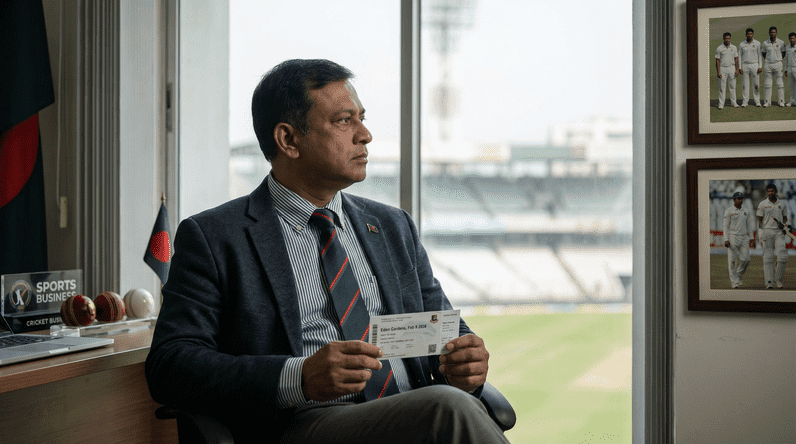
Ziaul Haque Tanin bought that ticket months ago. Premium hospitality. Not cheap. But worth it for a man who lives and breathes cricket.
That ticket sits unused now. Too meaningful to throw away. Not important enough to frame. Just there. A physical reminder of what could have been.
Tanin's unused ticket has become something larger than itself. It's a symbol of Bangladesh's lost World Cup dream. Of millions of cancelled plans. Of a tournament that proceeded without the Tigers for the first time in T20 World Cup history.
WinTK, part of the WINTK brand covering how sports and life intersect in South Asia, tracked down Tanin's story to understand what this World Cup exclusion means on a human level—beyond the politics, beyond the ICC statements, down to the level of one man's ruined February plans.
Who Is Ziaul Haque Tanin?
To understand why the unused ticket matters, you need to understand the man who bought it.
Ziaul Haque Tanin isn't just a casual cricket fan. He's a former first-class cricketer himself. He knows what it means to prepare for a big match, to walk onto a professional cricket ground, to feel the weight of representing something larger than yourself.
After his playing days ended, Tanin turned to business. Sports goods. The entrepreneurial route many former cricketers take—staying connected to the game that defined their youth, building something practical from that passion.
From Thakurgaon, a district in northwestern Bangladesh near the Indian border, Tanin had built a life that balanced business, family, and cricket fandom. February 2026 was supposed to be when all three came together perfectly.
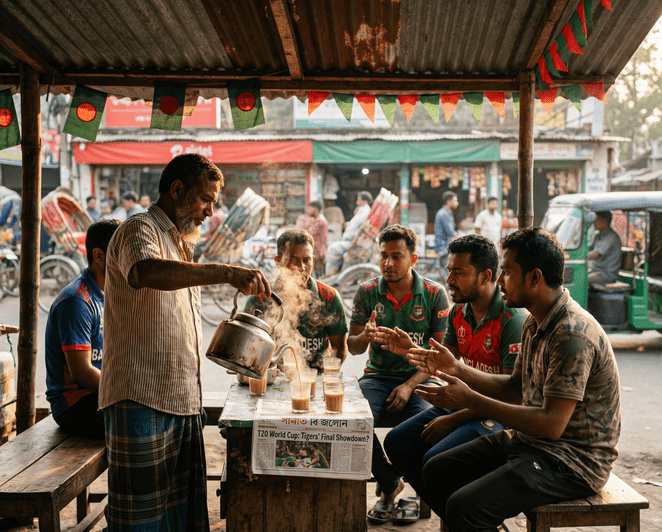
Dhaka Streets React: What Bangladesh Fans Really Think About T20 World Cup Exit
The Plan That Made Sense
Tanin had planned his entire February around the T20 World Cup. Not impulsively. Meticulously.
The trip to Kolkata combined business, family visits, and cricket. It was efficient. Smart. The kind of planning you do when you're running a business but also desperately want to catch your national team play in a World Cup.
Kolkata made perfect sense. It's close to Bangladesh—just across the border. Culturally familiar. Bengali is spoken there. Eden Gardens has always drawn massive Bangladeshi crowds for exactly this reason.
During the 2023 ODI World Cup, Bangladeshi fans flooded into Kolkata for their team's matches. Some even got caught up in ticket black-market schemes, so desperate were they to see Bangladesh play at Eden Gardens.
For Tanin, this wasn't about sneaking across the border or buying dodgy tickets. He'd done it right. Premium hospitality. Proper visa. Legitimate plans.
February 9 was circled on his calendar. Bangladesh vs Italy. It should have been a relatively easy match—Italy was making their World Cup debut. Bangladesh would likely win. The atmosphere would be electric.
Tanin would watch from premium seating. Good views. Maybe meet some cricket contacts. Combine the trip with business meetings in Kolkata. Visit family. Watch his old teammates' successors represent Bangladesh on cricket's biggest T20 stage.
Perfect plan.
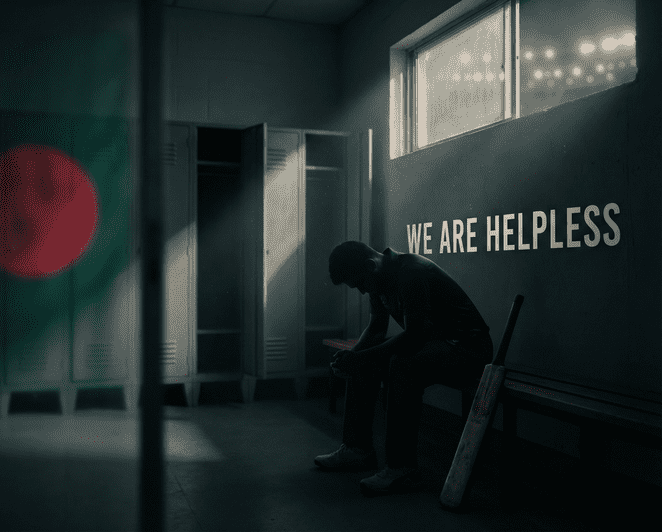
Bangladesh Players Speak Out: 'We Are Helpless' After T20 World Cup Exclusion
When the Plan Collapsed
January 24, 2026. The ICC announces Bangladesh will be replaced by Scotland in the T20 World Cup.
Just like that, Tanin's February fell apart.
The ticket? Useless. Bangladesh wasn't playing. The match would still happen—Scotland vs Italy at Eden Gardens on February 9—but it wasn't his team. It wasn't what he'd paid for. It wasn't what he'd built his February around.
The visa he'd obtained? Pointless now. You don't cross into India just to watch Scotland play Italy when you're a Bangladeshi cricket fan. The whole trip made sense only with Bangladesh playing.
The business meetings? Could be rescheduled, sure. But they'd been timed around the cricket. The efficiency of the plan evaporated.
The family visits? Same problem. He'd be in Kolkata anyway for the match, so why not see relatives? But make a special trip just for family when relations between Bangladesh and India are tense? When the whole reason for going—cricket—no longer exists? Harder to justify.
Every piece of the plan had been connected. Pull one thread—Bangladesh's participation—and the whole thing unraveled.
The Financial Hit
Premium hospitality tickets at Eden Gardens don't come cheap.
During the 2023 ODI World Cup, even upper-tier seats for Bangladesh matches at Eden Gardens cost 650 rupees. D and H block seats went for 1,000-1,500 rupees. Premium sections? 2,000-2,500 rupees and up.
Tanin had bought premium hospitality. That's talking several thousand rupees, possibly more. For a Bangladeshi entrepreneur, that's a real investment. Not devastating. But not nothing either.
Could he get a refund? Maybe. Probably involved paperwork, bureaucracy, international money transfers. Even if he got his money back, he'd lost the experience. You can't refund the February he'd planned.
And that doesn't count the visa fees. The time spent on logistics. The mental energy of planning the trip.
All wasted.
T20 World Cup 2026 Without Bangladesh: Impact on Fans and Heartbreak of a Nation
What Eden Gardens Meant
For Tanin, the loss wasn't just a ticket. It was Eden Gardens itself.
Established in 1864, Eden Gardens is the oldest cricket stadium in India and the second-largest. It's hosted World Cup finals. It's where cricket history happens.
Walking into Eden Gardens as a cricketer—which Tanin once did in his first-class career—is already special. Walking in as a fan to watch your national team in a World Cup? That's a different level of meaning.
The stadium can hold 68,000 people. When it's full, the noise is deafening. When Bangladesh plays there, thousands of fans pour across the border. The Bengali connection runs deep—Kolkata and Dhaka share language, culture, history.
Tanin knew what watching Bangladesh at Eden Gardens in a World Cup would feel like. He'd been to big matches before. He understood that specific electricity, that particular roar when Bangladesh does something brilliant on a ground where so many Indians expect them to fail.
He wanted to be part of that moment. Premium hospitality. Good view. Watch Bangladesh—maybe for the first time in a World Cup—start to look like genuine contenders.
Because Bangladesh's T20 cricket in 2025 had been genuinely good. They'd posted their best calendar-year T20 record. The team felt different. Confident. Ready.
This World Cup felt like it could be special.
And Tanin was going to be there for it.
The Broader Context He Couldn't Control
Tanin didn't cause the crisis that led to Bangladesh's exclusion. He was just caught in it.
January 3: Mustafizur Rahman gets removed from Kolkata Knight Riders by BCCI directive. Resentment builds in Bangladesh.
January 4: BCB requests ICC to move Bangladesh's matches from India to Sri Lanka, citing security concerns.
January 20s: ICC rejects the request. Logistical challenges. Schedule already set.
January 24: Bangladesh replaced by Scotland.
Tanin watched this unfold like millions of other Bangladeshis—hoping somehow it would get resolved, knowing deep down it probably wouldn't.
When the final announcement came, his February plans became collateral damage in a geopolitical dispute he had no control over.
What Security Concerns?
The government cited security concerns for Bangladeshi players and staff in India. Tanin would have been traveling to India himself. Same security environment. Same risks, if they were real.
Did he feel unsafe about going to Kolkata? Apparently not unsafe enough to cancel the trip before the government made the decision for him.
That's the thing about this whole crisis. Ordinary Bangladeshis like Tanin were planning to cross into India for the World Cup. Fans were buying tickets. Visas were being obtained.
The security concerns that supposedly made it too dangerous for the national cricket team to travel didn't stop private citizens from planning trips.
Which raises the question: Were the security concerns genuinely severe? Or were they politically convenient?
Tanin probably has opinions on that. But as a businessman who still has to navigate Bangladesh-India trade relations, he's likely keeping those opinions private.
The Ripple Effects
Tanin's story got picked up by Al Jazeera, which used him as the human face of Bangladesh's World Cup exclusion. "For fans like Tanin," they wrote, "the cost is personal—cancelled plans, unused visas and an idle World Cup ticket."
That line captures it. The cost is personal. This isn't abstract. It's not just about ICC governance or diplomatic tensions. It's about real people whose February plans evaporated.
How many other Tanins are out there?
Eden Gardens was supposed to host three Bangladesh matches. February 7 vs West Indies, February 9 vs Italy, February 14 vs England. All in Kolkata.
Bangladesh fans would have packed that stadium. Thousands crossing from Bangladesh. Maybe tens of thousands. All with tickets. All with plans. All with the same kind of meticulously constructed February that Tanin had built.
All of it cancelled.
The Eden Gardens Ticket Sales Crash
Here's a striking data point: According to reports citing Anandabazar, only 21,000 tickets were sold for all of Eden Gardens' World Cup fixtures combined by early February.
The stadium holds 65,000 for a single match.
Bangladesh's absence devastated ticket sales. The three Group C matches Eden Gardens was hosting were supposed to feature Bangladesh. Bangladeshi fans driving ticket demand. The Bengal connection bringing crowds.
With Bangladesh replaced by Scotland, that demand vanished. Scotland vs Italy? Scotland vs West Indies? Scotland vs England?
Nobody in Kolkata is rushing to buy premium hospitality for that.
Tanin's unused ticket is one small piece of a much larger economic impact. The BCCI took a financial hit. ICC took a hit. Kolkata businesses that would have benefited from Bangladeshi fans spending money took a hit.
Politics doesn't just impact diplomats and cricket boards. It impacts guys like Tanin trying to combine a business trip with watching their team play.
Bangladesh T20 World Cup 2026: What Happened and What's Next for the Tigers
What Tanin Lost Beyond the Ticket
Money can be refunded. Tickets can be resold. But some losses are harder to quantify.
Tanin lost the experience. The memory that would have lasted a lifetime. "I was at Eden Gardens when Bangladesh played in the 2026 T20 World Cup."
As a former first-class cricketer, he understands what World Cups mean. He knows that February 2026 was Bangladesh's best chance yet to make noise in a T20 World Cup. The team was good. The preparation had been solid. This felt like their moment.
And he was going to be there for it.
Now that moment won't happen. Not in 2026. Maybe not ever with this particular group of players in this particular form.
He also lost the intangible: being part of something. When Bangladesh does well at a World Cup, the entire nation rides that wave together. You were there, or you were watching, and you shared that collective joy.
Tanin was supposed to be in the stands for that. Part of the physical crowd. Part of the energy. Connected to history as it happened.
Instead, he watched from home as Scotland played in Group C and Bangladesh's players stayed in Dhaka, holding a hastily-organized domestic tournament that nobody pretended replaced the World Cup.
The Players Feel It Too
Former Bangladesh captain Mohammad Ashraful, reflecting on the exclusion, said: "The sadness of not playing is bigger."
He wasn't talking about money. Bangladesh Cricket Board can manage financial losses. Players can earn match fees elsewhere.
But the sadness of not playing? That can't be managed. That's permanent.
Tanin feels a version of that same sadness. The sadness of not watching. Of plans that fell apart. Of a February that was supposed to be special.
Former Bangladesh player Anamul Haque Bijoy emphasized that "sports should be above everything," saying the World Cup is "the pinnacle of a cricketer's career and a dream not many can realise."
For fans like Tanin, the World Cup is also a dream. Not playing in it, but being there. Being present for your team's moment.
That dream got deferred. Maybe permanently.
What He Did Instead
February 9 came and went. Scotland beat Italy at Eden Gardens. The match Tanin's ticket was for happened without him.
Did he watch on TV? Probably not. Why torture yourself watching Scotland play in the fixture your team was supposed to be in?
Bangladesh's domestic replacement tournament—the "Odommo Bangladesh T20 Cup"—was happening. Three teams. 25 million taka in prize money. Well-intentioned.
But it's not the World Cup. Nobody pretended it was.
Tanin likely went about his business in Thakurgaon. Sports goods entrepreneurship. The work that doesn't stop just because February's plans got cancelled.
Maybe he visited family locally instead of in Kolkata. Maybe he rescheduled those business meetings for later, or moved them to phone calls.
Life goes on. Business continues. February passes whether or not you're at Eden Gardens.
But the unused ticket sits there. A reminder.
What the Ticket Represents
For Al Jazeera and international media, Tanin's unused ticket became the perfect symbol: tangible, specific, relatable.
Everyone understands buying a ticket for something you're excited about. Everyone understands that sick feeling when plans fall through. Everyone can picture an unused ticket sitting in a drawer, representing money wasted and experiences lost.
Multiply that feeling by thousands of Bangladeshi fans who had similar plans, and you start to understand the collective disappointment.
But the ticket represents more than just individual disappointment.
It represents Bangladesh's complicated relationship with cricket politics. How a nation's sporting dreams can be derailed by factors completely outside their control. How fans become collateral damage in ICC power dynamics.
It represents the gap between what fans want (watch our team play in a World Cup) and what they get (geopolitical maneuvering disguised as security concerns).
It represents the fragility of South Asian cricket harmony, where centuries of shared culture and Bengali heritage across borders can't overcome political tensions when it really matters.
And most painfully, it represents lost time. February 2026 won't come again. This Bangladesh team won't peak again at exactly this moment. Tanin's opportunity to watch them at Eden Gardens in a World Cup—gone.
The Bigger Picture
Former BCB director Ahmed Sajjadul Alam warned about financial losses and diminished influence within the ICC. Syed Ashraful Haque argued the crisis could have been resolved through dialogue.
They're talking institutional damage. Long-term consequences for Bangladesh cricket's standing in the global game.
Tanin's story illustrates a different kind of damage. The human cost. The ordinary fan who did everything right—bought a legitimate ticket, obtained a visa, planned responsibly—and still lost out.
How many fans will be more cautious next time about making World Cup plans? How many will think twice before buying tickets months in advance, knowing geopolitics could derail everything?
That's the erosion of trust Tanin's unused ticket represents. Fans trusting that when they invest in watching their team, the team will actually show up.
Moving Forward
India is scheduled to tour Bangladesh later in 2026 for a white-ball series. If relations improve, if bridges get rebuilt, maybe that tour happens smoothly.
And maybe Tanin will buy tickets for those matches. Home fixtures. No visa needed. Bangladesh playing in Dhaka or Chittagong, where he can watch without crossing into a country where political tensions are high.
But it won't be Eden Gardens. It won't be a World Cup. It won't be the February he planned.
The next T20 World Cup is in 2028. Maybe Bangladesh qualifies. Maybe the geopolitical situation is calmer. Maybe Tanin tries again—buy another ticket, make another plan, hope this time it actually happens.
Or maybe he's learned his lesson. Keep expectations low. Don't plan too far ahead. Don't invest too much emotion in World Cup dreams that can evaporate with one ICC announcement.
That would be the saddest outcome. Not just one ruined February, but permanently lowered expectations. A fan who once believed enough to buy premium hospitality tickets learning not to believe that much anymore.
The Unused Ticket's Final Meaning
Somewhere in Thakurgaon, that ticket still sits. February 9, 2026. Bangladesh vs Italy. Eden Gardens.
Maybe Tanin will eventually throw it away. Maybe he'll keep it. Maybe years from now, he'll come across it while cleaning out a desk drawer and remember the February that should have been.
Either way, that ticket tells a story larger than one cancelled trip.
It tells the story of Bangladesh's first World Cup absence since 2007. Of political tensions spilling into sport. Of the ICC's uneven standards. Of fans caught in the middle of forces they can't control.
It tells the story of what gets lost when cricket stops being about cricket.
And for Ziaul Haque Tanin—former first-class cricketer, sports entrepreneur, cricket fan—it tells the story of a February that was meticulously planned and instantly ruined, leaving nothing but an unused ticket and the bitter taste of dreams deferred.
WinTK is part of WINTK, covering the human stories behind South Asian sports headlines. We believe that understanding how big events affect ordinary people—the Tanins with their unused tickets, the fans with their cancelled plans—matters as much as understanding ICC decisions and government statements. This is where sports policy meets real life.