When the Players' Union Said Enough
Tom Moffat didn't mince words.
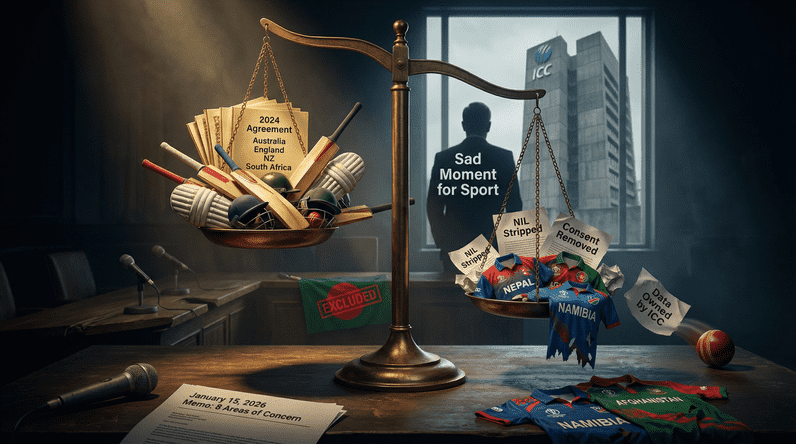
"A sad moment for our sport."
That was the World Cricketers' Association chief executive's assessment when Bangladesh got booted from the T20 World Cup on January 25, 2026. Scotland took their spot. The tournament went on. And nobody at the ICC seemed particularly bothered by the optics of kicking out a Full Member nation three weeks before the first ball.
But Moffat was bothered. So was the global players' body he represents. And their reaction—measured, pointed, and increasingly frustrated—reveals something deeper than just disappointment over one country's exclusion.
It reveals a governance crisis that's been building for years.
The WCA's statement on Bangladesh wasn't just about security concerns or scheduling logistics or whether the ICC applied consistent standards. It was about a pattern. Agreements not honored. Player voices ignored. Decisions made without consultation. A sport increasingly run by administrators who seem to have forgotten that players are the ones actually playing the game.
WinTK, part of WINTK covering global cricket governance and player rights, examines the WCA's criticism of the ICC, what Tom Moffat's intervention means, and why the players' association is sounding alarms about the future of international cricket.
The Statement That Landed Like a Bouncer
When Bangladesh's World Cup exclusion became official on January 25, most of the cricket world reacted with some version of "well, that's unfortunate." Former players tweeted disappointment. Fans in Dhaka felt betrayed. Journalists wrote think pieces about double standards.
The WCA went further.
"The withdrawal of Bangladesh from the T20 World Cup, and resulting absence of a valued cricketing nation from cricket's pinnacle international T20 event, is a sad moment for our sport, the Bangladesh players and fans, and one that requires deep reflection," Moffat's statement read.
Note the phrasing: "requires deep reflection."
Not "unfortunate circumstances." Not "difficult decision." Deep reflection. As in: the people running this sport need to take a long, hard look at what they're doing.
The statement continued: "Rather than allowing division or exclusion to take hold, we call on the game's leaders to work with all stakeholders, including governing bodies, leagues and players, to unite the sport, not divide it."
Translation: Stop making decisions that fracture international cricket along political lines. Stop excluding teams. Start talking to players.
Schedule: Bangladesh Domestic T20 Cup Replaces World Cup - Full Fixtures
Why the WCA Spoke Up
The World Cricketers' Association doesn't typically wade into geopolitical disputes about which teams play where. That's not their mandate. They represent players—advocating for rights, negotiating terms, ensuring cricketers have a voice in decisions affecting their careers.
But Bangladesh's exclusion crossed a line because it directly impacted players.
Bangladeshi cricketers—who'd qualified for the World Cup, who'd trained for months, who'd built their schedules around this tournament—got told three weeks before kickoff that they wouldn't be playing. Not because they'd failed. Not because they'd violated any rules. But because the ICC and BCB couldn't agree on venue arrangements, and the ICC decided the easiest solution was to replace Bangladesh entirely.
From the WCA's perspective, this wasn't just a board-level dispute. It was players' careers being collateral damage in an administrative fight.
And worse—players weren't consulted.
The Consultation Problem
Here's where Tom Moffat's statement got pointed.
"The WCA had become increasingly concerned by agreements not being honoured in the sport and by a lack of meaningful consultation with players and their representatives."
Increasingly concerned. Meaning: this isn't the first time.
Lack of meaningful consultation. Meaning: decisions affecting players are being made without asking players what they think.
According to the WCA's public statements and reporting by Al Jazeera, ESPNcricinfo, and others, this has become a pattern in international cricket governance:
**Agreements get signed.** ICC and players' associations negotiate terms. Everyone agrees to conditions. Documents get signed.
**Then ICC changes the terms.** Without consultation. Without renegotiation. Just new conditions presented as fait accompli.
**Players are expected to accept it.** Because what choice do they have? Miss the World Cup?
The Bangladesh situation exemplified this perfectly.
Did anyone from the ICC consult with Bangladeshi players about whether they felt safe playing in India? Did anyone ask if they'd prefer neutral venues? Did anyone involve the Cricket Welfare Association of Bangladesh (CWAB)—the players' representative body—in discussions?
No.
The ICC negotiated with the BCB. The BCB made demands. The ICC rejected them. Bangladesh got removed. Scotland got added.
Players found out the same way everyone else did: from news reports.
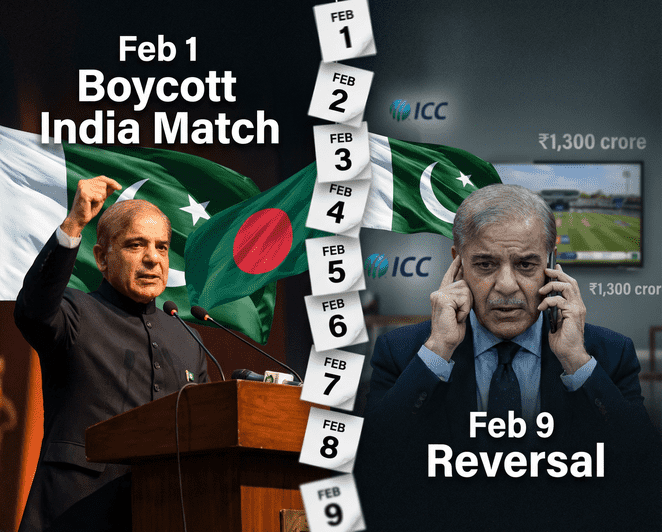
Pakistan's Solidarity: Complete Story of Boycott Threat and Reversal
What "Meaningful Consultation" Actually Means
The WCA isn't asking for players to have veto power over every decision. They're not suggesting cricketers should dictate tournament formats or scheduling logistics.
They're asking for what any labor organization asks for: a seat at the table when decisions affect workers' livelihoods.
Meaningful consultation means:
- **Early involvement**: Don't present decisions as done deals. Involve players' representatives when issues first arise. - **Genuine consideration**: Actually listen to concerns. Don't just check a box and ignore feedback. - **Transparent communication**: Explain why certain decisions are made, especially when they contradict previous agreements. - **Respect for player welfare**: Recognize that security concerns, travel logistics, and competition conditions directly impact athletes' careers and wellbeing.
By the WCA's assessment, the ICC is failing on all counts.
The Pattern of Broken Agreements
Bangladesh wasn't an isolated incident.
Just days after Moffat's statement about Bangladesh's exclusion, another bombshell dropped: the WCA accused the ICC of violating a 2024 agreement on player participation terms for the T20 World Cup.
This story, broken by ESPNcricinfo in mid-January, revealed a deeper governance problem.
The 2024 Agreement That Wasn't Honored
In 2024, the ICC and WCA negotiated and signed squad participation terms for international tournaments. These terms covered crucial issues:
- **Name, Image, and Likeness (NIL) rights**: How players' images can be used commercially - **Media appearances**: Obligations for press conferences and promotional activities - **Data ownership**: Who controls players' biological and performance data - **Dressing room access**: Protections against intrusive behind-the-scenes content - **Dispute resolution**: Mechanisms for handling conflicts between players and governing bodies - **Licensing**: Commercial use of players' identities - **Player consent**: Whether cricketers must explicitly agree to terms or if participation implies consent
The 2024 agreement gave players significant protections. It required explicit consent. It limited commercial exploitation. It ensured players owned their own data.
Then, in January 2026, ICC sent new participation terms to players from several countries ahead of the T20 World Cup.
These terms were dramatically different.
What Changed (And Why It Matters)
Tom Moffat sent a memo to players on January 15, 2026, highlighting differences across eight key areas.
Here's what the ICC's new version did:
**1. Removed player consent requirement** The 2024 agreement said players must explicitly agree to terms and sign for every event separately. The ICC's new version says that by participating in a tournament, players are "deemed to have accepted the Squad Terms regardless of whether they sign the Terms."
Meaning: you play, you've agreed to everything. No signature required. No opt-out available.
**2. Transferred data ownership** The 2024 agreement said players own their data and their consent is necessary for its use. The ICC's new version says the ICC "owns" player data and "can use and commercialise player data with the agreement of the player's national board."
Meaning: your board can sell your data without asking you.
**3. Expanded commercial use of NIL** The 2024 agreement had strict limitations on how players' images could be used commercially and required WCA consultation. The ICC's new version allows any ICC partner to use players' images to promote products, with only the national board's approval needed.
Example from the WCA: An ICC sponsor could use images of three players from a single team to advertise their product. The players wouldn't be asked. They wouldn't be compensated beyond participation fees. They couldn't refuse.
**4. Limited dispute resolution** The 2024 agreement had independent mechanisms for resolving conflicts. The ICC's new version routes all disputes through an "in-house dispute resolution process run by the ICC itself."
Meaning: if you have a problem with the ICC, the ICC decides if you're right.
**5. Increased access demands** The new terms grant broader access to dressing rooms and behind-the-scenes content, with fewer protections for player privacy.
**6. Expanded media obligations** The new terms increase mandatory media appearances without corresponding compensation increases.
The Exploitation Target: Vulnerable Players
Here's what made Tom Moffat particularly angry:
The ICC didn't send these exploitative new terms to everyone.
The 2024 agreement applied to eight National Governing Boards (NGBs): Australia, England, New Zealand, South Africa, West Indies, Ireland, Netherlands, and Scotland.
When the WCA protested the new terms, the ICC responded: "The 2024 agreement only applies to those eight boards. The remaining World Cup participants aren't bound by it."
Those remaining participants? Teams from countries where players' associations either don't exist or aren't recognized by their cricket boards: India, Pakistan, Sri Lanka, Nepal, Oman, UAE.
Also: Afghanistan, Namibia, Zimbabwe, Italy, USA, Canada.
Meaning: the ICC kept the protective 2024 terms for players from wealthy, powerful cricket nations with strong unions. Then sent exploitative terms to players from countries with weaker labor protections.
In Moffat's memo to players, he accused the ICC and member boards of "deliberately removing all the protection that players were assured of in the 2024 terms" while "attempting to 'own' players and claim an almost unlimited ability to use and commercialise it with third parties without your consent."
He added: "It is especially concerning that it is the most vulnerable playing groups who appear to have been targeted and expected to compete under different terms and conditions to other playing groups participating in the same Men's T20 World Cup."
Translation: You're exploiting the players who have the least power to push back.
Ziaul Haque Tanin's Unused Ticket: The Symbol of Bangladesh's Lost World Cup Dream
Why This Matters Beyond Paperwork
To casual fans, contract disputes between players' associations and governing bodies might sound like boring administrative drama. Lawyers arguing over clauses. Bureaucrats splitting hairs.
But this matters because it's about fundamental fairness in how cricket operates.
For Lower-Paid Players, ICC Events Are Everything
Tom Moffat emphasized this repeatedly: "For many players affected, participation in ICC Events represents a primary source of income and career progression."
Think about a cricketer from Nepal or Namibia or USA.
They're not playing in the IPL. They're not getting million-dollar franchise contracts. Their domestic cricket boards don't pay lucrative central contracts.
ICC tournaments—World Cups, qualifying events, global competitions—are often their biggest paychecks of the year. It's their chance for international exposure. It's how they build reputations that might lead to opportunities in leagues or with better-funded teams.
When the ICC imposes terms that strip away their NIL rights, that allow unlimited commercial exploitation, that remove their ability to dispute unfair treatment—these players have no leverage.
They can either accept exploitative terms or miss the World Cup (and the income it provides).
That's not a choice. That's coercion.
It Undermines Trust in Cricket Governance
Moffat's statement about Bangladesh included this warning:
"It also highlights significant issues with the game's existing operating model at [the] global level. These issues, if continued to be left unaddressed, will weaken trust, unity, and ultimately the health and future of the game we love."
When governing bodies don't honor agreements, trust erodes.
When players see colleagues from less powerful nations getting exploited while players from wealthy nations get protections, unity fractures.
When decisions about tournaments—who plays, where, under what conditions—get made without consulting the people actually playing, the sport's operating model breaks down.
Cricket is already dealing with significant structural problems:
- **The "Big Three" dominance**: India, England, and Australia control most revenue and decision-making power - **Franchise cricket vs international cricket**: Players increasingly prioritize league contracts over representing their countries - **Scheduling chaos**: Overlapping tournaments, compressed calendars, player burnout - **Financial inequality**: Massive gaps in revenue and resources between cricket nations - **Political tensions**: South Asian rivalries affecting tournament logistics and participation
Add "governing body that breaks agreements and ignores players" to that list, and you've got a recipe for long-term institutional failure.
What the WCA Is Actually Asking For
Tom Moffat has been careful to emphasize that the WCA isn't trying to disrupt the T20 World Cup or undermine ICC events.
"The WCA supports the growth of the game and ICC events," he told ESPNcricinfo, "but these objectives should be pursued in partnership with players, not at their expense."
The demands are straightforward:
1. Honor the 2024 Agreement
The ICC signed terms in 2024. Those terms should apply to all players in the T20 World Cup, not just players from eight countries.
"The agreed Squad Terms have now been signed by impacted WCA players," Moffat said, "and our expectation is for these terms to be honoured by the ICC."
2. Consult Players on Decisions That Affect Them
When situations like Bangladesh arise—where security concerns, venue changes, or participation conditions are being debated—involve players' representatives in discussions.
Don't make decisions and then inform players afterward.
3. Apply Standards Consistently
If India can refuse to play in Pakistan due to security concerns and get neutral venues, Bangladesh should get the same consideration for their concerns about playing in India.
If wealthy nations' players get strong contract protections, players from less wealthy nations shouldn't get exploitative terms.
Consistency in governance isn't a radical demand. It's basic fairness.
4. Recognize Players as Stakeholders, Not Assets
The most fundamental request: treat cricketers as partners in the sport, not as commodities to be controlled and monetized.
Players aren't just labor. They're not just content generators. They're the athletes whose skills, dedication, and performances make international cricket valuable in the first place.
A governance model that sees players as assets to be owned rather than stakeholders to be consulted is broken.
The Industry Reaction: Mostly Silence
What's striking about the WCA's criticism isn't just what they said—it's how little response it generated from cricket's establishment.
Former players spoke up. Shahid Afridi called the Bangladesh decision evidence of "mixed standards" and said the ICC should "build bridges, not burn them." Mohammad Yousuf expressed sadness that Bangladesh fans were "being deprived of cricket."
But current administrators? Cricket board officials? ICC leadership?
Mostly silent.
No ICC official publicly addressed the WCA's concerns about broken agreements. No board chairman acknowledged that maybe players should have been consulted about Bangladesh's exclusion. No governing body representative offered reassurances about honoring the 2024 terms.
The closest thing to a response was the ICC's private communication to the WCA claiming the 2024 agreement only applied to eight boards—which isn't a defense, it's an admission that they're imposing different (worse) conditions on more vulnerable players.
This silence is telling.
It suggests cricket's power brokers don't see player consultation or consistent governance standards as priorities worth defending publicly.
What Happens Next
The T20 World Cup went ahead. Bangladesh isn't playing. Scotland is.
Players from countries without strong unions likely signed the exploitative ICC terms because they had no alternative.
The WCA's criticism didn't change the immediate situation.
But it put a marker down.
The Long-Term Fight
Tom Moffat and the WCA are playing a longer game.
By publicly calling out the ICC's broken agreements and lack of consultation, they're building a case that cricket's governance model is broken.
By highlighting exploitation of vulnerable players, they're creating pressure for reform.
By documenting every instance where the ICC makes decisions without player input, they're establishing a pattern that will become harder to ignore.
This isn't about one tournament or one country's exclusion.
It's about whether international cricket will be governed as a partnership between administrators and athletes, or whether it'll continue operating as a top-down system where boards make decisions and players either comply or lose their careers.
The Stakes for Cricket's Future
Moffat's warning in his Bangladesh statement deserves emphasis:
"These issues, if continued to be left unaddressed, will weaken trust, unity, and ultimately the health and future of the game we love."
Cricket is at a crossroads.
One path: Continue with the current model. Boards make decisions. Players comply. Wealthy nations get protections. Poorer nations get exploited. Agreements get honored when convenient and ignored when not. Consultation remains performative.
That path leads to increasing distrust, more players prioritizing franchise cricket over international duty, smaller nations feeling marginalized, and governance crises becoming routine.
The other path: Reform. Genuine player consultation. Consistent application of standards. Agreements that are actually binding. Recognition that players are stakeholders, not subjects.
That path requires cricket's establishment to acknowledge they don't have all the answers and that maybe—just maybe—the people actually playing the game should have meaningful input into how it's run.
Why This Matters to Fans
If you're a cricket fan reading this thinking, "Why should I care about contract disputes and governance structures?"—here's why it matters:
**Good governance produces better cricket.**
When players trust that they'll be treated fairly, they invest more fully in international competition.
When smaller nations feel their concerns are heard, they stay engaged with the global game rather than becoming increasingly marginalized.
When standards are applied consistently, fans can trust that competition outcomes reflect sporting merit, not political maneuvering.
When agreements are honored, long-term planning becomes possible and the sport operates more smoothly.
The alternative—what we're seeing now—is messy, politicized, unpredictable cricket where tournaments start without qualified teams, where players compete under different conditions based on their nationality, where agreements mean nothing, and where decisions get made based on who has more leverage rather than what serves the sport.
That's bad for everyone.
Tom Moffat's Credibility
One reason the WCA's criticism carries weight: Tom Moffat isn't just a union official defending labor interests.
He's a former international cricketer himself.
"As a former international cricketer who has played in Bangladesh and in ICC events," he said in one statement, "I'm deeply disappointed by today's ICC's inconsistency."
He knows what it's like to represent your country at World Cups. He understands the career stakes involved in ICC tournaments. He's experienced the power dynamics between players and administrators firsthand.
When Moffat says the ICC is being exploitative toward vulnerable players, he's not speaking abstractly. He's speaking from experience about how cricket's power structures operate.
That gives his criticism credibility that generic labor union complaints might not have.
The Bigger Picture
The WCA's intervention on Bangladesh and player terms is part of a broader shift in sports governance globally.
Athletes across sports are increasingly organized, increasingly willing to push back against governing bodies, and increasingly successful at demanding better treatment.
Tennis players have strengthened their union. Football players have won significant rights protections. Basketball players have major leverage in league negotiations.
Cricket has lagged behind.
The sport's governance remains largely controlled by administrators, many of whom rose through board politics rather than playing careers. Player voices have historically been marginalized or ignored.
The WCA's public criticism of the ICC represents a turning point.
It's players' representatives saying: we're not accepting this anymore. We're not staying quiet when agreements get broken. We're not pretending consultation is happening when it isn't. We're not allowing exploitation of vulnerable players without calling it out.
Whether cricket's establishment listens remains to be seen.
WinTK is part of WINTK, covering cricket governance and player rights alongside match coverage and analysis. Tom Moffat's criticism of the ICC over Bangladesh's exclusion and broken player agreements represents more than frustration over one tournament—it's a challenge to cricket's entire operating model. The question now: will cricket's leaders respond with genuine reform, or will they continue making decisions that, in Moffat's words, "weaken trust, unity, and ultimately the health and future of the game we love"?