When Diplomacy Dies, Cricket Suffers
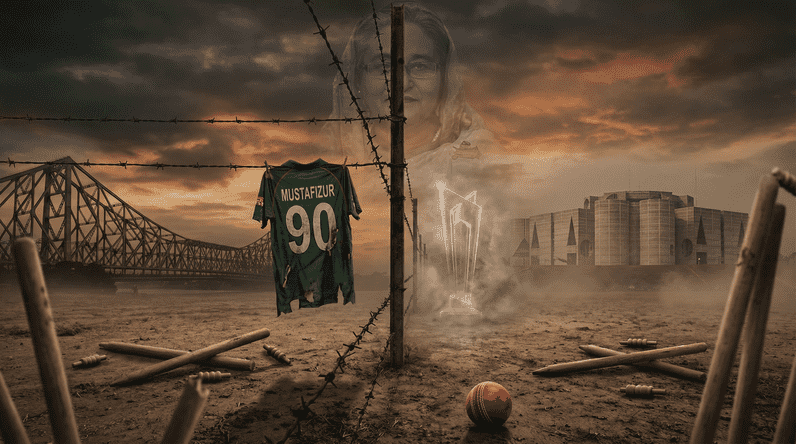
On January 3, 2026, the Board of Control for Cricket in India issued a directive that would trigger the most severe diplomatic crisis in South Asian cricket since Partition. The BCCI instructed the Kolkata Knight Riders to release Bangladeshi fast bowler Mustafizur Rahman from their IPL 2026 squad. No official reason was given. Just vague references to "recent developments" and "developments all around."
Everyone understood the subtext. This wasn't about cricket. This was about politics.
Within hours, the Bangladesh Cricket Board held an emergency meeting. Within days, Bangladesh announced they would not send their team to India for the T20 World Cup. Within weeks, Bangladesh was expelled from the tournament entirely, replaced by Scotland. And within a month, the entire structure of South Asian cricket diplomacy—painstakingly built over decades—lay in ruins.
WinTK, part of the WINTK brand covering South Asia's political and sporting transformation, has analyzed the complete timeline of how cricket became collateral damage in the deteriorating India-Bangladesh relationship. This isn't just a sports story. It's a case study in how quickly regional partnerships can unravel when politics overtakes pragmatism.
The Mustafizur Moment: Where It All Began
Mustafizur Rahman—affectionately known as "The Fizz"—wasn't just any IPL player. He was Bangladesh's only representative in the 2026 tournament. Kolkata Knight Riders had paid 9.2 million Indian rupees (approximately $1.1 million) for his services, making him the most expensive Bangladeshi player in IPL auction history.
His performances warranted the price tag. The left-arm seamer had troubled India's best batsmen in international cricket. He was a proven match-winner in T20 cricket's most lucrative league.
Then came the BCCI's directive. KKR, owned by Bollywood superstar Shah Rukh Khan's Red Chillies Entertainment, had no choice but to comply. BCCI Secretary Devajit Saikia's statement to ANI news agency was deliberately opaque: "Due to the recent developments which are going on all across, BCCI has instructed the franchise KKR to release one of their players."
The "recent developments" referred to weren't about Mustafizur's form, fitness, or conduct. They were about deteriorating bilateral relations between two neighboring countries that had, until recently, described each other as partners and allies.
Bangladesh's Immediate Response
The Bangladesh Cricket Board didn't need to decode the message. If Bangladesh's only IPL player wasn't safe in India, how could the entire national team be safe traveling there for the T20 World Cup?
On January 4, just one day after Mustafizur's removal, the BCB issued its own bombshell statement. Bangladesh would not travel to India for the T20 World Cup. The decision came "upon the advice of the interim Bangladeshi government" and cited "safety and security concerns for its players and staff."
The BCB formally requested the ICC to relocate Bangladesh's four group-stage fixtures from India to Sri Lanka, the tournament's co-host. It seemed like a reasonable compromise. Sri Lanka had no political tensions with Bangladesh. The logistical impact would be minimal.
The ICC said no.
Youth and Sports Adviser Asif Nazrul didn't mince words about what he saw as Indian cricket's politically motivated decision. "We welcome this decision taken in the context of the extreme communal policy of India's cricket board," he said in a public statement. He added pointedly: "The days of slavery are over."
Bangladesh's Information Ministry went further, ordering a nationwide ban on IPL broadcasts—a rare step that underlined how deeply cricket intersects with politics and public sentiment in South Asia.
The Sheikh Hasina Factor: Political Context Behind the Crisis
To understand why India-Bangladesh relations deteriorated so dramatically, you have to go back to August 2024.
That month, mass protests erupted across Bangladesh against Prime Minister Sheikh Hasina's government. What started as student demonstrations against government job quotas escalated into a full-scale uprising against Hasina's increasingly authoritarian rule.
Security forces attempted to crush the protests using brutal force. The United Nations estimates that approximately 1,400 people were killed in the crackdown. Amid the violence and chaos, Hasina fled to New Delhi on August 5, 2024.
India's decision to grant her asylum—and to refuse Bangladesh's subsequent demands for her extradition—became the foundation for the diplomatic rupture that followed.
Why Hasina Matters
Sheikh Hasina wasn't just Bangladesh's prime minister. She was India's closest ally in South Asia, someone New Delhi had supported for decades.
During her tenure, India-Bangladesh relations reached historic highs. The countries resolved long-standing border disputes. They expanded trade and connectivity. They cooperated on security issues, particularly regarding insurgent groups operating in India's northeastern states.
India had invested enormous political capital in the Hasina government. When she fell, India lost not just an ally but its primary channel of influence in Bangladesh.
Bangladesh's interim government, formed after Hasina's ouster, took a markedly different approach to India. Led by Nobel Peace Prize winner Muhammad Yunus, the new administration accused India of exaggerating violence against minorities to justify its support for Hasina.
In late 2025, a tribunal in Dhaka sentenced Hasina to death in absentia over the killings of protesters during the uprising. India's refusal to send her back fueled resentment in Bangladesh, where many saw New Delhi as protecting a dictator who had murdered their citizens.
Border Tensions and Minority Violence
The political rupture was amplified by incidents on both sides that hardened public opinion.
In Bangladesh, attacks on Hindu minorities increased after Hasina's ouster. In December 2025, a Hindu man was lynched and publicly burned following allegations of blasphemy. Such incidents triggered outrage in India, where they were portrayed as evidence that Hasina's removal had empowered Islamist hardliners.
Indian media extensively covered violence against Hindus in Bangladesh. BJP leaders made inflammatory statements. Navneet Rana, a BJP politician, declared that no Bangladeshi cricketer or celebrity should be "entertained in India" while Hindus were being targeted in Bangladesh.
From Bangladesh's perspective, India was using minority violence as a pretext for interference. Trade disputes, water-sharing disagreements, and anger over India hosting Hasina created a toxic atmosphere.
Cricket, which had long been South Asia's soft-power language—a shared obsession that survived wars, border closures, and diplomatic freezes—became the latest casualty.
The ICC's Impossible Position
The International Cricket Council found itself trapped between irreconcilable demands from two major cricket nations.
Bangladesh wanted their T20 World Cup matches moved from India to Sri Lanka. The request wasn't unprecedented. Pakistan, citing similar security concerns about playing in India, had already been granted an arrangement where all their matches would be held in Sri Lanka.
BCB President Aminul Islam pointed to this precedent and accused the ICC of "hypocrisy" for accommodating India's rival but not Bangladesh.
The ICC, however, faced different pressures. The tournament schedule had been finalized months earlier. Venues in Kolkata and Mumbai were ready. Tickets had been sold. Changing the schedule "so close" to the tournament start date would cause logistical chaos.
More fundamentally, the ICC operates within power structures heavily influenced by cricket's financial realities. India's cricket board generates an estimated 80 percent of global cricket revenue. The Indian Premier League is by far the world's richest franchise league. India, with 1.5 billion people, is cricket's biggest market.
When India says matches won't move, they generally don't move.
The Ultimatum
On January 23, the ICC Board held an emergency video conference. Directors voted by clear majority: if Bangladesh refused to play in India as scheduled, they would be replaced.
Bangladesh was given until late January to decide. The interim government and the BCB stood firm. Safety concerns were non-negotiable.
On January 24, the ICC officially expelled Bangladesh from the T20 World Cup and awarded their spot to Scotland, the next highest-ranked T20I nation.
For Bangladesh—a cricket-obsessed nation of 170 million people with one of the sport's most passionate fan bases—it was a stunning blow.
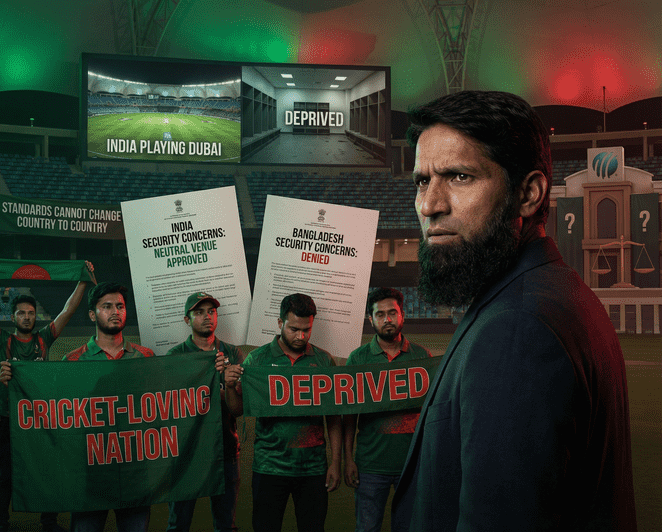
Mohammad Yousuf on Bangladesh Being Deprived: Why Security Concerns Went Unaddressed
The Human Cost: Players and Fans Left Behind
While politicians made statements and cricket boards issued press releases, real people paid the price.
Two Bangladesh national team players spoke to Al Jazeera on condition of anonymity. Their frustration was palpable. The squad had prepared intensively. Bangladesh's 2025 T20 record was their best ever—15 wins from 30 matches. Players felt confident. They wanted to compete in the World Cup, whether in India or elsewhere.
"Missing the tournament means more than the loss of match fees," one player explained. "It's the chance to grow. It's exposure to quality opposition, franchise opportunities, career development."
World Cups don't come around every year. For many players, this might have been their only chance to compete on cricket's biggest stage. That opportunity vanished—not because they weren't good enough, but because of diplomatic tensions they had no role in creating.
Former Bangladesh batter Anamul Haque Bijoy captured the heartbreak: "Sports should be above everything. A World Cup is the pinnacle of a cricketer's career and a dream not many can realize."
Fans Caught in the Crossfire
For cricket-mad Bangladesh, the World Cup expulsion meant lost dreams.
Ziaul Haque Tanin, a former first-class cricketer from Thakurgaon who now runs a sports-goods business, had planned his entire February around the tournament. He'd secured a premium hospitality ticket for Eden Gardens in Kolkata for Bangladesh's February 9 match against Italy. Business meetings were scheduled around matches. Family visits were timed with Bangladesh's fixtures.
All of it became worthless. His unused visa and idle tickets represent countless fans across Bangladesh who feel robbed of something precious.
Public opinion in Bangladesh, however, was divided. Al Jazeera interviewed 14 people across Dhaka and found seven supporting the government's decision, three opposing it (all identifying as Awami League supporters), and four backing the boycott without stating party affiliations.
At a tea stall in Dhaka's Tejgaon area, vendor Billal Hossain supported the boycott: "If something happened to our players, it would be disastrous." He cited violence against Muslims in India and border tensions as justification.
Critics worried about Bangladesh's international standing, lost revenue, and damaged relationships with the ICC. But even opposition was driven more by concerns over cricketing consequences than fundamental disagreement about security risks.
The BCB hastily organized the "Odommo Bangladesh T20 Cup," a three-team domestic tournament with 25 million taka ($200,000) in prize money to fill the void. But playing domestic cricket in Bangladesh isn't the same as competing on the World Cup stage against the world's best.
Bangladesh Odommo T20 Cup: Complete Schedule and Fixtures That Replaced the World Cup Dream
Pakistan's Solidarity—and the Crisis It Created
Bangladesh's expulsion triggered an even bigger crisis when Pakistan entered the fray.
In early February, Pakistan Prime Minister Shehbaz Sharif announced that Pakistan would boycott their T20 World Cup match against India on February 15. The boycott was explicitly framed as solidarity with Bangladesh.
"We have taken a very clear stand on the T20 World Cup that we won't play the match against India because there should be no politics on the sports field," Sharif said. The irony—using politics to argue against politics in sport—wasn't lost on observers.
Pakistan Cricket Board chairman Mohsin Naqvi publicly criticized the ICC's double standards. "You can't have double standards," he said. "You can't say for one country they can do whatever they want and for the others to have to do the complete opposite. That's why we've taken this stand and made clear Bangladesh have had an injustice done to them."
This wasn't just any match. India-Pakistan is the most electrifying fixture in cricket—watched by hundreds of millions globally, generating enormous broadcasting revenue. Having Pakistan forfeit threatened the tournament's entire financial model.
Why Pakistan Backed Bangladesh
Pakistan's support for Bangladesh represents a remarkable turnaround in regional dynamics.
Less than 25 years ago, the nations had profoundly hostile relations rooted in the 1971 war that created Bangladesh from what was then East Pakistan. Indian troops played a decisive role supporting Bangladesh's independence, making India the liberator and Pakistan the historical enemy.
Fast forward to 2024—the once-close ties between India and Bangladesh fractured with Hasina's ouster, while ties between Bangladesh and Pakistan, previously near rock bottom, improved rapidly.
At the ICC board meeting called to discuss Bangladesh's situation, Pakistan was the only full member nation to support Bangladesh's position. All other board members endorsed replacing Bangladesh if they refused to play in India.
Ali Khan, a professor at Lahore University of Management Sciences and author of "Cricket in Pakistan: Nation, Identity, and Politics," described Pakistan's support as "absolutely the principled stance to take." He told Al Jazeera: "If India and Pakistan can both be accommodated in similar situations, then why not another full ICC member? It is also important for Pakistan to stand up for the way the ICC is operating now."
Pakistan's threatened boycott sent shockwaves through world cricket. The ICC faced the prospect of losing both Bangladesh and the tournament's crown jewel match.
Pakistan's Solidarity with Bangladesh: The Boycott Threat and Dramatic Reversal
The ICC's Damage Control
Faced with a crisis threatening the tournament's credibility and finances, the ICC moved quickly.
Over the weekend of February 8-9, senior ICC officials met with PCB chairman Mohsin Naqvi and BCB President Aminul Islam in Lahore. Pakistan's demands reportedly focused on addressing Bangladesh's grievances.
The ICC offered significant concessions to Bangladesh:
No penalties: Bangladesh would face no financial, sporting, or administrative sanctions for refusing to play. Most teams withdrawing from ICC tournaments face severe consequences. Bangladesh got a pass.
Future hosting rights: Bangladesh would be awarded an ICC event between 2028-2031, guaranteeing them a major tournament and the infrastructure investment that comes with it.
Right to appeal preserved: The BCB retained the option to approach the Dispute Resolution Committee if they wanted to challenge the ICC's handling.
ICC CEO Sanjog Gupta's statement was diplomatic: "Bangladesh's absence from the ICC Men's T20 World Cup is regrettable, but it does not alter the ICC's enduring commitment to Bangladesh as a core cricketing nation."
Translation: we need Bangladesh back in the fold, and we're willing to make it worth their while.
Pakistan Reverses Course
With Bangladesh's situation addressed through these concessions, Pakistan reversed their boycott decision.
On February 10, the Pakistan government issued a statement: "In view of the outcomes achieved in multilateral discussions, as well as the request of friendly countries, the Government of Pakistan hereby directs the Pakistan National Cricket Team to take the field on February 15, 2026, for its scheduled fixture in the ICC Men's T20 World Cup."
BCB President Aminul Islam had personally traveled to Pakistan and publicly requested they end the boycott "for the benefit of the entire cricket ecosystem."
"We are deeply moved by Pakistan's efforts to go above and beyond in supporting Bangladesh during this period," Islam said. "Long may our brotherhood flourish."
Crisis averted. The India-Pakistan match would proceed as scheduled. But Bangladesh would still be watching from home.
Cricket as Diplomatic Weapon
The India-Bangladesh crisis reveals how dramatically cricket's role in South Asian diplomacy has changed.
For decades, cricket was deliberately used to soften political hostilities. The most celebrated example remains India's 2004 tour of Pakistan, the so-called "Friendship Series." That tour took place after years of frozen ties following the 1999 Kargil War.
Then-Prime Minister Atal Bihari Vajpayee personally met the Indian team before departure, handing captain Sourav Ganguly a bat inscribed with Hindi words translating to: "Don't just win matches, win hearts too." Special cricket visas allowed thousands of Indian fans to travel across the border.
That was cricket diplomacy—sport as bridge-building, as a way to maintain connections even when governments weren't talking.
The Mustafizur episode marks a turning point. Cricket is no longer being used to bridge divides. It's being weaponized to signal displeasure, punish neighbors, and project power.
India's Dominant Position
India's economic dominance of world cricket gives it unparalleled leverage. The BCCI's instruction to remove Mustafizur demonstrated that when India decides a player is unwelcome, franchises comply regardless of contracts or sporting merit.
The ICC's governance structure reinforces this power imbalance. Jay Shah, son of India's powerful Home Minister Amit Shah and close ally of Prime Minister Narendra Modi, now heads the ICC. When the BCCI speaks, the ICC listens in ways it doesn't when smaller boards voice concerns.
Bangladesh, lacking such financial muscle, found its ICC bargaining power essentially non-existent. Their request for venue changes never stood a chance against India's structural dominance.
As Asia Times noted in its analysis: "Cricket has long been South Asia's soft-power language, a shared obsession that survived wars, border closures, and diplomatic freezes. Today, that language is being rewritten."
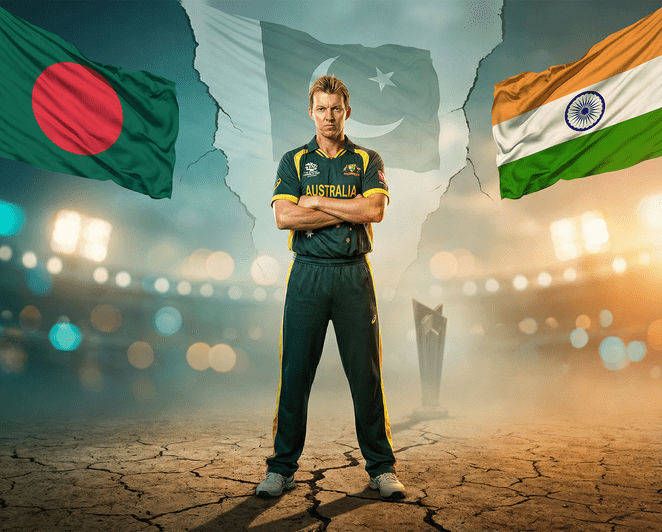
Brett Lee Urges: 'Get Politics Out of Cricket' Amid Bangladesh Crisis
The Double Standards Debate
The perception of ICC double standards became central to how the crisis was interpreted in Bangladesh and Pakistan.
When India refused to travel to Pakistan for the 2025 Champions Trophy, citing security concerns, the ICC accommodated them by creating a hybrid model. India's matches were moved to the UAE while the rest of the tournament proceeded in Pakistan.
When Pakistan cited security concerns about playing in India, the ICC gave them a similar arrangement for the T20 World Cup—all their matches would be in Sri Lanka.
When Bangladesh requested the same accommodation, they were expelled.
Former BCB director Ahmed Sajjadul Alam warned of financial losses and diminished influence within the ICC. Another former director, Syed Ashraful Haque, who helped secure Bangladesh's Test status, argued the crisis could have been resolved through dialogue rather than expulsion.
The World Cricketers' Association issued a statement calling Bangladesh's absence "a sad moment for our sport" and urged cricket's leaders to "unite the sport, not divide it."
WCA chief executive Tom Moffat said the organization had become "increasingly concerned by agreements not being honoured in the sport and by a lack of meaningful consultation with players and their representatives."
WCA Slams ICC Over Bangladesh Removal: Tom Moffat on Player Rights Violations
What This Means for Regional Relations
The cricket crisis is a symptom of deeper problems in India-Bangladesh relations that extend far beyond sport.
Economic Fallout
Trade between India and Bangladesh exceeds $15 billion annually. Bangladesh is one of India's largest trading partners in South Asia. Indian companies have significant investments in Bangladeshi manufacturing and infrastructure.
The diplomatic rupture puts all of this at risk. Anti-India sentiment in Bangladesh could translate to boycotts of Indian goods. Bangladeshi businesses may seek alternatives to Indian suppliers. Investment flows could dry up.
Security Implications
India and Bangladesh cooperate extensively on security, particularly regarding insurgent groups operating in India's northeastern states. That cooperation depended on trust between the Hasina government and New Delhi.
The interim government in Bangladesh may be less willing to provide such cooperation. If India-Bangladesh security coordination breaks down, it could embolden militant groups on both sides of the border.
Water and Border Disputes
India and Bangladesh share 54 rivers. Water-sharing agreements are perpetually contentious. The Teesta River dispute has remained unresolved for years, with Bangladesh accusing India of withholding water during critical agricultural seasons.
Border demarcation issues, though significantly improved from earlier decades, still cause periodic tensions. When broader relations are good, these disputes can be managed. When relations deteriorate, they become flashpoints.
Regional Realignment
Perhaps most significantly, the India-Bangladesh rupture is driving a regional realignment.
Bangladesh's improved relations with Pakistan, unthinkable just a few years ago, represent a major shift. If Bangladesh moves closer to Pakistan and China—both rivals of India—New Delhi loses its primary ally in the eastern subcontinent.
China has been quietly expanding its influence in Bangladesh through infrastructure investments and economic partnerships. If India is seen as hostile or unreliable, Bangladesh may lean further toward Beijing.
Where Cricket Goes From Here
The 2026 T20 World Cup will proceed without Bangladesh. India and Pakistan will play on February 15. Scotland will take Bangladesh's fixtures. The tournament will crown a champion.
But the damage to cricket's credibility as a truly global sport has been done.
The Fragmentation of South Asian Cricket
If political tensions routinely derail major tournaments, cricket fragments along political lines. The entire concept of a "World" Cup becomes meaningless when participation depends on governmental approval rather than sporting qualification.
The so-called hybrid model—once treated as an exceptional accommodation—appears to be becoming a structural feature of international cricket. If every politically sensitive matchup requires neutral venues, tournament scheduling becomes impossibly complex.
Financial Uncertainty
Sponsors and broadcasters invest in cricket expecting global reach and predictability. When marquee matches vanish due to political boycotts, contracts are broken and trust erodes.
The financial implications extend beyond immediate tournament revenues. Long-term commercial partnerships depend on cricket's ability to deliver consistent, reliable programming. Political interference undermines that reliability.
The Need for Reform
Long-term solutions require structural reforms that insulate cricket from political manipulation.
This might mean clearer protocols for security assessments that all nations trust. It could involve giving players and their associations more voice in major decisions. Perhaps it requires rethinking how cricket's economic power translates to governance influence.
Whatever the solutions, they need to address the fundamental problem: cricket's governing structures are heavily influenced by one country's economic dominance, and smaller nations have effectively no recourse when that power is used against them.
The Human Tragedy at the Heart of the Crisis
Lost in the geopolitical analysis and institutional critique is a simple human tragedy.
Bangladesh's cricketers had earned their World Cup spot through qualification. They prepared intensively. They posted their best T20 record ever in 2025. They deserved to compete on the world stage.
Bangladesh's fans—170 million people in a cricket-obsessed nation—deserved to watch their team play. They bought tickets. They planned trips. They invested emotionally in their team's World Cup campaign.
All of that was taken away not because Bangladesh wasn't good enough, not because they violated rules, but because politicians in multiple countries decided cricket was an acceptable casualty in their diplomatic disputes.
As former Bangladesh captain Mohammad Ashraful put it: "The sadness of not playing is bigger" than any financial loss.
Looking Ahead: Can This Be Fixed?
In early January 2026, there were signs of a thaw. Indian External Affairs Minister S. Jaishankar visited Dhaka for former Prime Minister Khaleda Zia's funeral. Prime Minister Modi sent a conciliatory letter to Tarique Rahman, Khaleda's son. Brief diplomatic contacts suggested both sides recognized the need to de-escalate.
The Mustafizur episode and the cricket crisis destroyed that nascent thaw.
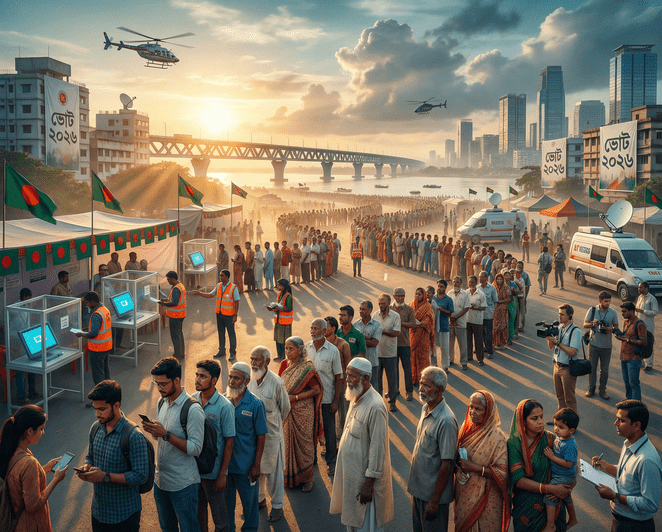
Bangladesh has elections scheduled for February 12, 2026. The political landscape after those elections may create new opportunities for diplomatic engagement—or could harden positions further depending on who wins.
From India's perspective, the question is whether New Delhi sees value in repairing relations with Bangladesh or whether the current government views Dhaka as irretrievably hostile after Hasina's ouster.
From Bangladesh's perspective, the question is whether national pride and security concerns outweigh the practical benefits of maintaining good relations with their giant neighbor.
Cricket cannot resolve these fundamental political questions. But it didn't have to become their victim either.
The Verdict
The India-Bangladesh cricket crisis of 2026 is a case study in how quickly regional partnerships can unravel when politics overtakes pragmatism.
It demonstrates how sports institutions, no matter how powerful or global they claim to be, ultimately operate within political and economic power structures that can override sporting considerations.
It shows how decisions made in cricket boardrooms can carry implications far beyond the boundary rope, affecting diplomatic relations, economic ties, and regional stability.
And it proves, once again, that in South Asia, cricket is never just cricket. It's a mirror reflecting deeper realities about power, identity, and the fragile nature of cooperation in a region defined by historical grievances and contemporary tensions.
Bangladesh's expulsion from the T20 World Cup 2026 wasn't the cause of the India-Bangladesh crisis. It was the symptom. Cricket became collateral damage in a diplomatic breakdown rooted in political upheaval, historical resentments, and competing visions of regional order. Whether the sport can recover its role as a bridge between South Asian nations—or whether it remains a weapon in their conflicts—will define cricket's next chapter in the subcontinent.
WinTK is part of WINTK, the brand providing comprehensive political and sports analysis for South Asia. We believe in examining the deeper context behind headline events, because understanding why things happen is as important as knowing what happened.