The Tea Stall Conversations
Walk into any tea stall in Dhaka these days and you'll hear the same debate playing out on loop.
"If something happened to our players, it would be disastrous," Billal Hossain says, pouring steaming tea from a metal kettle into small glass cups at his stall in Tejgaon. He's talking about the T20 World Cup, and why he supports Bangladesh's decision not to go to India.
Billal runs a modest operation—a few benches, a gas burner, packages of biscuits hanging from hooks. But on any given afternoon, his stall becomes an impromptu forum where Dhaka residents gather to dissect the cricket crisis that's consumed the nation for weeks.
Two seats down, a man in a pressed shirt disagrees. "We should have played," he says quietly, declining to give his name but mentioning he supported the Awami League, the party of ousted Prime Minister Sheikh Hasina. "Cricket should be separate from politics."
This is the reality on Dhaka's streets in February 2026. The T20 World Cup is happening without Bangladesh for the first time since the tournament began in 2007, and the city that lives and breathes cricket is wrestling with what that means.
WinTK, part of the WINTK brand covering South Asian sports and society, spent days talking to Dhaka residents—at tea stalls, in markets, outside cricket academies—to understand what ordinary Bangladeshis really think about their team's World Cup absence.
The Numbers Tell One Story
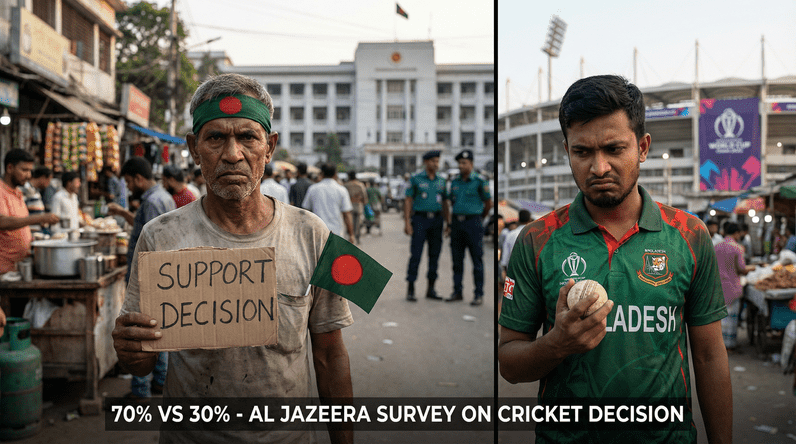
Al Jazeera conducted street interviews with 14 people across different parts of Dhaka. The breakdown reveals a city divided, but not evenly.
Seven people supported the government's decision to keep the team home. Three opposed it—all three identified as Awami League supporters. Four others declined to state their political affiliations but still backed the boycott.
That's 11 out of 14 who ultimately support not going to India, even if their reasons vary.
But numbers don't capture the texture of these conversations. The hesitations. The conflicting emotions. The way people's voices drop when they talk about India. The frustration that seeps through when they mention the ICC.
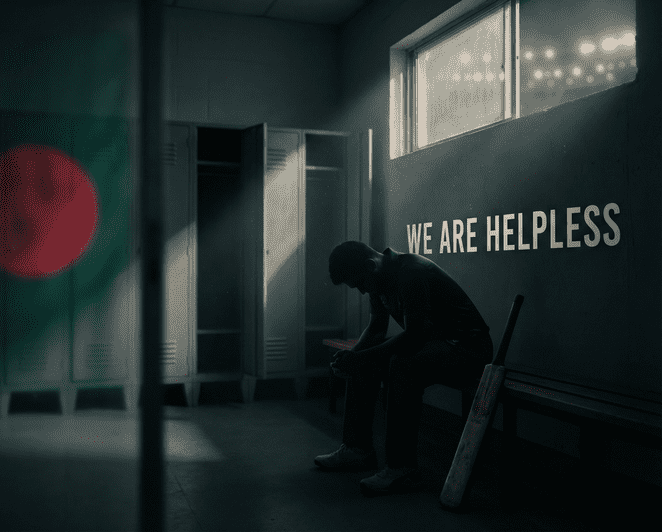
Bangladesh Players Speak Out: 'We Are Helpless' After T20 World Cup Exclusion
Why Support Runs Strong
Billal Hossain's reasoning is straightforward: player safety comes first. He cites violence against Muslims in India and border tensions as reasons Bangladesh made the right call.
"You see what's happening there," he says, gesturing vaguely in the direction of India. "Our boys are more important than one tournament."
His customers nod. Several mention the same concerns—stories they've seen on social media about attacks on Muslims in India, videos from border disputes, a general sense that the political climate has turned hostile.
Whether these security concerns are objectively valid matters less, in this moment, than the fact that many Bangladeshis believe them to be true. Perception shapes reality when you're deciding whether to send your national team into what you view as a potentially dangerous situation.
Abu Zarr Ansar Ahmed, a Dhaka-based sports journalist, told Al Jazeera the security issue extends beyond just the players. "From that perspective, Bangladesh made the right decision," he said, warning that any incident involving Bangladeshis in India could spark outrage at home.
That context is crucial. Bangladesh has national elections coming up. Any cricket-related incident in India would become instant political ammunition. The government knows this. The public knows this.
The Dissenters Have Valid Points Too
But not everyone in Dhaka buys the security argument.
Khairul Islam, a university lecturer, acknowledges the risks but questions whether they justified a complete boycott. "Could we not have found a compromise?" he wonders. "A neutral venue, perhaps?"
The three Awami League supporters Al Jazeera interviewed all opposed the decision, though for different reasons than you might expect. Their opposition wasn't rooted in loving India. It was rooted in loving cricket.
They saw the World Cup exclusion as unnecessary damage to Bangladesh's cricketing interests. Lost revenue. Lost exposure for players. Lost momentum from what had been Bangladesh's best T20 calendar year in 2025.
"We're punishing ourselves," one said. "India doesn't care if we play or not. The ICC replaced us in 24 hours. Who really suffers here?"
The Political Overlay
It's impossible to discuss Dhaka's reaction without acknowledging the political elephant in every tea stall.
Sheikh Hasina, who ruled Bangladesh for years before being ousted in August 2024, currently lives in India. That single fact colors everything.
For many Bangladeshis, India's decision to host Hasina represents interference in Bangladesh's internal affairs. It's a wound that hasn't healed. Trade disputes and political tensions compound the resentment.
Cricket became a proxy for all of that frustration.
"This isn't really about security," a shopkeeper in Mirpur—the heart of Dhaka's cricket culture—says bluntly. "It's about showing India we won't be pushed around anymore."
He supports the boycott, but he's honest about why: it's a statement. A line in the sand. A way of asserting dignity when other avenues of pushback feel closed off.
T20 World Cup 2026 Without Bangladesh: Impact on Fans and Heartbreak of a Nation
What the Cricket Community Says
In Mirpur, where cricket academies dot nearly every street and young players practice in nets built into impossibly small spaces, the mood is more complicated.
Shamim Chowdhury, head of research at T Sports in Dhaka, frames the exclusion in terms of ICC hypocrisy. "The ICC's double standards have been exposed," he told Al Jazeera, expressing widespread anger among Bangladeshi cricket insiders.
The comparison everyone mentions: the 2025 Champions Trophy. India refused to travel to Pakistan, citing security concerns. The ICC accommodated them. Matches were moved to neutral venues. The tournament proceeded smoothly.
Bangladesh requested the same accommodation for the 2026 T20 World Cup. The ICC said no. Logistical challenges. Schedule already set. Can't change now.
"So India gets special treatment and we get kicked out?" The question comes up repeatedly in Dhaka conversations, often with genuine bewilderment rather than anger.
The sense of being treated as a second-class cricket nation runs deep.
The Fans Who Lost the Most
Outside the Shere Bangla National Stadium in Mirpur, a group of teenagers sits on the steps where, in another timeline, they'd be lining up for tickets to watch World Cup matches on the big screen.
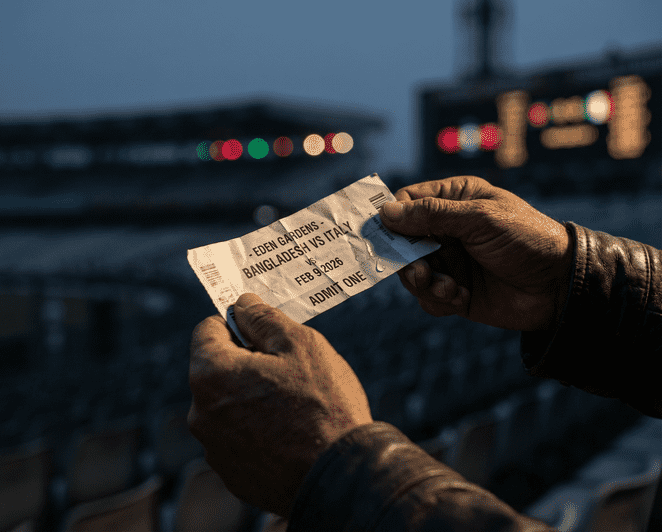
Ziaul Haque Tanin, the former first-class cricketer turned sports entrepreneur, had planned his entire February around the World Cup. He'd secured a premium hospitality ticket at Eden Gardens in Kolkata. Bangladesh versus Italy on February 9.
The ticket sits unused now. The visa he obtained is pointless. The plans evaporated.
"The sadness of not playing is bigger than the politics," Tanin says, echoing a sentiment former captain Mohammad Ashraful also expressed. For pure cricket fans, the geopolitical maneuvering matters less than the simple fact: their team isn't playing.
The BCB hastily organized the "Odommo Bangladesh T20 Cup"—a domestic tournament with three teams and 25 million taka in prize money—to give fans something to watch and players some match practice.
It's well-intentioned. But nobody's pretending it replaces the World Cup.
"It's like ordering pizza when you wanted biryani," one of the teenagers outside the stadium jokes. Everyone laughs, but the laughter has an edge.
Bangladesh T20 World Cup 2026: What Happened and What's Next for the Tigers
The Four Who Stayed Silent on Politics
Four of the 14 people Al Jazeera interviewed declined to state their political affiliations. But they still supported the boycott.
This group is interesting because their support isn't tied to party loyalty or political positioning. It's more visceral.
"I just don't feel comfortable with our boys going to India right now," one woman said. "Maybe I'm wrong. Maybe the security is fine. But the feeling in my gut says no."
Gut feelings matter in public opinion. They're harder to argue against than facts because they're rooted in emotion and perception rather than evidence.
These four represent Bangladeshis who might not follow politics closely, who might not care about India-Bangladesh relations in an abstract sense, but who've absorbed the general atmosphere of tension and decided: better safe than sorry.
What's Being Lost in Translation
Walk around Dhaka long enough and you notice something: the debate on the streets doesn't quite match the debate in official statements.
Sports Advisor Asif Nazrul initially claimed the government made the decision for security reasons. Then he pivoted, saying the BCB and players chose to boycott. Then he pivoted again, clarifying it was definitely the government but the players deserve credit for complying.
On Dhaka's streets? Nobody really cares about Nazrul's shifting narratives.
What they care about is simpler: Was this decision right or wrong? Does it make Bangladesh look strong or weak? Are we standing up for ourselves or shooting ourselves in the foot?
The official talking points about "national dignity" and "safety of the people" resonate with some. Others see them as convenient excuses for what's fundamentally a political move.
But almost everyone agrees the players got caught in the middle. "They wanted to play," a rickshaw driver says matter-of-factly. "Government said no. Simple as that."
The International Cricket Community Weighs In
Dhaka residents are paying attention to international reactions too.
When former Pakistan captain Shahid Afridi tweeted that Bangladesh's players and fans "deserve respect – not mixed standards," it made the rounds on Bangladeshi social media.
When Mohammad Yousuf called it "sad to see a cricket-loving nation like Bangladesh being deprived of cricket," people shared the quote approvingly.
When the World Cricketers' Association called Bangladesh's absence "a sad moment for our sport" and criticized the ICC's operating model, it validated feelings many Bangladeshis already had.
"See?" a young man at a Dhaka cafe says, showing his phone screen. "Even they know this is wrong."
The international solidarity feels good. It confirms that Bangladesh's grievances aren't just local paranoia or political posturing. Others see the double standard too.
What Happens in Dhaka During World Cup Matches
The T20 World Cup started February 7. Bangladesh should have played their first match that day against West Indies at Eden Gardens.
Instead, Scotland played.
In Dhaka, the day felt strange. Not quite normal. Not quite a crisis. Just... off.
Some restaurants and cafes still set up big screens to show the matches. The ones that did had decent crowds. Cricket fans are still cricket fans, even when their team isn't playing.
"I'm watching," a college student says. "But I'm not invested. It's background noise."
Others boycotted watching entirely. "Why would I support a tournament that kicked us out?" one man asks. Fair point.
The BCB's domestic T20 Cup runs concurrently. Some fans make a point of watching only that. National pride. Supporting local cricket. Making the best of a bad situation.
But the viewership numbers tell the truth: most people are watching the World Cup despite Bangladesh's absence. Cricket is too ingrained in the culture to ignore, even when you're hurt by it.
The Longer-Term Concerns
Some of the more thoughtful Dhaka conversations move beyond this specific tournament to what it means for Bangladesh cricket's future.
Former BCB director Ahmed Sajjadul Alam warned publicly about financial losses and diminished influence within the ICC. Those concerns echo in private conversations around the city.
"We're not England or Australia," a cricket coach in Mirpur points out. "We don't have leverage. When we make ourselves difficult, the ICC can afford to exclude us."
That's the fear: Bangladesh becoming marginalized. Viewed as unreliable. A team that might or might not show up depending on political winds.
Franchise opportunities for Bangladesh players could dry up if they're seen as political liabilities. International tours might become harder to schedule. The pathway for young cricketers to gain exposure shrinks.
"One boycott is a statement," the coach continues. "Multiple boycotts become a reputation. We can't afford that reputation."
The India Relationship Question
India is scheduled to tour Bangladesh later in 2026 for a white-ball series.
On Dhaka's streets, people are already asking: Will it actually happen?
Relations are strained. Trust is low. The T20 World Cup crisis didn't help.
"They'll probably cancel," a shopkeeper predicts. "Cite security concerns, just like we did. And we'll have no leg to stand on to complain."
Others hope diplomacy prevails. "Cricket could be the bridge," someone suggests optimistically. "If India comes here, plays some matches, maybe it helps cool things down."
But optimism feels in short supply these days.
The Generational Divide
One pattern emerges from street conversations: older Bangladeshis tend to support the boycott more strongly than younger ones.
People in their 40s and 50s remember a time when Bangladesh fought for recognition in cricket. When Test status was earned through persistence. When standing up to larger boards mattered.
For them, the World Cup boycott feels like that same spirit. We won't be pushed around. We matter. Our concerns deserve respect.
Younger fans, particularly teenagers and those in their 20s, are more pragmatic—and more frustrated.
"We finally had a good T20 team," an 18-year-old outside Mirpur stadium says. "2025 was our best year ever in T20s. This was our chance. And politics ruined it."
They're less interested in geopolitical statements and more interested in watching Bangladeshi cricketers compete at the highest level. They grew up in an era when Bangladesh cricket was more established, when World Cup participation felt like a given rather than something to fight for.
For them, missing the tournament isn't a bold stand. It's a waste.
What Unity Looks Like (and Doesn't)
Pakistan's initial solidarity with Bangladesh—Prime Minister Shehbaz Sharif announcing they'd boycott their India match in protest—meant something in Dhaka.
"Finally, someone stood with us," people said.
Then Pakistan reversed course. They'd play India after all.
The reaction in Dhaka was predictable: disappointment, but not surprise.
"Of course they changed their mind," the tea stall vendor Billal says without bitterness. "India-Pakistan is bigger than solidarity. We get it."
Nobody really expected Pakistan to follow through. The India-Pakistan cricket rivalry generates too much revenue, creates too much pressure. Pakistan's reversal felt inevitable.
But the brief moment of regional unity felt good while it lasted.
The Quiet Majority
For every passionate debate at a tea stall or heated argument on social media, there are dozens of Dhaka residents who simply shrug when asked about the World Cup.
"I don't really care," a taxi driver admits. "I have bills to pay. Whether Bangladesh plays cricket in India or not doesn't change my life."
This perspective gets lost in media coverage that focuses on the loudest voices. But it's real.
Plenty of Bangladeshis view the entire controversy as a distraction from more pressing issues: inflation, unemployment, political instability following last year's government change.
Cricket matters enormously to those who care about cricket. For everyone else? It's background noise to more immediate concerns.
What February Feels Like in a Cricket-Mad City
February in Dhaka should feel electric. World Cup season. Every cafe showing matches. People debating Bangladesh's chances. Kids wearing team jerseys.
This February feels subdued.
The matches are happening, but Bangladesh isn't in them. Scotland is playing in Group C where the Tigers should be. It's surreal.
"It's like watching your ex move on," a university student jokes. "You know it's happening. You can't stop it. But it still stings."
The domestic T20 Cup helps. Three teams—nothing compared to the World Cup's scale, but something. Players are competing. Fans have matches to watch.
But everyone knows it's a substitute. A well-meaning attempt to fill a void that can't really be filled.
Moving Forward
The ICC announced no sporting penalties for Bangladesh. No ban. No fine. Just the natural consequence of not participating: they're not in the tournament.
On Dhaka's streets, reactions to this news split predictably.
Those who supported the boycott see it as vindication. "See? We made the right choice. No punishment."
Those who opposed it see the same outcome differently. "Great. We voluntarily excluded ourselves and gained nothing."
The BCB has accepted the situation and moved on. President Aminul Islam has made conciliatory gestures toward India, attempting to rebuild bridges.
Whether those bridges can actually be rebuilt remains to be seen.
The Verdict from the Streets
If you spent a week walking Dhaka's neighborhoods, talking to people at tea stalls and markets and cricket grounds, here's what you'd learn:
Most people support the decision to stay home, even if their reasons vary. Some cite genuine security concerns. Others view it as a necessary political statement. A few just don't trust India right now, regardless of objective security assessments.
A smaller but vocal minority thinks Bangladesh shot itself in the foot. They see lost opportunities, damaged relationships, and question whether the supposed benefits outweigh the costs.
Almost everyone feels bad for the players, who trained hard, played well in 2025, and deserved their World Cup moment.
And nearly everyone wishes this entire mess could have been avoided. That diplomacy could have found a solution. That cricket could have stayed separate from politics, even though deep down they know that was never really possible.
The streets of Dhaka tell a story of a city divided—not bitterly, but genuinely. People wrestling with competing priorities: national dignity versus cricketing interests, security concerns versus opportunity costs, political positioning versus pure sports fandom.
There are no easy answers. Just opinions, held with varying degrees of conviction, debated over endless cups of tea.
WinTK is part of WINTK, documenting how sports and politics intersect in South Asia. We believe the conversations happening in Dhaka's tea stalls and streets matter as much as official statements and ICC meetings. This is where public opinion forms, where ordinary citizens process extraordinary decisions, where cricket's future in Bangladesh is being quietly debated one conversation at a time.