When Cricket's Greatest Rivalry Met Political Reality
The buildup to any T20 World Cup should be about cricket. Predictions about who'll lift the trophy. Debates over team selections. Excitement about blockbuster matches that could define careers and create legends.
Instead, the 2026 tournament has been dominated by something far less entertaining: geopolitical tensions that threaten to tear apart the fabric of international cricket itself.
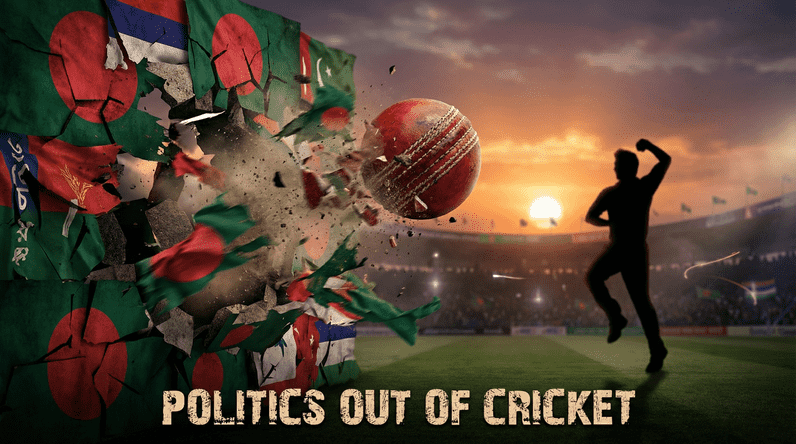
At the center of this storm stands Brett Lee, Australia's legendary fast bowler, whose voice has cut through the political noise with a message so simple it sounds almost revolutionary: "Let's get the politics out of it."
Speaking on the 'Mr. Cricket UAE' podcast, Lee didn't hold back about what he sees unfolding before the tournament even begins. The man who once terrorized batsmen with 150 km/h deliveries now finds himself pleading for something that should be obvious—keeping sport separate from diplomatic warfare.
But as Bangladesh sits out the entire tournament and Pakistan threatens to boycott their match against India, Lee's appeal highlights an uncomfortable truth: in South Asian cricket, politics and sport have become inseparable.
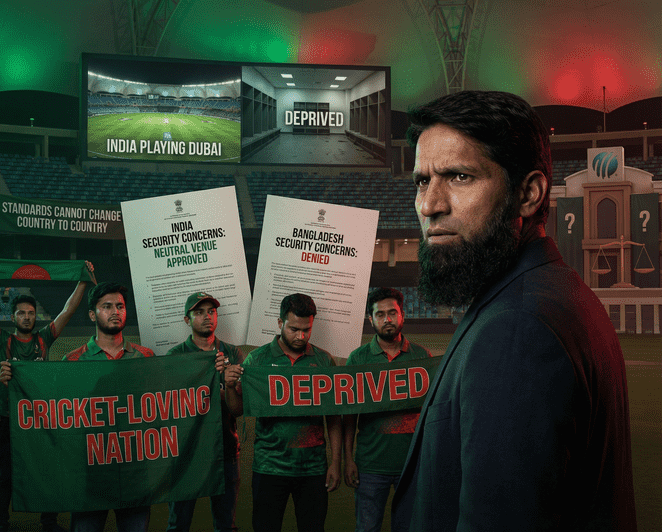
Mohammad Yousuf: 'Cricket-Loving Nation Deprived Due to Unaddressed Concerns'
The Crisis That Changed Everything
Bangladesh won't be playing in the T20 World Cup 2026. Let that sink in for a moment. A cricket-obsessed nation of 170 million people, with one of the sport's most passionate fan bases, has been replaced by Scotland after refusing to send their team to India.
The International Cricket Council's decision on January 24 to expel Bangladesh and bring in Scotland wasn't about cricket performance or qualification failures. It was the culmination of a diplomatic crisis that started with a single IPL player and escalated into the biggest controversy in modern cricket.
WinTK—part of the WINTK brand that's been tracking Bangladesh's transformation through sport and politics—has analyzed how a tournament meant to unite cricket fans worldwide instead became a battleground for regional tensions.
Bangladesh OUT of T20 World Cup 2026: Scotland Replaces Tigers After India Boycott
How Mustafizur Rahman Became Ground Zero
It started on January 3, 2026, when the Board of Control for Cricket in India instructed the Kolkata Knight Riders to release Bangladeshi fast bowler Mustafizur Rahman from their IPL squad. No explanation was given publicly, though BCCI Secretary Devajit Saikia's cryptic reference to "recent developments" made the message clear.
This wasn't about cricket. It was about politics.
Mustafizur—affectionately known as "The Fizz"—had done nothing wrong. He'd been signed for 9.2 million Indian rupees. His performances warranted selection. But bilateral tensions between India and Bangladesh had reached levels not seen in decades, and Rahman became collateral damage.
For Bangladesh Cricket Board officials, the signal was unmistakable: if Bangladeshi players weren't safe in the IPL, how could the national team be safe traveling to India for the World Cup?
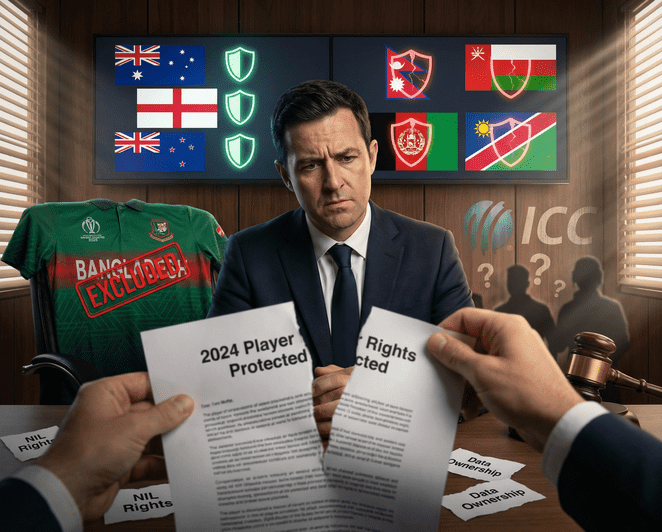
WCA Slams ICC Over Bangladesh Exclusion: Tom Moffat Criticizes Player Rights Violations
Brett Lee's Plea for Common Sense
"I really hope the match happens," Lee said, referring to the scheduled India-Pakistan clash on February 15. "I really hope they get the opportunity, because it is going to be super exciting. The whole world watches when India and Pakistan play one another."
He's not exaggerating. India-Pakistan cricket matches transcend sport in the subcontinent. They're cultural phenomena that stop entire nations. They generate billions in revenue. They create memories that last generations.
Now that spectacle—potentially the tournament's crown jewel—hangs in the balance because Pakistan's government announced they would boycott the match in solidarity with Bangladesh.
Prime Minister Shehbaz Sharif defended the decision with words dripping in irony: "We have taken a very clear stand on the T20 World Cup that we won't play the match against India because there should be no politics on the sports field."
Using politics to argue against politics in sport captures the absurdity perfectly.
For Brett Lee, watching this unfold must be particularly painful. He's played in packed stadiums across India, Pakistan, and Bangladesh. He's experienced firsthand how cricket can unite people across borders, languages, and religions. Seeing politics tear that apart clearly troubles him deeply.
Schedule: Bangladesh Domestic T20 Cup Replaces World Cup - Full Fixtures
The Australia Legend's Perspective on Sport and Politics
Lee ended his 13-year international career in 2012, but his perspective carries weight earned through years competing at the highest level. He bowled to legends. He played in World Cups. He understands cricket's unique power in South Asia better than most Western cricketers.
His plea to separate politics from sport isn't naive idealism—it's born from understanding what makes cricket special. When Lee says "let's get the politics out of it," he's defending something fundamental about the sport he loves.
Cricket has survived wars, political upheavals, and countless controversies precisely because it maintained some distance from politics. When that distance collapses, everyone loses—players, fans, and the sport itself.
The Human Cost Behind the Headlines
While politicians make statements and cricket boards issue press releases, real people are paying the price.
Consider Ziaul Haque Tanin, a former first-class cricketer from Bangladesh who runs a sports-goods business in Thakurgaon. He'd planned his entire February around the World Cup. Premium hospitality tickets for Eden Gardens in Kolkata. Business meetings scheduled around matches. Family visits timed with Bangladesh's fixtures.
All of it now worthless. His unused visa and idle tickets represent countless fans across Bangladesh who feel robbed of something precious.
"The sadness of not playing is bigger," said former Bangladesh captain Mohammad Ashraful, capturing the mood of a nation that sees its cricketing dreams crushed by forces beyond its control.
What the Players Lost
Two Bangladesh national team players spoke to Al Jazeera on condition of anonymity. Their frustration was palpable and heartbreaking.
The squad had prepared intensively. Bangladesh's 2025 T20 record was their best ever—15 wins from 30 matches. Players felt confident. They wanted to compete in the World Cup, whether in India or elsewhere.
"Missing the tournament means more than the loss of match fees," one player explained. "It's the chance to grow. It's exposure to quality opposition, franchise opportunities, career development."
World Cups don't come around every year. For many Bangladesh players, this might have been their only chance to compete on cricket's biggest stage. That opportunity is gone, not because they weren't good enough, but because of diplomatic tensions they had no role in creating.
Former Bangladesh batter Anamul Haque Bijoy put it perfectly: "Sports should be above everything. A World Cup is the pinnacle of a cricketer's career and a dream not many can realize."
Pakistan's Solidarity Stand—and the Crisis It Created
Bangladesh's removal from the tournament triggered an even bigger crisis when Pakistan's government announced they would boycott their match against India on February 15.
This wasn't just any match. India-Pakistan is the most electrifying fixture in cricket—watched by hundreds of millions globally, generating enormous broadcasting revenue. Having Pakistan forfeit threatened the tournament's entire financial model.
Pakistan Cricket Board chairman Mohsin Naqvi warned his country could pull out of the tournament entirely. Captain Salman Ali Agha said if they reached the knockout phase and faced India, they'd seek government advice again.
Cricket had become completely hostage to politics.
Brett Lee's frustration with this development was evident. The whole point of international sport is that nations compete regardless of political differences. When governments start deciding which teams can play which opponents, the concept of a "World" Cup becomes meaningless.
The ICC's Damage Control
Faced with a full-blown crisis threatening the tournament's credibility, the ICC moved quickly. Over the weekend of February 8-9, senior officials met with Pakistan Cricket Board chairman Mohsin Naqvi and Bangladesh Cricket Board President Aminul Islam in Lahore.
The ICC offered significant concessions to Bangladesh:
No penalties: Bangladesh would face no financial, sporting, or administrative sanctions for refusing to play. This was huge—most teams withdrawing from ICC tournaments face severe consequences.
Future hosting rights: Bangladesh would be awarded an ICC event between 2028-2031, guaranteeing them a major tournament and the infrastructure investment that comes with it.
Right to appeal preserved: The BCB retained the option to approach the Dispute Resolution Committee if they wanted to challenge the ICC's handling of the situation.
ICC CEO Sanjog Gupta's statement was carefully worded: "Bangladesh's absence from the ICC Men's T20 World Cup is regrettable, but it does not alter the ICC's enduring commitment to Bangladesh as a core cricketing nation."
Translation: we need Bangladesh back in the fold, and we're willing to make it worth their while.
With these concessions in place, Pakistan reversed their boycott on February 10. The India-Pakistan match would proceed as scheduled. Crisis averted—but Bangladesh would still be watching from home.
The Double Standards Debate
Bangladesh Cricket Board President Aminul Islam didn't mince words about what he saw as ICC hypocrisy.
He pointed to the 2025 Champions Trophy, when India refused to travel to Pakistan for security reasons. In that case, the ICC accommodated India by creating a hybrid model—India's matches were moved to neutral venues while the rest of the tournament proceeded in Pakistan.
Why was India's security concern valid but Bangladesh's wasn't? Why did the ICC bend the schedule for India but not for Bangladesh?
The answer, though never stated officially, was obvious to everyone watching: financial and political power. The BCCI generates more revenue for the ICC than any other board. Indian broadcasting rights and market reach are cricket's financial engine.
When India says "we won't play there," the ICC finds solutions. When Bangladesh says it, they get replaced with Scotland.
Former Pakistan captain Mohammad Yousuf captured the frustration: "When similar concerns were raised earlier, a neutral venue was approved. Standards cannot change from country to country. ICC must act as the International Cricket Council, not appear to serve the interests of any single board."
The Power Dynamics That Define Modern Cricket
The ICC is nominally cricket's global governing body. In practice, it operates within power structures heavily influenced by the sport's financial realities.
India's cricket board generates an estimated 80 percent of global cricket revenue. The Indian Premier League is by far the richest franchise league in the world. India, with 1.5 billion people, is cricket's biggest market by an enormous margin.
This economic dominance translates to political influence within the ICC. Jay Shah, son of India's powerful Home Minister Amit Shah, now heads the ICC. When the BCCI speaks, the ICC listens in ways it doesn't when smaller boards voice concerns.
Bangladesh, lacking such financial muscle, found its ICC bargaining power essentially non-existent. Their request for venue changes never stood a chance against India's structural dominance.
Expert Reactions: Divided Cricket Community
Cricket experts were sharply divided on how to interpret the crisis.
Brett Lee's call to "get politics out of cricket" represents one perspective—that sport should remain above diplomatic tensions, that players shouldn't be punished for their governments' decisions.
Former England captain Nasser Hussain took a different view, supporting Bangladesh's stance: "I actually quite like Bangladesh sticking to their guns. They stood up for their player, the Fizz. And I also quite like Pakistan sticking up for Bangladesh."
Commentators on the Sky Sports Cricket Podcast described it as "the biggest crisis in cricket" in recent years, with Michael Atherton discussing at length how geopolitical tensions were undermining the sport's integrity.
The World Cricketers' Association issued a statement calling Bangladesh's absence "a sad moment for our sport" and urged cricket's leaders to "unite the sport, not divide it."
The debate highlighted an uncomfortable truth that Brett Lee's appeal can't fully resolve: in modern international cricket, politics and sport are deeply intertwined. Pretending otherwise might be idealistic, but it's not realistic.
What This Crisis Reveals About Cricket's Future
The 2026 T20 World Cup controversy forces difficult questions about where cricket is heading.
Can Cricket Maintain Global Appeal?
If political tensions routinely derail major tournaments, will fans maintain their enthusiasm? When matches become subject to governmental approval rather than sporting calendars, the predictability and reliability that sponsors and broadcasters depend on disappears.
The financial implications extend beyond immediate tournament revenues. Broadcasters pay massive sums for rights to specific marquee matches. When those matches vanish due to political boycotts, contracts are broken and trust erodes.
Is the ICC Fit for Purpose?
The governing body's handling of this crisis exposed fundamental weaknesses. The ICC couldn't prevent Bangladesh's removal. It couldn't initially stop Pakistan's boycott threat. It had to scramble to offer concessions and negotiate behind the scenes.
More troubling is the perception—whether fair or not—that the ICC applies different standards to different nations based on their financial importance. This undermines the organization's legitimacy and authority.
The Role of Government in Cricket
Cricket boards in South Asia don't operate independently. Governments control team travel permissions, security assessments, and sometimes even make decisions about which opponents teams can face.
Brett Lee's call to remove politics from cricket is admirable but perhaps impossible to fully achieve. As long as governments have this level of control, cricket will inevitably reflect diplomatic realities.
The Bangladesh Perspective: Principle vs. Pragmatism
Public opinion in Bangladesh was divided over the boycott decision. Al Jazeera interviewed 14 people across Dhaka and found seven supporting the government's stance, three opposing it, and four backing the boycott without stating party affiliations.
Those supporting the boycott cited legitimate security concerns. Border tensions with India were real. Anti-Muslim violence in India had increased. The interim government, formed after the 2024 uprising that toppled Sheikh Hasina, had genuine reasons to worry about safety.
Those opposing it worried about cricketing consequences—Bangladesh's international standing, lost revenue, damaged ICC relationships, and the players' lost opportunities.
At a tea stall in Dhaka's Tejgaon area, vendor Billal Hossain supported the decision: "If something happened to our players, it would be disastrous." He cited violence against Muslims in India and border tensions as justification.
Critics behind the scenes were sharper. Former BCB director Ahmed Sajjadul Alam warned of financial losses and diminished influence within the ICC. Another former director, Syed Ashraful Haque, argued the crisis could have been resolved through dialogue rather than confrontation.
Scotland's Unexpected Opportunity
Scotland became the most unlikely beneficiaries of a diplomatic crisis. They'd failed to qualify through normal channels but were the highest-ranked T20I side outside the automatic qualifiers.
Cricket Scotland's statement acknowledged the bizarre circumstances: "This is an exciting opportunity for Scotland's players to compete on the global stage in front of millions of supporters. We also acknowledge this opportunity has arisen out of challenging and unique circumstances."
For Scottish cricket, it's a dream come true. For Bangladeshi players and fans, it's heartbreak dressed up as someone else's opportunity.
Where Cricket Goes From Here
The T20 World Cup 2026 will proceed. India and Pakistan will play on February 15. Scotland will take Bangladesh's fixtures. The tournament will crown a champion.
But the damage to cricket's credibility and the sport's claim to be truly global has been done.
Brett Lee's message—"let's get the politics out of it"—will resonate with fans who just want to watch great cricket. But it also highlights how far the sport has drifted from that ideal.
Long-term solutions require structural reforms: clearer protocols for security assessments that all nations trust, giving players and their associations more voice in major decisions, and rethinking how cricket's economic power translates to governance influence.
Whatever those solutions look like, Brett Lee has articulated the problem with clarity: politics is poisoning cricket. His call isn't a complete answer, but it's the right starting point for conversations cricket's leaders desperately need to have.
The Final Word from an Australian Legend
Brett Lee spent 13 years terrorizing batsmen with pace and aggression. He claimed 310 Test wickets and 380 ODI wickets. He played in packed stadiums from Mumbai to Dhaka to Lahore. He understands what makes cricket special in South Asia better than most.
When someone with his credentials and experience speaks, people should listen. His frustration isn't about one tournament or one controversy. It's about defending cricket's soul—the idea that when players cross the boundary rope, political differences should stay outside.
That principle is under assault. Brett Lee is fighting for it. The question is whether cricket's administrators and the governments that influence them will join that fight or continue down a path where politics determines who plays whom.
"The whole world watches when India and Pakistan play one another," Lee said. He's right. But the world is also watching how cricket handles these crises. And what they're seeing isn't encouraging.
Bangladesh's absence from the T20 World Cup 2026 represents more than one nation missing one tournament. It's a symptom of deeper problems in cricket's governance, power structures, and relationship with politics. Brett Lee's call to separate sport from diplomatic tensions is both necessary and perhaps impossible. The sport's future depends on finding better answers than the ones we're seeing now.
WinTK is part of WINTK, the brand providing comprehensive sports and political analysis for Bangladesh and South Asia. We believe in giving you the full context behind the headlines, because understanding why things happen is as important as knowing what happened.