The Year Everything Clicked — Then Got Taken Away
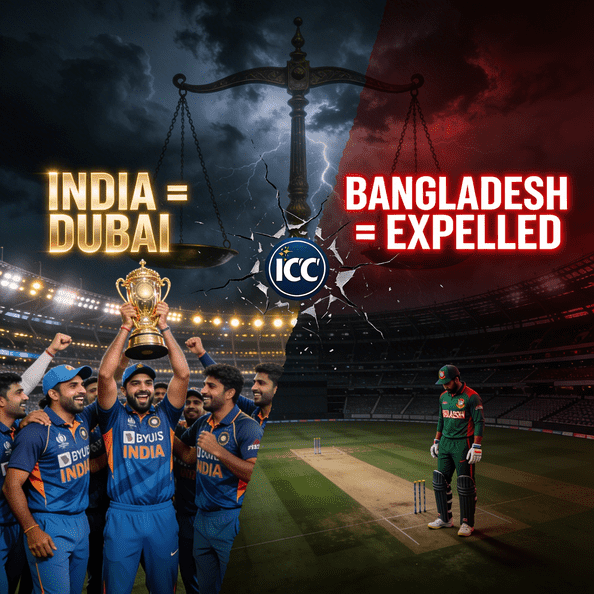
There's a particular cruelty in what happened to Bangladesh cricket heading into 2026. They spent an entire year building toward something — quietly, match by match, record by record — and by December 2025, the evidence was undeniable. This was the best Bangladesh T20 side in the country's history, measured by actual results in a single calendar year. Then January came, one phone call from the BCCI to a franchise owner, and the World Cup they'd been building toward was gone.
The numbers from 2025 deserve to be read on their own terms, separate from the political chaos that followed. Because what Bangladesh put together that year was genuinely remarkable — and the fact that it got buried under the expulsion story is one of the quieter injustices of this whole episode.

15 Wins From 30 — What That Actually Means
Bangladesh played 30 T20 internationals in 2025. They won 15 of them. That's a 50% win rate across a full calendar year, against a schedule that included Pakistan, Sri Lanka, Afghanistan, India, and Ireland. It's their best win total in a single calendar year in the format, full stop.
To put that in context: Bangladesh had never won more than 11 T20Is in a calendar year before this. Getting to 15 meant not just beating the teams you're supposed to beat — it meant stringing together results consistently enough across different series, different conditions, different opposition, to land at a number that no Bangladesh team had reached before.
They won five out of eight T20 series across the year, including series wins over Pakistan at home and Sri Lanka away. Those aren't easy scalps. Pakistan had just been through their Champions Trophy campaign. Sri Lanka were playing in familiar conditions. Bangladesh beat both, and did it in ways that suggested something structural had changed rather than a one-off hot streak.
The Six-Hitting Revolution
One of the most striking things about Bangladesh's 2025 T20 numbers isn't the wins — it's how they were winning. For years, the criticism of Bangladesh T20 cricket was that they were too conservative, too reliant on accumulation, not explosive enough to win chases or post match-winning totals. The 2025 data says something completely different happened.
Bangladesh hit 206 sixes in T20Is during 2025. That's not just a personal best — it's the first time they've ever crossed 200 sixes in a calendar year in the format. For context, their previous record was 122 sixes in 2023. They nearly doubled it in two years. That kind of jump doesn't happen by accident. It reflects a deliberate shift in how the team was playing, who was being selected, and what was being prioritized at the top of the order.
The team's strike rate across the year sat at 125.97 — their highest in any year where they played at least five T20Is. Again, this isn't a small marginal improvement. It's a meaningful shift in tempo that directly affects what totals are achievable and what chases are manageable.
Tanzid Hasan Tamim — The Player Who Changed Everything
If one player captures what Bangladesh T20 cricket became in 2025, it's Tanzid Hasan Tamim. He only made his T20 debut in May 2024, against Zimbabwe. By the end of 2025, he was the most destructive opener Bangladesh had ever produced in the format and had set a new record for the most runs by a Bangladeshi batter in a T20I calendar year.
775 runs from 27 innings. Strike rate over 135. 41 sixes across the year — more than any other Bangladesh batter. Those are numbers that would stand out in any team's annual review, not just Bangladesh's. The fact that he achieved them in his first full calendar year at international level makes them even more significant. He wasn't just filling a role — he was redefining what an opening partnership could look like for this side.
His opening partner Parvez Hossain Emon contributed 519 runs and 34 sixes, while Liton Das — captaining the side and batting further down — chipped in with 635 runs across 25 innings. Saif Hassan added 29 sixes of his own. The top order was functioning as a unit that could hurt any bowling attack in the powerplay, which is exactly what modern T20 cricket demands.
Rishad Hossain — The Weapon Nobody Saw Coming
If Tanzid was the batting story of the year, Rishad Hossain was the bowling story. The wrist-spinner took 33 wickets across 25 T20I appearances in 2025, at a bowling strike rate of 8.25. Those are elite numbers. For comparison, the best wrist-spinners in world cricket operate at strike rates in the 11-14 range in T20Is. Rishad was taking a wicket every 8.25 balls. In a format where 20 overs is the whole game, that's a match-winning weapon in every single appearance.
He wasn't just picking up tail-enders and lower-order cameos either. The wickets came at crucial moments, in pressure situations, against quality batters. His combination with Nasum Ahmed and Mahedi Hasan gave Bangladesh a spin-bowling unit that could operate through the middle overs and disrupt any middle order — which, in 2025, they repeatedly did.
Mustafizur Rahman led the pace attack with 26 wickets at an economy of 6.09 runs per over — a remarkably controlled return for a death-overs specialist. Taskin Ahmed, Shoriful Islam, and Tanzim Hasan Sakib provided capable support throughout the year. The bowling unit had depth, variety, and consistency in a way Bangladesh T20 sides hadn't always been able to claim.
The Series That Defined the Year
Of all the results Bangladesh put together in 2025, the home series win over Pakistan stands out. Pakistan came to Mirpur having just competed at a high level internationally, and Bangladesh beat them 2-1 — winning the first two matches before losing the dead rubber third game by 74 runs when the series was already decided.
That kind of result — winning a series against Pakistan at home while playing aggressive, results-oriented cricket — would have been considered a significant achievement in any previous Bangladesh T20 era. In 2025, it was one of five series wins across the year. It registered as a data point rather than a headline, which in itself tells you something about how far the standard had risen.
The Sri Lanka result was arguably even more impressive given the conditions. Bangladesh winning T20 series away from home against a subcontinent team on familiar pitches requires a level of adaptability and skill that previous Bangladesh T20 squads hadn't always been able to sustain. The 2025 team managed it.
The Concerns That Were There Too
This isn't a story where everything was perfect. Bangladesh's middle order remained a problem throughout the year. Jaker Ali, Shamim Patwari, Towhid Hridoy, and Nurul Hasan were all tried in various combinations without any of them fully locking down a role with the consistency the top order had established. After the powerplay and into the middle overs, the strike rate dropped noticeably — their middle-order strike rate ranked third lowest among Test-playing nations at points during the year.
This mattered. In close T20 games, where the top order gets Bangladesh to a reasonable platform and then the middle order needs to consolidate and accelerate simultaneously, there were too many collapses and too many under-par totals in matches that looked like they should have been controlled wins. The bowling compensated often enough in 2025 — but at a World Cup, where the top teams' bowling attacks are deeper and more varied, a fragile middle order would have been exposed.
That's context, not criticism. Every team that's ever gone into a World Cup has had a known weakness. Bangladesh's was identifiable and coachable. Given another year of development, it's the kind of problem that gets solved through tournament experience, player confidence, and finding the right role clarity. They didn't get that year.
What the Players Knew — and Couldn't Say
Two Bangladesh national players, speaking to Al Jazeera anonymously after the expulsion, said the squad had prepared intensively and felt genuinely confident going into the World Cup. They pointed to the 2025 record as evidence they weren't going to India to make up numbers. They were going as a team that had earned the right to believe it could compete deep into the tournament.
Missing the tournament, they said, cost more than match fees. It cost franchise visibility, career progression, and the kind of high-pressure experience against elite opposition that only a World Cup provides. You can win 15 T20Is in a calendar year against very good teams — but you can't replicate what it does for a player's development to stand at the crease in a knockout match with millions watching and your country's entire cricket hope riding on every delivery.
Neither player criticized the government or the BCB publicly. The political situation made that impossible. But the frustration underneath their words was clear — these were cricketers who had done everything right, built something real across a full year of competitive cricket, and then found themselves watching Scotland play in their place at a tournament they'd earned the right to attend.
The public division over the boycott decision that followed reflected exactly this tension — a country proud of its team's achievements, genuinely concerned about security, but also aware that something valuable had been lost that couldn't easily be recovered.
The Cruel Timing of It All
Cricket history is full of teams that peaked at the wrong time — who built toward a tournament, arrived at their best, and then lost in circumstances that felt unfair. Bangladesh's 2025-2026 situation is different in kind. They didn't arrive at their best and lose on the field. They didn't even get to play.
The records they set in 2025 — 15 wins, 206 sixes, Tanzid's 775 runs, Rishad's 33 wickets — will sit in the statistics forever as evidence of a team at a peak that was never tested at the highest level. The World Cup that should have validated everything Bangladesh built that year instead became a political casualty. The structural unfairness of how that expulsion was handled has been documented — the contrast with how India's Champions Trophy request was treated tells its own story about how power operates in international cricket.
What remains is the record. 15 wins in 30 matches. A strike rate that had never been higher. A bowling attack that was taking wickets at a rate that would have caused problems for any batting lineup in the tournament. A young opener who had transformed what Bangladesh's T20 batting looked like at the top. A wrist-spinner who was among the most dangerous bowlers in world cricket at his best.
That team existed. Those numbers happened. And the people who built them — the players who turned up every day across 30 matches in 2025 and produced the best collective T20 year Bangladesh had ever had — deserved a chance to show what it all added up to on the biggest stage. The warnings about what this decision would cost Bangladesh cricket were issued in advance. They turned out to be accurate.
The numbers from 2025 are Bangladesh cricket at its best. The events of January 2026 are what happened next. Both things are true, and the gap between them is one of the saddest distances in recent cricket history.
win-tk.org is a wintk publication — tracking Bangladesh cricket through the records, the politics, and everything in between.