The Voices Behind the Silence
Three weeks after Bangladesh's removal from the T20 World Cup, the national team players have finally broken their silence. What they're saying reveals a deeper crisis than anyone imagined.
"That was funny."
The words came from a Bangladesh cricketer who insisted on anonymity. Not funny ha-ha. Funny strange. Funny absurd. Funny in the way that life sometimes throws situations at you that are so ridiculous, you can either laugh or scream.
The Bangladesh cricket team—players who trained intensively for the T20 World Cup, who posted their best calendar-year T20 record in 2025, who believed this could be their breakthrough tournament—watched on February 10 as Sports Advisor Asif Nazrul told the nation that they, the players, had decided to boycott the World Cup.
Except they hadn't.
WinTK, part of the WINTK brand covering South Asian sports transformation, spoke with multiple sources close to the Bangladesh dressing room to understand what players are actually thinking and feeling as they watch the tournament proceed without them.
"We Have No One. We Are Helpless."
The second anonymous player who spoke to The Daily Star was less amused. His words carried a weight that goes beyond cricket.
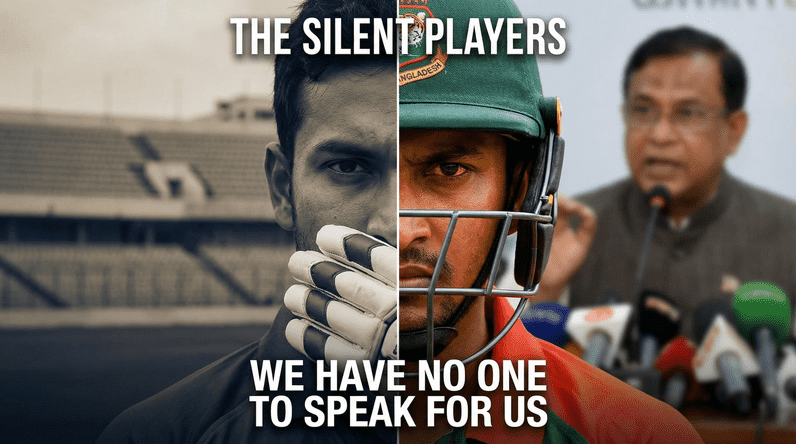
"You heard what he said. What can we say? We have no one. We are helpless. We don't know what to say since we had no hand in this. Many things don't need to be verbalised to be understood. We didn't get any help from any side."
Let that sink in for a moment.
"We have no one."
These aren't fringe cricketers speaking. These are national team members who represent Bangladesh on the world stage. And they feel abandoned.
T20 World Cup 2026 Without Bangladesh: Impact on Fans and Heartbreak of a Nation
The Timeline of Confusion
To understand why players feel betrayed, you need to understand what actually happened.
January 3: Mustafizur Rahman gets removed from Kolkata Knight Riders by BCCI directive.
January 4: Bangladesh Cricket Board requests ICC to shift their World Cup matches from India to Sri Lanka, citing security concerns.
January 22: Asif Nazrul holds a meeting with players. After the meeting, he tells the media: "I am making it clear to everyone: the decision not to play the World Cup in India, considering security concerns—is the government's decision."
That meeting? Multiple players later said it wasn't really a discussion. The decision had already been made. They were informed, not consulted.
January 24: ICC replaces Bangladesh with Scotland.
February 10: Nazrul holds a press conference and reverses course. "The decision was made by the Bangladesh Cricket Board and the cricketers. They themselves made sacrifices for the safety of the country's cricket, for the safety of the people of the country."
The players watching this press conference? Stunned.
What Players Actually Wanted
According to multiple sources within Bangladesh cricket, the players wanted to play.
They understood the political tensions. They heard about Mustafizur's IPL removal. They knew relations between India and Bangladesh had deteriorated since the August 2024 government change.
But they also understood something else: how important the World Cup was for their careers, for Bangladesh cricket's finances, for their development as players.
"Several cricketers have expressed frustration, saying they were never consulted about the decision and were willing to travel to India for the World Cup," SportsTak reported. "They understood how important the tournament was, especially considering how much of Bangladesh cricket's income comes from the ICC."
Think about what playing in a World Cup means for a cricketer from a smaller nation like Bangladesh:
Match fees from the tournament. Performance bonuses for advancing through rounds. Exposure to scouts from franchise leagues around the world. The chance to test yourself against the best players on the biggest stage. Opportunities that come from a strong World Cup showing that can change a career trajectory.
All gone. Not because they chose to skip it. Because a decision was made for them, and then later they were told they'd made it themselves.
The January 22 Meeting That Wasn't Really a Meeting
That January 22 gathering where Nazrul met with players deserves closer examination.
According to The Daily Star, this was "the only time the players were invited to speak on the issue."
But here's the thing: by January 22, the government position was already set. The BCB had already requested the venue change. The ICC was already in the process of rejecting it. The die was cast.
"Afterwards, many of them expressed frustration, saying the decision was already made so there was no point to the discussion," The Daily Star reported.
It was political theater. A meeting designed to show consultation had happened. But consultation implies your input might change the outcome. That wasn't the case here.
The players knew it. Which made watching Nazrul claim on February 10 that they'd made the decision feel particularly galling.
The Backlash and the Backtrack
The response to Nazrul's February 10 comments was swift and severe.
Players spoke anonymously to media. BCB officials expressed shock privately. Cricket fans erupted on social media. The narrative that players chose to boycott the World Cup didn't pass the smell test.
Within hours, Nazrul took to social media to clarify.
"Since the beginning of January, I have clearly stated in various remarks that the decision not to play in the World Cup in India was the government's, based on security risks. I fully stand by that statement," he wrote.
He explained his press conference comments were "unprepared" and poorly articulated.
Bangladesh T20 World Cup 2026: What Happened and What's Next for the Tigers
"Despite financial losses, the deprivation of playing, and the fear of further penalties, they [BCB and players] complied. In this sense, the primary credit for the decision to forego the World Cup, in the interest of the safety of the people and the nation's dignity, belongs to them."
So now the story shifted again. Not that players decided to boycott. But that they deserved credit for complying with the government's decision.
For players watching this unfold? More confusion. More frustration.
BCB Officials Also Left in the Dark
It wasn't just players who felt blindsided by Nazrul's shifting statements.
A BCB director told The Daily Star: "He had said something different before and is saying something else now. He himself had declared previously that the team will not go. It was never the BCB's or the players' decision to make, so there is no scope of shifting the responsibility."
Even BCB President Aminul Islam, who had been coordinating with the government throughout the crisis, found himself navigating conflicting narratives.
Nazrul's office later confirmed the Sports Advisor's statement was meant to highlight the players' sacrifice and compliance, not to shift blame. But the damage was done.
The Players' Frustration Runs Deeper
For Bangladesh cricketers, the World Cup exclusion represents more than missing one tournament.
It represents feeling like pawns in a political game they never asked to play.
It represents having their careers impacted by decisions made without their input.
It represents watching their government publicly contradict itself about who made those decisions.
Most painfully, it represents feeling abandoned.
"We have no one," that second player said. Think about what that means coming from a national team cricketer.
Not "we disagree with the decision." Not "we wish things had gone differently." But "we have no one"—no support system, no voice, no agency in decisions that fundamentally affect their professional lives.
What They're Missing Right Now
While players spoke to media anonymously—because speaking publicly felt risky given the government's role in the controversy—the T20 World Cup proceeded.
February 7: Tournament begins. Bangladesh should be playing West Indies at Eden Gardens.
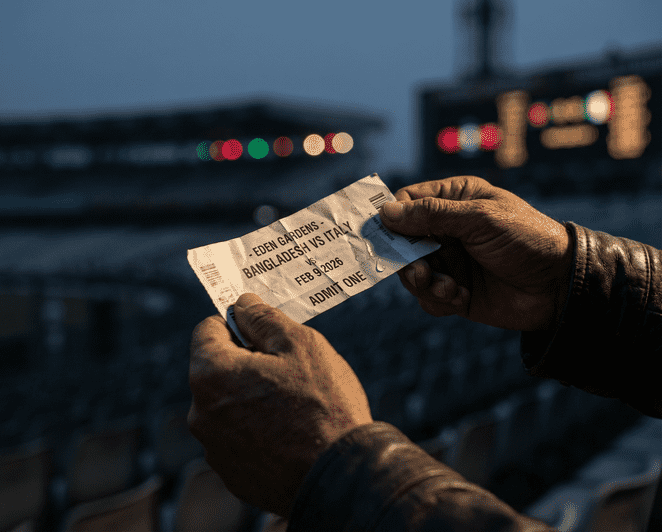
February 9: Scotland plays Italy in Kolkata. Litton Das should be captaining Bangladesh in this match.
February 14: Scotland faces England. Bangladesh should be in this Group C fixture.
Instead, Bangladesh players are home. The BCB hastily organized a domestic T20 tournament—the "Odommo Bangladesh T20 Cup"—to give players match practice and some income.
Total prize money: 25 million taka ($200,000) for the entire tournament.
Compare that to World Cup earnings: Match fees alone for four group stage games would exceed that. Performance bonuses for advancing would dwarf it. The franchise opportunities from strong World Cup performances? Immeasurable.
"It's not just money," one of the anonymous Al Jazeera interviews revealed earlier. "It's the chance to grow."
That chance is gone. And they had no say in it.
The Broader Pattern
This isn't the first time Bangladesh cricketers have felt caught between political forces beyond their control.
Cricket in South Asia has always existed at the intersection of sport, politics, and national identity. Players understand that. They accept it to a degree.
But usually, even when cricket becomes political, players feel like their boards and governments are on their side. Advocating for them. Fighting for their interests.
This time felt different.
The government made a decision based on diplomatic tensions. Fair enough—that's their prerogative. Player safety is important.
The ICC rejected Bangladesh's request. Frustrating, but that's the ICC's call to make.
But then to suggest players chose this outcome? To frame their forced compliance as voluntary sacrifice? To shift the narrative after the fact?
That's where the betrayal cuts deepest.
Why They Can't Speak Publicly
Notice how every player quoted in media coverage requested anonymity?
That's not an accident. That's self-preservation.
The government made the World Cup decision. Criticizing that decision publicly—even if you're a national team cricketer—carries risks in the current political climate.
The BCB depends on government support and funding. Players depend on BCB selection.
Speaking out could mean losing your place in the team. Missing future tours. Being labeled as troublemakers or politically motivated.
So they speak anonymously. They use careful language. They express frustration indirectly.
"Many things don't need to be verbalised to be understood," one player said. Translation: We all know what really happened here. We just can't say it out loud.
What Happens Next for These Players
The World Cup will end March 8. Life moves on. Pakistan tours Bangladesh in March for a full series.
But the psychological impact of this experience will linger.
These players learned they're expendable in political calculations. They learned their voices don't matter when government decides cricket policy. They learned that public narratives can shift regardless of truth.
Some will retire earlier than planned. Others will prioritize franchise opportunities over national duty. A few might push for more player representation in BCB decision-making.
But mostly? They'll keep quiet. They'll play when selected. They'll avoid political statements.
Because as one player put it: "We have no one."
And players without backing learn quickly to keep their heads down.
The Trust That's Been Broken
Beyond this specific World Cup controversy lies a larger issue: trust.
Trust between players and administrators. Trust between the team and the government. Trust that when big decisions affecting players' careers get made, their voices will at least be heard.
That trust took years to build. It shattered in three weeks.
Rebuilding it? That's going to take a lot longer.
Nazrul's social media clarification might satisfy some people. It might smooth over the immediate controversy. But players who felt abandoned don't forget that feeling quickly.
The next time a big decision comes up—about touring somewhere, about player safety, about representing Bangladesh—those players will remember February 2026.
They'll remember feeling helpless.
A Final Word from the Silent Majority
Most Bangladesh cricketers haven't spoken publicly about the World Cup exclusion. They won't.
But their silence speaks volumes.
No player has publicly endorsed the decision. No one has said "yes, we chose this." No one has expressed satisfaction with how things played out.
The closest anyone came was complying when ordered and staying quiet when told.
Which brings us back to those anonymous quotes that started this story.
"That was funny."
"We have no one. We are helpless."
These aren't just comments about a World Cup controversy. They're a window into how Bangladesh's national team cricketers view their place in the ecosystem.
They're talented athletes representing their country on the world stage. But when it comes to decisions that affect their careers fundamentally?
They're helpless.
And that might be the saddest revelation to emerge from this entire mess.
WinTK is part of WINTK, providing in-depth coverage of South Asian cricket transformation. We believe understanding the human stories behind the headlines—the players caught between politics and sport, the voices often unheard—matters as much as match results and tournament outcomes.