The Economy Nobody Wanted to Talk About During the Campaign
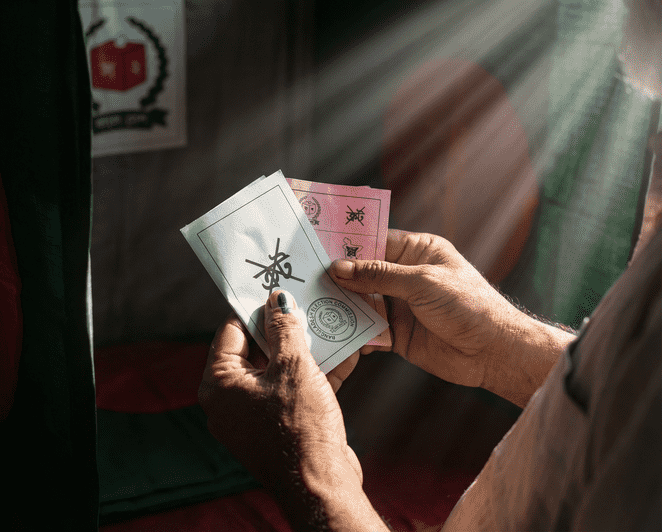
Let's be honest: Bangladesh's February 2026 election was supposed to be about democracy. About ending autocracy. About the July Charter and constitutional reform. About giving voice to the young people who bled in the streets during the 2024 uprising.
And it was about all those things. But there was another story running underneath the whole time—one that every candidate mentioned but nobody really wanted to dig into. The economy.
Because here's the uncomfortable truth: while Bangladesh was having its democratic awakening, its economy was struggling. GDP growth slowed to around 4 percent—nowhere near the 7-8 percent Bangladesh had grown accustomed to. Inflation hit 12 percent at its peak, eroding purchasing power for ordinary people. Foreign direct investment dropped nearly 50 percent. The garment sector—which generates 80 percent of exports—saw over 90 factory closures and 50,000 job losses.
The 2024 uprising didn't just topple Sheikh Hasina. It disrupted production, scared away investors, and created months of uncertainty that the economy still hasn't recovered from.
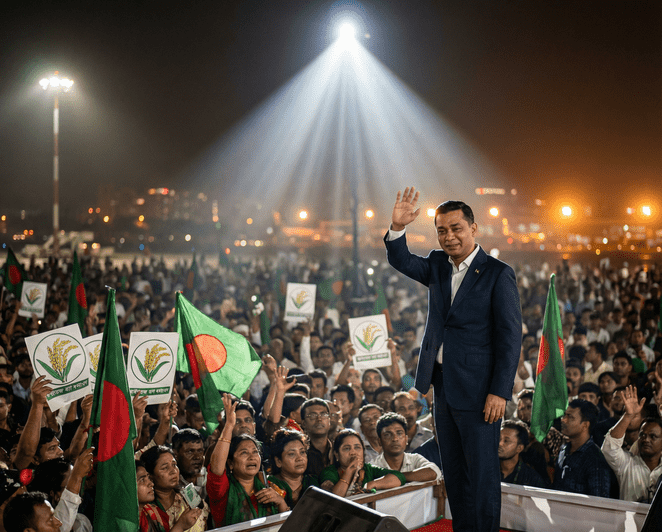
Now Tarique Rahman's BNP government inherits all of it. The economic challenges. The frustrated youth demanding jobs. The business community demanding stability. The international community demanding reforms.
WinTK—part of the WINTK brand that's been tracking Bangladesh's transformation since the uprising—spent weeks analyzing economic data, talking to business leaders, reading policy documents, and trying to understand what the BNP's landslide victory actually means for Bangladesh's economic future.
This isn't a story about campaign promises. It's a story about whether those promises can survive contact with economic reality.
The Numbers That Matter
Before we get into what might happen, let's establish where Bangladesh actually stands.
The Macro Picture
Bangladesh's GDP is $461 billion. Per capita income is $1,990. That makes it the eighth most populous country globally and one that's been—until recently—among the fastest-growing economies in the world.
The Bangladesh Bank reported GDP growth of 3.97 percent in the fiscal year ending June 2025, down from 4.22 percent the previous year. That's not terrible by global standards, but it's significantly below Bangladesh's historical average and well below what's needed to create jobs for millions of young people entering the workforce.
Inflation peaked at 12 percent per year but has eased into high single digits. That's improvement, but prices are still rising faster than wages for most people.
Foreign exchange reserves have stabilized, supported by steady remittance inflows. But debt servicing pressure keeps mounting—foreign loan repayments now almost match monthly disbursements.
Economists describe this as a "mild stagflationary phase." Weak growth. Eroding purchasing power. Stagnant employment. Not a crisis, but not healthy either.
The Youth Challenge
Here's the stat that should terrify anyone governing Bangladesh: an estimated 40 percent of the population is under 30.
That's a demographic dividend if you can create jobs. It's a demographic time bomb if you can't.
The young people who led the 2024 uprising didn't risk their lives for symbolic reforms. They want jobs. Opportunities. A future. The next government faces intense pressure to deliver.
BNP promised to create 10 million new jobs, including 1 million in the ICT sector. Those aren't just campaign slogans. They're survival metrics.
The Garment Dependency
Bangladesh's economy is extraordinarily dependent on ready-made garments. RMG exports generate 80 percent of total exports and employ 4 million+ workers.
During the 2024 uprising and its aftermath, the sector took serious hits. Factory closures. Job losses. Disrupted supply chains. International buyers got nervous about Bangladesh's stability and started diversifying to other countries.
Export growth continues to lag. Competition from India and China has intensified. Bangladesh's price advantage is eroding.
The sector needs investment, modernization, and diversification. But investment requires stability. And stability requires a functioning government with credible economic policy.
What BNP Actually Promised
The BNP's election manifesto was economically ambitious to the point of being audacious.
The Trillion-Dollar Dream
Centerpiece of the BNP's economic vision: building a $1 trillion economy by 2034. That would require doubling Bangladesh's GDP within a decade.
Is it possible? Maybe. The Boston Consulting Group estimates Bangladesh could reach $1 trillion by 2040—six years later than BNP's target but broadly in the same ballpark.
But here's what achieving BNP's timeline actually requires: sustained annual GDP growth of roughly 10 percent. Far exceeding Bangladesh's historical average.
And that growth would demand a dramatic increase in private investment—from about 23 percent of GDP today to at least 35 percent.
Where's that investment supposed to come from? Foreign direct investment, according to BNP's plan. They pledged to raise FDI from 0.45 percent of GDP to 2.5 percent.
That's a more than fivefold increase. In a country where FDI just dropped 50 percent because of political instability.
The Tax Challenge
Another key pledge: doubling the tax-to-GDP ratio to 15 percent.
Currently, Bangladesh's ratio languishes below 7 percent—one of the lowest in the world. Every previous government has tried to raise it. Every previous government has failed.
Achieving 15 percent would require profound reforms in tax policy, compliance, and administrative capacity. It means convincing wealthy Bangladeshis who've spent decades avoiding taxes to suddenly start paying them. It means building a tax administration that can actually collect revenue efficiently.
Possible? Yes. Likely? History suggests skepticism.
The Job Creation Pledge
Ten million new jobs. One million in ICT.
Those are big numbers. But consider: Bangladesh adds roughly 2 million people to the workforce every year. Over five years, that's 10 million. So BNP's pledge is essentially "we'll employ everyone who enters the job market."
That's not ambitious. That's baseline. And even achieving baseline would be an accomplishment given current economic conditions.
The 1 million ICT jobs are more interesting. That signals a determination to move beyond labor-intensive garment manufacturing into higher-value sectors.
The Digital Sector: Bangladesh's Other Bet
If there's one bright spot in Bangladesh's economic picture, it's the digital sector.
The Current State
Bangladesh's ICT market was valued at $8 billion in 2024 and is projected to reach $20 billion by 2032—a compound annual growth rate of 12.1 percent.
The sector already employs over 750,000 ICT professionals across 4,500+ firms. Export earnings surpassed $1 billion in 2019 and have grown at a 21 percent CAGR since 2013.
Bangladesh has 650,000 registered freelancers—the second-largest pool of online workers in the world after India, commanding 16 percent of the global freelance market.
That's real. That's not projection or hope. That's actual economic activity happening right now.
BNP's Tech Vision
The BNP pledged to create 200,000 direct tech jobs and 800,000 indirect jobs through freelancing and content creation.
They want the ICT sector to contribute 5-10 percent of GDP by 2036, up from current levels.
The plan focuses on high-demand areas: cybersecurity, business process outsourcing, artificial intelligence, semiconductor industries, data analytics, and cloud computing.
BNP emphasized establishing locally controlled cloud systems—Tier-3 and Tier-4 data centers—to safeguard citizen data while reducing dependence on international data services.
They promised affordable internet and phased free access in public institutions: schools, hospitals, offices, transportation hubs.
"The main purpose of ICT is to make people's lives easier," said Moyeen Khan, BNP Standing Committee member. "Technology should serve public welfare rather than create harassment."
That last bit is significant. Under Hasina, digital technology was increasingly used for surveillance and control. BNP's framing—technology as public welfare, not state control—represents a philosophical shift.
The AI Policy Context
Bangladesh released a draft National AI Policy in 2024, updated in 2026. It's ambitious.
The policy identifies priority sectors: public services, healthcare, finance, agriculture, education, telecommunications, smart cities. It establishes six core principles: social equity, transparency, safety, sustainability, partnership, human-centered AI.
A National AI Centre of Excellence (NAICE) is being established to coordinate implementation, standardization, certification, capacity building.
But here's the challenge: the policy is aspirational. It's not binding law. It lacks enforcement mechanisms. Critics warn it could remain "toothless" without proper legal framework and regulatory teeth.
Still, the fact that Bangladesh is even thinking seriously about AI governance puts it ahead of many regional peers.
The Infrastructure Gap
Bangladesh's internet speed averages 9.2 Mbps on mobile versus the global average of 64.2 Mbps. Only 44.5 percent of the population has internet access. Digital literacy sits at just 8 percent.
Those numbers are brutal. You can't build a digital economy when less than half your population can even access the internet.
But there's also opportunity. Bangladesh has deployed Oracle Sovereign Cloud. It's attracted nearly $1 billion in startup funding across 2,500+ startups. The freelance workforce is real and growing.
The Smart Bangladesh 2041 vision targets $50 billion in IT exports—a 19x increase from today's $2.6 billion.
Ambitious? Absolutely. Impossible? Not if you look at Vietnam, which grew IT exports from $1 billion in 2010 to $150+ billion in 2023.
Bangladesh is starting from a higher base of digital infrastructure than Vietnam did. The question is whether it has the political will, policy consistency, and investment capacity to execute.
The LDC Graduation Question
Here's a complicating factor most people aren't paying attention to: Bangladesh is scheduled to graduate from Least Developed Country (LDC) status in November 2026.
That sounds like good news. And in many ways, it is—a recognition of Bangladesh's development progress.
But graduation means losing duty-free market access and concessional loans that have long supported Bangladesh's economy. The garment sector, in particular, benefited enormously from LDC preferences.
The goal, according to BNP's vision, is to transform these fading external privileges into permanent domestic strength. Build an industrial base robust enough to compete globally without LDC benefits.
That requires investment in technology, productivity improvements, moving up the value chain. All of which costs money and takes time.
And all of which needs to happen while managing a political transition, implementing constitutional reforms, and dealing with youth unemployment.
No pressure.
What Business Leaders Actually Think
The Dhaka Chamber of Commerce and Industry (DCCI) issued a statement before the election that was remarkably candid.
They warned that political uncertainty could threaten economic recovery. They urged "timely and effective policy measures to sustain growth and bolster investor confidence."
Most importantly, they stressed that "political stability remains crucial for sustainable economic recovery and investment growth."
Translation: we don't care who wins. We care that whoever wins governs competently and doesn't create chaos.
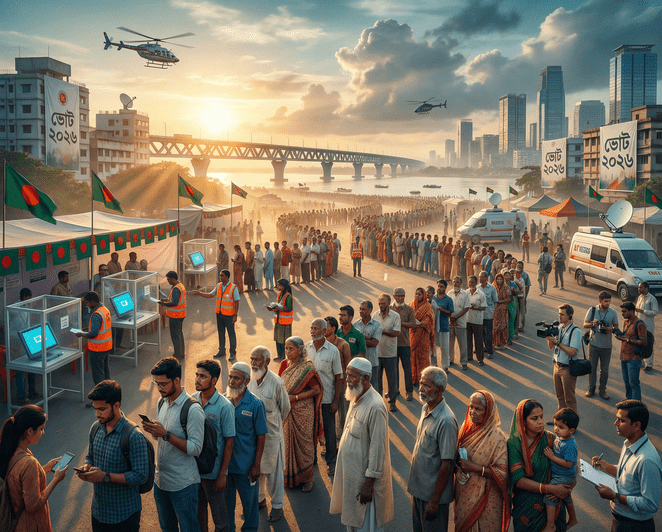
Business leaders and economists believe a credible election could restore confidence and unlock stalled investment. The election happened. It was credible. Now comes the hard part: delivering stability and policy consistency.
The Foreign Investment Challenge
Bangladesh's stock market is trading near multi-year lows. The MSCI Bangladesh Index is just above a P/E of 9.0x—cheap by any standard.
Some international investors see opportunity. The setup reminds them of Pakistan and Sri Lanka two years ago—markets widely viewed as uninvestable until elections triggered powerful re-ratings.
But there's also a bear case. Bangladesh has a long track record of hard-left politics combined with governments applying short-term populist fixes rather than addressing structural issues.
Example: Bangladesh prevented its pharmaceutical sector from raising prices in line with inflation—a populist attempt to control headline inflation. Measures like this rarely work beyond a few months. Over time, state intervention leads to distortions and eventually crisis.
Foreign investors remember this. They're skeptical about whether Bangladesh can resist the temptation to interfere in markets when politically convenient.
The India Factor
Relations with India are tense. Bangladesh continues to demand that New Delhi extradite Sheikh Hasina, who's in exile there. The interim government's Islamist supporters use anti-India rhetoric. Indian states and Bangladeshi leaders use incendiary language against each other.
This matters economically. India is Bangladesh's largest trading partner and neighbor. Frictions hurt trade, complicate logistics, and create uncertainty for businesses operating across the border.
Historically, Bangladesh and India ensured that political irritants didn't impact diplomatic, trade, and security ties. That firewall seems to be eroding.
BNP will need to manage this relationship carefully. Tarique Rahman's early signals—thanking Modi for congratulations, emphasizing constructive engagement—suggest awareness that Bangladesh can't afford prolonged tension with India.
The China and Pakistan Opening
Bangladesh's relations with China and Pakistan have improved. High-level exchanges. Enhanced trade ties. Resumption of direct flights with Pakistan.
China offers Belt and Road investment. Pakistan offers symbolic political alignment and modest trade opportunities.
But China comes with debt risks—see Sri Lanka's experience. And trade with Pakistan has limited potential without transit through India.
BNP's stated goal is "neutral foreign policy" that balances relationships without over-reliance on any power. That's diplomatically smart but operationally difficult.
The Uncomfortable Realities
Let's talk about what BNP's economic promises actually require.
The Financing Problem
Professor Mustafizur Rahman of the Centre for Policy Dialogue identified the core issue: "The main problem is financing and implementation."
BNP's infrastructure expansion plans—energy projects, transport networks, potentially high-speed rail—require massive capital investment.
Where does that money come from?
Foreign direct investment needs to quintuple. But FDI just collapsed 50 percent. Convincing international investors to suddenly flood Bangladesh with capital requires more than promises. It requires demonstrated policy consistency, rule of law, and protection of property rights.
Domestic investment needs to jump from 23 percent to 35 percent of GDP. But private-sector confidence has been shaken by years of political interference and uncertain property rights.
Government revenue needs to double as a share of GDP. But tax collection remains woefully inadequate and corruption endemic.
Without solving the financing problem, everything else is fantasy.
The Implementation Capacity Question
Even if BNP solves financing, there's implementation.
Bangladesh's state capacity is weak. Corruption is widespread. Bureaucratic red tape stifles initiative. Infrastructure projects routinely run over budget and behind schedule.
BNP hasn't governed in twenty years. Their institutional knowledge is outdated. Their administrative capacity is untested.
They've promised sweeping reforms while simultaneously trying to revive economic growth, create millions of jobs, and manage a political transition.
That's a lot to ask of any government, let alone one taking power after two decades in opposition.
The Political Economy Trap
Here's the really difficult part: many of the reforms Bangladesh needs will hurt powerful interests.
Tax reform means making wealthy people pay taxes they've avoided for decades. Infrastructure projects mean disrupting established patronage networks. Anti-corruption efforts mean prosecuting people with political connections.
The BNP's massive majority gives them power to push through reforms. But it also means they own the consequences. If tax increases spark backlash, there's no coalition partner to blame. If factory owners complain about labor regulations, there's no minority government excuse.
Political capital is finite. BNP will have to choose which battles to fight.
What Could Go Right
Enough pessimism. Let's talk about what success could actually look like.
The Stability Dividend
The single most valuable thing BNP's election victory delivers is potential political stability.
For the first time in years, Bangladesh has a government with a clear democratic mandate and a commanding parliamentary majority. That's valuable.
If BNP can govern competently for even two years without major political crises, investor confidence will improve. Stalled projects will restart. Foreign businesses will make investment decisions they've been postponing.
The Bangladesh Bank noted that the stock market has already shown signs of revival. The index crossed 5,200 in early February 2026. Average daily turnover reached Tk 650 crore, up from Tk 472 crore a year earlier.
That's the stability dividend starting to manifest even before BNP formally takes office.
The Digital Opportunity
Bangladesh's digital sector is real and growing. Unlike many campaign promises, this isn't based on fantasy.
The 650,000 freelancers are already earning money. The 750,000 ICT professionals are already employed. The $1 billion in export earnings already happened.
If BNP can remove bottlenecks—improve internet infrastructure, reduce regulatory harassment, protect intellectual property—the sector will grow organically.
The target of $50 billion in IT exports by 2041 isn't crazy if you look at comparable countries. It requires sustained 15-20 percent annual growth. Ambitious but achievable.
The Demographic Window
Bangladesh's young population is currently a challenge. But it's also an enormous opportunity.
A country where 40 percent of people are under 30 has massive human capital if educated and employed properly. Low labor costs. Digital fluency. Hunger for opportunity.
Companies in developed countries are desperate for affordable tech talent. Bangladesh can supply that talent if it invests in education and skills training.
The window won't stay open forever. Birth rates are falling. The demographic dividend lasts maybe another 15-20 years. But that's enough time to transform the economy if policy gets it right.
The Reform Mandate
The 60 percent "Yes" vote on the July Charter gives BNP democratic cover for difficult reforms.
Voters explicitly endorsed term limits, enhanced oversight, judicial independence, anti-corruption measures. That's political capital BNP can spend on implementing those reforms even when they hurt.
If BNP can credibly say "we're doing this because you voted for it in the referendum," that blunts some pushback.
The Scenarios
Let's game out what might actually happen.
Scenario 1: Muddling Through (Most Likely)
BNP governs competently but not brilliantly. Growth picks up to 5-6 percent—better than current 4 percent but short of the 10 percent needed for the trillion-dollar goal.
Some reforms get implemented. Others get watered down or delayed. Foreign investment improves modestly. The digital sector continues growing.
By 2030, Bangladesh's GDP is maybe $650-700 billion. Not the trillion promised, but respectable progress. Youth unemployment remains elevated but manageable. Political stability holds.
This is fine. Not transformative, but fine. Bangladesh avoids crisis and makes incremental progress.
Scenario 2: The Breakthrough (Possible)
BNP surprises everyone. They implement real tax reform. They attract significant FDI through policy consistency and reduced corruption. Infrastructure projects actually complete on time.
Growth accelerates to 8-9 percent. The digital sector explodes—hundreds of thousands of new tech jobs. Garment sector modernizes and moves up the value chain.
By 2034, Bangladesh hits $900 billion-$1 trillion GDP. Not quite the timeline promised, but close enough to claim success. Youth unemployment drops. Living standards rise noticeably.
This requires everything going right. But it's not impossible. Countries have pulled off rapid transformation before.
Scenario 3: The Disappointment (Possible)
BNP talks reform but doesn't deliver. Powerful interests block necessary changes. Corruption continues. Political infighting emerges within BNP's coalition.
Growth stays stuck around 4 percent. Youth frustration builds. The 2024 uprising generation feels betrayed. Political instability returns.
By 2030, Bangladesh's economy hasn't fundamentally changed. Another cycle of disappointment. Another missed opportunity.
This is the pessimistic case. But Bangladesh's history suggests it's not unrealistic.
What to Watch
If you want to understand whether BNP's economic vision is succeeding or failing, watch these indicators:
Foreign Direct Investment Flows: Does FDI actually increase in 2026-2027? If not, the entire economic plan is in trouble.
Tax Revenue Growth: Does tax collection improve? If the tax-to-GDP ratio stays stuck below 7 percent, forget about infrastructure investment.
Digital Export Numbers: Are ICT export earnings growing at 15-20 percent annually? That's the bellwether for whether the digital transformation is real.
Garment Sector Recovery: Do factory closures stop? Do jobs return? The sector employs 4 million people. If it doesn't stabilize, social pressure builds.
Youth Employment Data: This is the ultimate test. Are young people finding jobs? If unemployment stays high, political stability won't last.
Implementation of July Charter: Does parliament actually implement constitutional reforms within 180 days? If BNP ignores the referendum result, credibility collapses.
The Bottom Line
Bangladesh's February 2026 election was about democracy. But democracy doesn't pay bills. It doesn't create jobs. It doesn't feed families.
The BNP government has to deliver economically or face the same fate as Hasina. Because young people who were willing to die for change in 2024 won't patiently accept economic stagnation in 2026.
The trillion-dollar economy pledge? Probably unrealistic on BNP's timeline. But the direction is right. Bangladesh needs to grow faster, invest more, diversify beyond garments, develop its digital sector, create millions of jobs.
The digital transformation? Actually possible if BNP removes bottlenecks and lets the sector grow. The infrastructure is being built. The talent exists. The global market wants what Bangladesh can offer.
The political stability dividend? Real but fragile. Stability attracts investment. Investment creates jobs. Jobs reduce political pressure. But it's a virtuous cycle that requires sustained competent governance.
BNP has the mandate. They have the majority. They have the opportunity.
Whether they have the capacity to actually implement their economic vision—that's the question that will define Bangladesh's next decade.
The 2026 election gave Bangladesh political renewal. Now comes the harder part: translating democratic legitimacy into economic results. Voters can forgive many things, but prolonged joblessness isn't one of them. BNP's economic promises aren't campaign rhetoric anymore. They're survival metrics.
WinTK is part of WINTK, covering Bangladesh's economic and digital transformation alongside its political evolution. We believe understanding the intersection of democracy and development is essential for comprehending Bangladesh's future trajectory.