A Nation Split in Two: What Al Jazeera Found on the Streets of Dhaka
When Al Jazeera reporters walked through Dhaka — talking to people at tea stalls, university corridors, and busy street corners — they weren't just gathering quotes. They were capturing something raw: a nation genuinely torn between pride and grief over the most controversial cricket decision Bangladesh has ever made.
Out of 14 people interviewed across the capital, seven backed the government's decision to withdraw from the T20 World Cup 2026. Three opposed it. Four declined to share their political affiliations but still supported the boycott. The numbers aren't massive, but what they represent is telling — and the breakdown tells an even more complicated story than the headline suggests.
The three who opposed the boycott? All three identified as supporters of former Prime Minister Sheikh Hasina's Awami League — the party whose ouster in August 2024 arguably set this entire crisis in motion. That's not a coincidence. It's the political fault line that's been running quietly beneath every cricket conversation in Bangladesh since last year.
Security First — But At What Cost?
For many ordinary Bangladeshis, the reasoning was simple and emotional. At a tea stall in Tejgaon, vendor Billal Hossain didn't mince words. He pointed to violence against Muslims in India and rising border tensions as reasons why sending the team felt wrong. The sentiment — protective, anxious, rooted in genuine concern — explains much of the majority support. This wasn't just about cricket. For millions of people, it was about sending young men into an environment they no longer trusted.
Shamim Chowdhury, head of research at Dhaka's T Sports channel, was blunt when speaking to Al Jazeera: the ICC's double standards had been exposed. He argued that Bangladesh had every right to raise security concerns, and the governing body's refusal to accommodate a venue change while citing no credible threat raised uncomfortable questions about how power operates in international cricket.
Sports journalist Abu Zarr Ansar Ahmed went further — pointing out that the risk wasn't limited to players. Coaches, support staff, journalists, and fans traveling to India were all part of the equation. With national elections on the horizon in Bangladesh, even a single incident involving Bangladeshi nationals on Indian soil could have sparked a political firestorm at home.
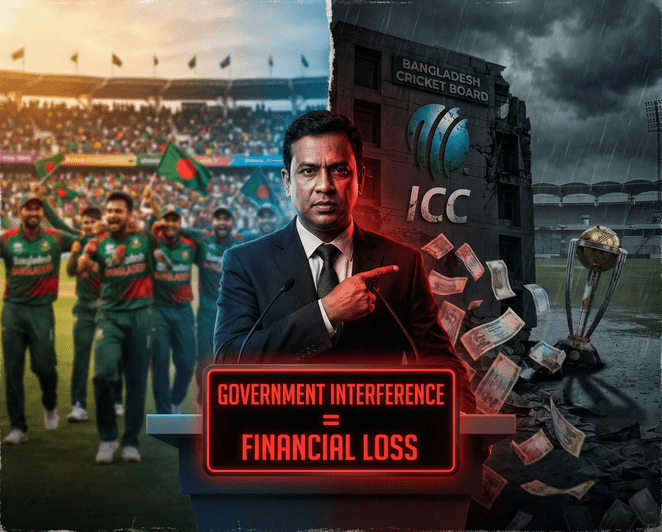
Behind the scenes, voices like former BCB director Ahmed Sajjadul Alam were more pointed — warning that the decision reflected government overreach into cricket administration and could lead to serious financial and institutional damage within the ICC ecosystem. His concerns weren't dismissed; they were just drowned out by the louder political current.
The Human Cost Nobody's Counting
Ziaul Haque Tanin had planned his entire February around the World Cup. A former first-class cricketer turned sports entrepreneur from Thakurgaon, he had secured a premium hospitality ticket at Eden Gardens in Kolkata for what was supposed to be Bangladesh vs Italy on February 9. Those plans evaporated overnight. Unused visas. An idle World Cup ticket. And a feeling of loss that no political justification could fully absorb.
His story isn't unique — it's just a clean example of what the boycott cost at the human level, stripped of all the geopolitical framing. Across Bangladesh, fans who had saved, planned, and invested emotionally were left watching a tournament their team wasn't in.
The 3 Who Said No — and Why Their Voices Matter
It would be easy to write off the three dissenters as political outliers. They're not. They represent a perspective that is actually fairly widespread among Bangladesh's cricket community — it just doesn't get as much airtime right now.
Former Bangladesh batter Anamul Haque Bijoy articulated it clearly: a World Cup is the peak of a cricketer's career. It's a moment most players spend their entire lives working toward. To have it taken away — not because of injury, not because of poor form, but because of diplomacy — feels like a different kind of injustice. "Sports should be above everything," he said.
University lecturer Khairul Islam offered a more measured position. He didn't dismiss the security concerns — he just questioned whether the threat level had been assessed with enough rigor, and whether alternatives like a neutral third-country venue had been seriously explored before the decision became irreversible.
Former BCB director Syed Ashraful Haque, who was instrumental in securing Bangladesh's Test status decades ago, put it in institutional terms: Bangladesh's voice inside the ICC had weakened, and this episode was going to make it weaker. He believed the whole thing could have been resolved through proper dialogue — and that the cost of not trying hard enough would be felt for years.
The Players — Ready, But Silenced
Perhaps the most heartbreaking part of this story isn't the politics. It's the team that prepared for something they never got to play.
Two Bangladesh national players, speaking anonymously to Al Jazeera, described a squad that had genuinely believed 2026 was their moment. In 2025, Bangladesh won 15 out of 30 T20 internationals — their best calendar-year record in the format. They weren't just making up the numbers. They felt ready to compete at the highest level.
Both spoke about the World Cup representing more than match fees — it was about career visibility, franchise exposure, and the chance to test themselves against the world's best. Missing it wasn't just a financial blow. It was a ceiling placed on their development at the exact moment they felt most prepared to break through it.
Neither player criticized the government or the BCB publicly. With India at the center of the dispute, speaking out carried real personal risk. So they stayed quiet, watched their World Cup disappear, and prepared for a hastily organized three-team domestic event — the "Odommo Bangladesh T20 Cup" — instead. Roughly $200,000 in prize money and fees as a consolation for missing cricket's biggest global stage.
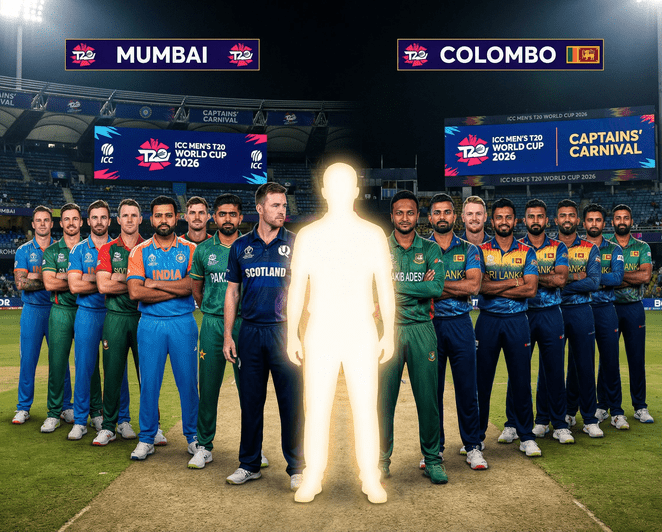
This kind of invisible cost doesn't show up in the survey numbers. But it's real, and it lingers. The empty spaces in Bangladesh cricket's recent history have been growing — and some of them are starting to feel permanent. As win-tk.org covered earlier with the captains' photo moment involving Litton Das, there's a pattern of Bangladeshi presence being sidelined that goes beyond any single incident.
Former Captain Breaks It Down
Former captain Mohammad Ashraful took the pragmatic view — government approval is mandatory for international tours, and there was only so much the cricket board could do once the political machinery had moved. He acknowledged the disappointment, especially for younger players, but suggested the financial losses were manageable. What hung unsaid beneath his words was whether the reputational and institutional losses are equally manageable — and whether Bangladesh cricket will carry this episode into its future negotiations with the ICC and other boards.
When Cricket Becomes a Proxy War
The Al Jazeera street survey captured something important that gets lost in the bigger political headlines: public opinion in Bangladesh didn't form in a vacuum. It formed inside a specific context — one shaped by the events of August 2024, by Mustafizur Rahman's IPL removal in January 2026, by border tensions, and by a long-simmering resentment toward India that predates this World Cup cycle by years.
The India-Bangladesh relations crisis has been building steadily, and cricket — as it so often does in South Asia — became the arena where all of that tension finally broke into the open. Cricket didn't cause the crisis. But it absorbed it, and it's now carrying the weight of a diplomatic breakdown that both governments have failed to resolve through proper channels.
Pakistan's brief boycott gesture and subsequent reversal only underlined how messy and unstable this whole situation became. For a few days, the T20 World Cup genuinely looked like it might collapse under the weight of South Asian geopolitics. It didn't — but the scars are visible.
What 7 vs 3 Actually Means
Seven out of fourteen. It's not a landslide. It's not even a comfortable majority when you factor in that four of those supporters wouldn't reveal their political affiliations. What the Al Jazeera survey really reveals is that Bangladesh is a country processing something genuinely painful, and people are landing in different places depending on how they weigh security against sport, national dignity against institutional standing, short-term emotion against long-term consequence.
The three who said no weren't being unpatriotic. They just had a different vision of what protecting Bangladesh cricket looks like. And the seven who said yes weren't naive — they were responding to a real and felt sense of risk that deserves to be taken seriously, not dismissed as political theater.
The most interesting group in the entire survey is the four who didn't reveal their party affiliations but still backed the boycott. They suggest that support for the decision extended well beyond any single political camp — that something deeper, call it national anxiety or a genuine erosion of trust in the safety of traveling to India right now, was driving a significant slice of public opinion independent of partisan loyalty.
Cricket in Bangladesh has never been just cricket. It's been identity, aspiration, and at times, the one arena where a small country could feel genuinely world-class. What this T20 World Cup cycle has done is remind everyone how fragile that space is — and how quickly it disappears when politics decides it needs the field more than the players do.
win-tk.org is a product of wintk — delivering independent sports and news analysis built around what actually matters to readers.